

Find a place that works for your day Compare desks and rooms, understand the inclusions, and plan a first visit. The main action is “Explore the spaces”. Supporting sections cover Day access, Dedicated desks, Room booking details.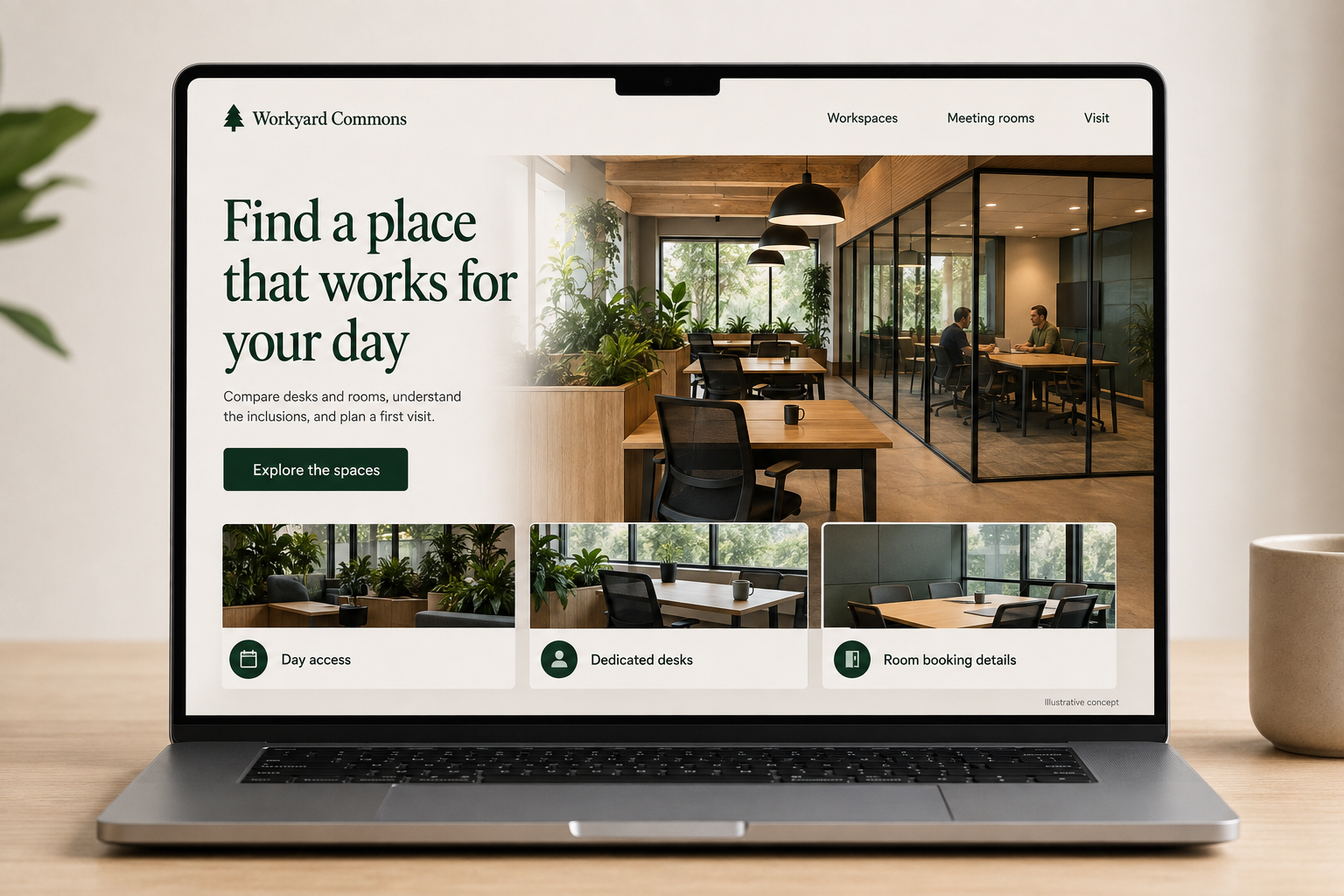
Explore this layout
Someone comparing coworking spaces is choosing an everyday working environment, not just a desk in a nice photograph. They need to understand noise, calls, access, meeting rooms, and the difference between a day visit and membership. The website should make those choices concrete. A useful tour or trial route then lets people check the experience that words and photographs cannot fully convey.
Compare the spaces by how they work
Distinguish shared desks, dedicated desks, private offices, and meeting rooms with clear descriptions of access and use. Show actual photographs and useful dimensions or capacity where relevant. Explain which spaces suit calls, focused work, or group meetings according to the operator's real arrangements. Avoid presenting one quiet private office as representative of every membership. Visitors should understand what they are booking and how it relates to the rest of the shared environment.
Explain the practical inclusions
State access hours, internet arrangements, printing where provided, storage, meeting-room allowances, and other included services accurately. Identify separately charged options. A room booking should show equipment and setup details rather than only its maximum capacity. Keep membership conditions readable and explain how changes or renewals work under the actual offer. Customers comparing a day pass with a monthly plan need a consistent view of what each option permits and what remains extra.
Make tours and day visits purposeful
Let prospective members choose a tour or request a trial where offered, explaining whether the time is confirmed automatically. Ask about the work arrangement they are considering and any practical questions. Day access needs a clear arrival and check-in process, with instructions sent after booking. If spaces have different entrances or access outside staffed hours, describe the relevant arrangements accurately. A first visit should help someone judge fit without requiring a commitment they did not expect.
Use content to answer workplace choices
Publish useful comparisons of the space's own options, such as when a meeting room suits a session better than an open desk. Keep the explanation grounded in actual facilities. Measure tour requests, day bookings, room reservations, and membership inquiries separately. Review repeated questions about calls, access, or included room time. Those details often influence whether someone returns, so improving their visibility can be more valuable than another generic article about productivity.
Before you launch
- Compare access hours by plan
- List meeting-room equipment
- Explain call and quiet-space arrangements
- Show day-visit check-in steps
Should the site let visitors book a desk without touring?
A day pass can provide a useful first experience when availability and arrival instructions are clear. Longer arrangements may benefit from a tour or conversation. Offer the routes the operation can support and explain the commitment for each so a simple visit does not appear to create a membership.