

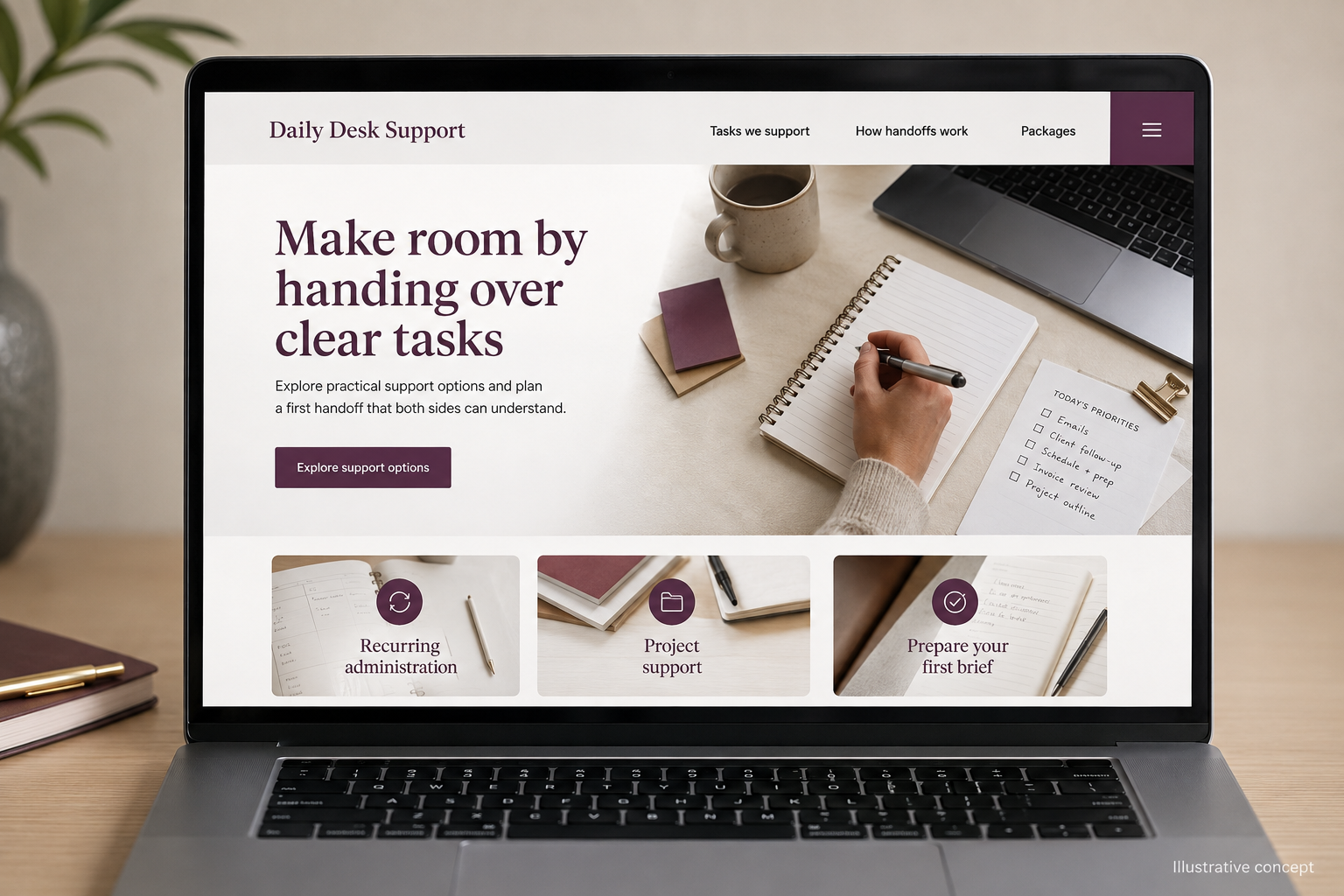
Explore this layout
Make room by handing over clear tasks
Explore practical support options and plan a first handoff that both sides can understand.
The main action is “Explore support options”. Supporting sections cover Recurring administration, Project support, Prepare your first brief.

Someone considering a virtual assistant often knows they are stretched but has not yet decided what to hand over. A website should turn that broad feeling into a practical conversation about tasks, frequency, and responsibilities. Clear examples help buyers understand the service without assuming that purchasing a block of hours means every kind of work, at any time, is included.
Describe tasks at a useful level
Group the work offered into clear categories such as scheduling, routine document preparation, or customer administration, only where these reflect the assistant's actual services. Give examples of inputs and outputs so clients can picture a handoff. State boundaries around specialist work rather than implying unlimited expertise. A prospective client needs to distinguish a recurring administrative routine from a one-off project that requires a separate discussion about scope and timing.
Explain how work moves between people
Describe the agreed request channel, priorities, review process, and expected communication rhythm. Clarify how urgent requests are handled under the actual service arrangement. Explain that system access is agreed during onboarding through an appropriate process, without asking for passwords in a public inquiry form. The website should help a client understand their own responsibilities, including supplying instructions and reviewing work, rather than suggesting that delegation removes the need for any ongoing communication.
Make packages understandable
Show whether an offer is based on time, defined tasks, or a recurring scope. Explain what is included, how unused time or additional work is handled under the actual terms, and when availability is confirmed. Avoid presenting an illustrative package as a guarantee that every client's workload fits it. A comparison should help someone choose a starting discussion, with enough detail to understand the difference between occasional support and an ongoing arrangement.
Use content to improve the first brief
Publish a practical guide to listing repeat tasks or preparing a first handover. Ask inquiry questions about the work, frequency, systems in broad terms, and desired start date. Measure suitable consultations and requests that become defined scopes, rather than all form submissions equally. Review misunderstandings about turnaround or task coverage and revise those pages. Useful content helps buyers arrive with a manageable first set of responsibilities instead of an undefined request for help with everything.
Before you launch
- Show examples of task inputs and outputs
- Explain the request and review channel
- Define package overage arrangements
- Keep credentials out of inquiry forms
Should a virtual assistant sell only hourly packages?
Hourly support is one option, but a defined recurring scope may be clearer for predictable work. Explain the model actually offered and what changes the arrangement. Clients need to understand responsibilities, availability, and how extra requests are discussed, not simply compare the largest number of hours at the lowest price.