Explore this layout
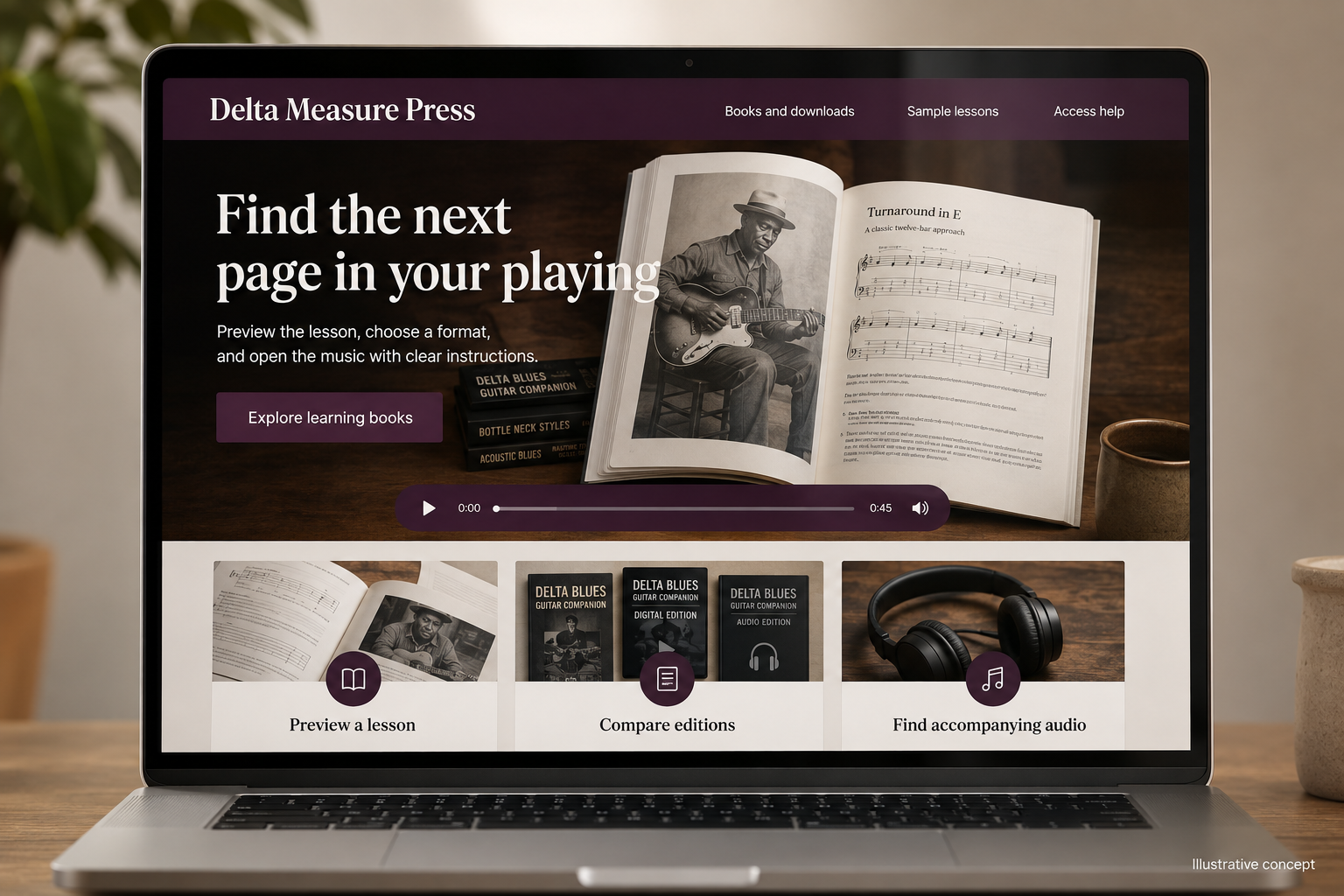
Find the next page in your playing
Preview the lesson, choose a format, and open the music with clear instructions.
The main action is “Explore learning books”. Supporting sections cover Preview a lesson, Compare editions, Find accompanying audio.
A blues learning book may arrive as a printed volume, a downloadable file, or a package with accompanying audio. A hypothetical Mississippi music publisher should make those formats unmistakable. The site’s role is to help a player choose material at a useful starting level and understand how to open the purchased content without turning a musical interest into a technical puzzle.
Put the format beside the title
Label print, download, and combined editions on collection cards as well as product pages. State whether notation, tablature, lyrics, or audio examples are included when those elements belong to the publication. Show page count or file details in a consistent place. A cover image alone cannot explain the purchase. If the editions differ beyond delivery method, provide a brief comparison so a customer does not assume the digital product contains everything in the printed bundle.
Let a real lesson establish the level
Offer an authorized sample showing the actual page design, instruction style, and notation size. Describe the knowledge a reader is expected to bring, such as familiarity with a particular tuning or basic chord shapes. Avoid a vague promise that one book suits every player. A short audio sample can demonstrate the associated material if the publisher has the right to share it. Provide text descriptions and controls that work without automatic playback.
Make access instructions part of fulfillment
Explain where a download link appears, whether an account is needed, and how accompanying audio is accessed. List supported file formats without implying universal compatibility. Give customers a recovery route if they lose an order email. For a printed book with a separate audio component, show the relationship clearly. A purchase confirmation should help the buyer begin using the material, not leave them searching the blog for an explanation of the delivery system.
Build a sequence people can follow
Create learning-path pages that connect introductory material to a specific next publication, explaining the difference in topics and assumed experience. Keep the recommendations tied to the catalog instead of making unsupported promises about how quickly someone will improve. Measure sample views, format changes, and access-support requests. If many customers ask where the audio is, improve the product label and confirmation message before adding more promotional content about the collection.
Before you launch
- Label print and download formats on cards.
- Show an authorized sample lesson page.
- Explain audio access before purchase.
- Test recovery of a lost download email.
Should a digital book and printed book have the same description?
They can share an explanation of the material, but format-specific details need their own treatment. State the file type, access process, printed dimensions, or included audio as appropriate. If the editions differ in content, show that clearly instead of allowing the shared cover design to imply they are identical.