


Choosing upholstery fabric online involves more than liking a color. A hypothetical North Carolina fabric supplier should help a buyer inspect a sample, understand the pattern scale, and order the amount their project requires. The site needs to distinguish a small swatch from fabric sold by length while making stock and batch information easy to discuss with an upholsterer.
Start with a swatch. Plan the whole piece. Inspect scale, compare colorways, and check fabric details for your project. The main action is “Choose fabric samples”. Supporting sections cover See the pattern repeat, Check continuous length, Share fabric specifications.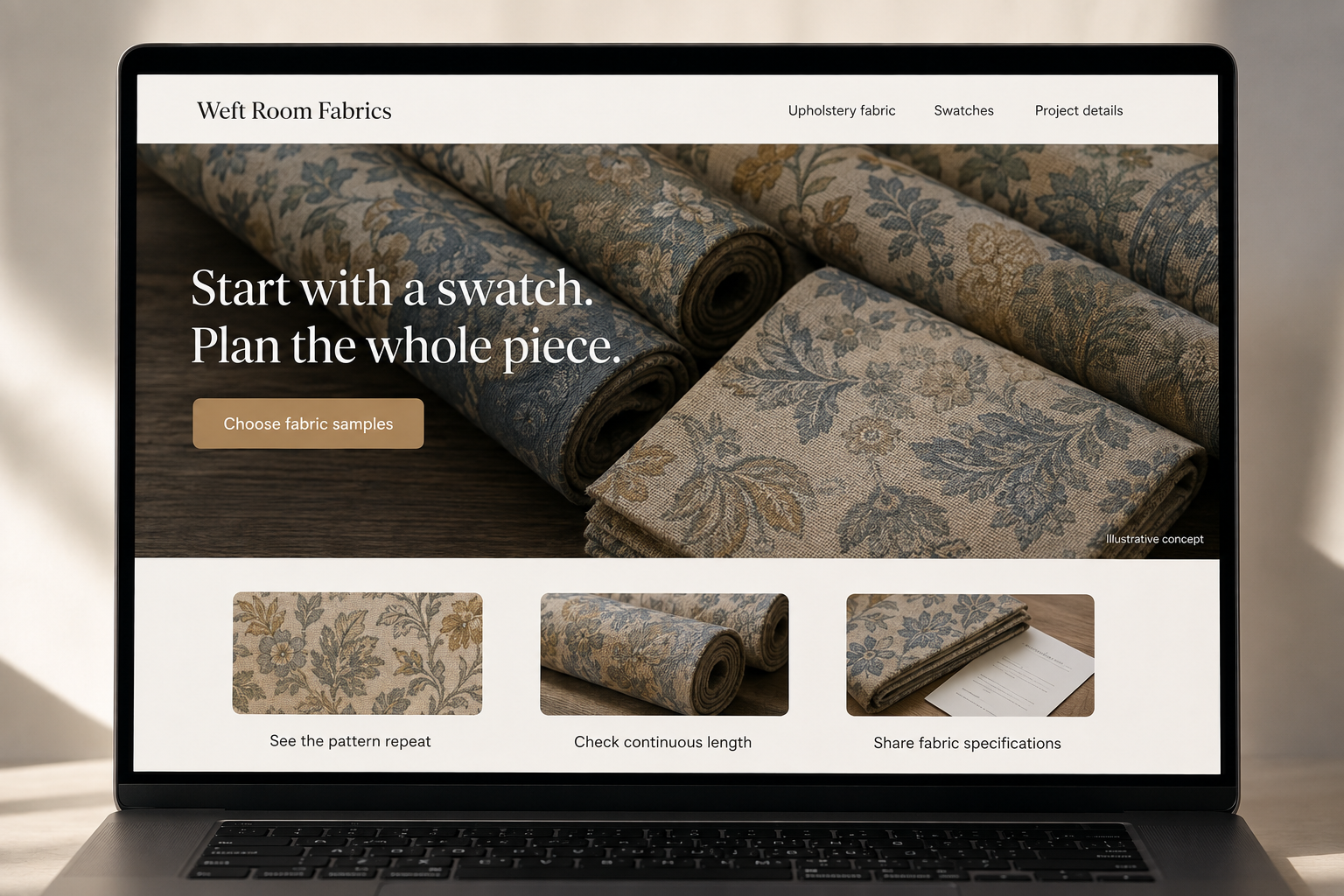
Explore this layout
Give the swatch its own simple journey
Offer a clearly labeled sample option linked to the exact fabric and colorway. Explain the sample size and whether it shows the full pattern repeat. Photograph the textile at a useful scale, with a ruler or identified furniture detail. If a swatch is too small to demonstrate a large motif, say so and provide a wider image. Keep the full-fabric listing easy to return to after the customer has received the sample.
Make length ordering understandable
Display the selling unit, order increment, usable width, and the way quantity becomes a cut length. Explain whether an order is supplied as one continuous piece and when that needs confirmation. A price per yard or meter should not be confused with a sample price. Avoid estimating a customer’s required quantity from a furniture label alone. Provide the specifications an upholsterer needs and let project-specific calculations be reviewed using the actual furniture dimensions.
Surface repeat and available stock
List the horizontal and vertical pattern repeat where applicable, along with directionality and the supplier’s material information. If batch or dye-lot differences matter to the available stock, show how the business handles that information. Explain what happens when the requested length exceeds a continuous piece on hand. A low-stock notice is only useful when it tells the buyer whether the available quantity can meet the project, not merely that other people might purchase it.
Write project pages that support consultation
An example chair or bench project can show the fabric before cutting and on the finished piece, with the relevant repeat and orientation explained. Identify the demonstration clearly and avoid implying a universal yardage requirement. Link to samples and a specification sheet that a buyer can share with their upholsterer. Track swatch-to-fabric orders and inquiries about continuous lengths. Those measures show whether the site is helping customers move from inspiration to a well-defined material order.
Before you launch
- Separate sample and full-length prices visibly.
- Show usable width and both pattern repeats.
- Explain continuous-cut availability.
- Keep colorway identity consistent on swatch reorders.
Should a fabric shop calculate yardage from “one armchair”?
That description leaves too many details unknown, including dimensions, pattern matching, and construction. A rough example can illustrate the planning process if it is labeled clearly, but the order should be based on the actual project. Provide usable width and repeat information so the customer or upholsterer can calculate with the right inputs.