
Explore this layout
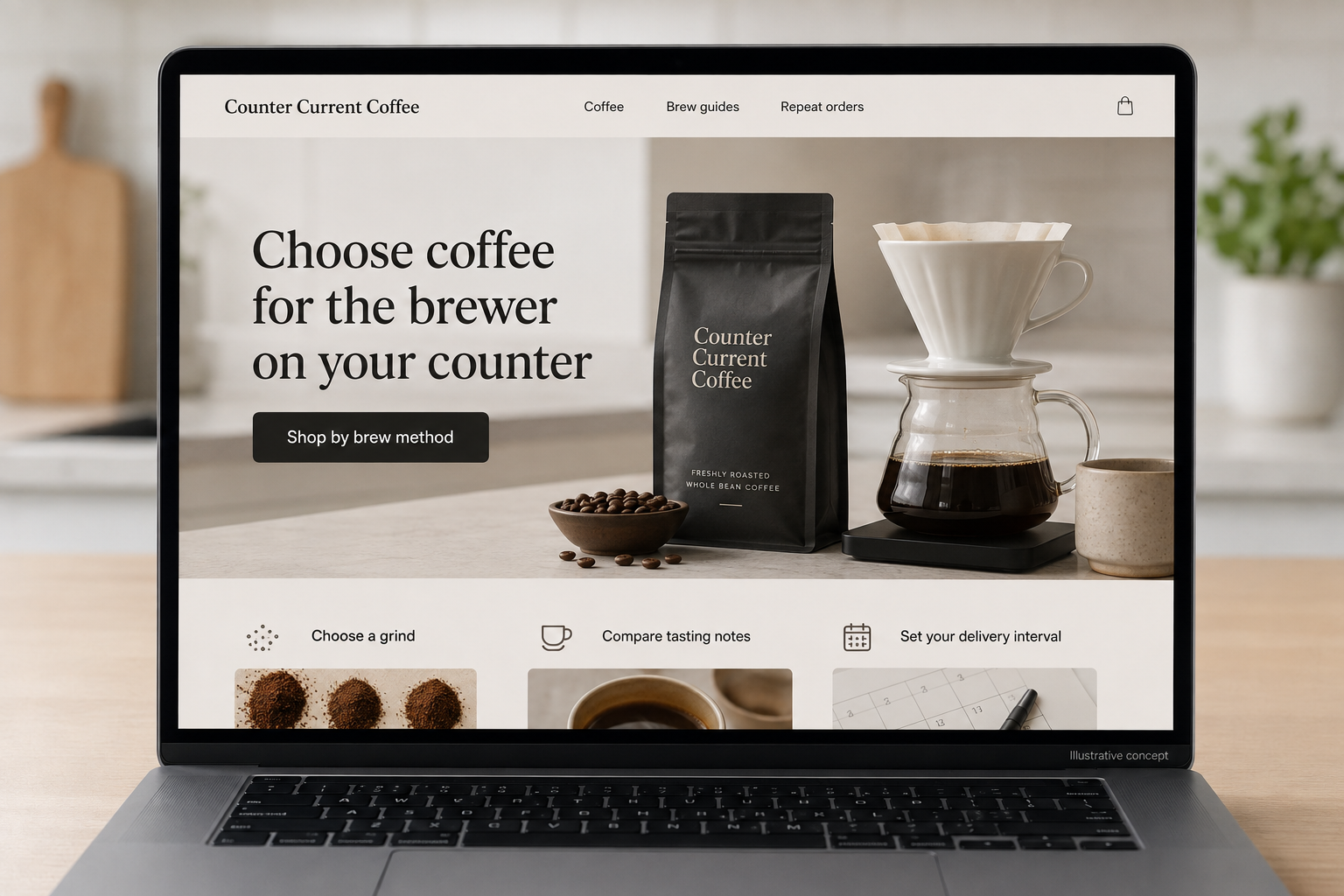
Choose coffee for the brewer on your counter
Compare tasting notes, select your format, and set a pace that suits your cupboard.
The main action is “Shop by brew method”. Supporting sections cover Choose a grind, Compare tasting notes, Set your delivery interval.
A coffee buyer may know the brewer on their counter more confidently than the flavor vocabulary on a bag. A hypothetical Washington roaster should use that familiar starting point. The store can connect brewing preferences to a clear product shortlist, then explain bag size, whole-bean or grind choices, and the timing of a repeat order without turning a simple purchase into a commitment.
Begin with the brewer the customer uses
Offer paths for the brewing methods the roaster’s products and guidance support, with a short explanation of each suggested coffee. Keep whole-bean and available grind options clearly labeled. If a grind choice depends on equipment, ask the useful question rather than presenting several unexplained numbers. Show the roaster’s actual example recipe when one is available. The page should help the buyer make an initial selection while leaving room for personal taste and adjustment.
Make tasting notes a comparison tool
Describe the roaster’s own tasting impressions in plain language and explain that flavor notes are descriptions, not necessarily added ingredients. Keep actual ingredient information separate and accurate. A comparison can distinguish the products by the qualities the roaster has evaluated without promising that every drinker will perceive them identically. Include origin or processing details only when known and maintained. A short, specific note is more useful than an elaborate story unsupported by the product records.
Explain the bag’s timing and format
Show net weight, roast-date information or the roaster’s stated roasting process, and the available dispatch arrangement. Separate when the coffee is prepared from carrier transit. Make the selected grind visible in the basket and confirmation. If a mixed order contains products on different schedules, explain how the shipment will be handled. Customers comparing a one-time bag with a recurring order should see whether the actual product and fulfillment process change.
Let repeat buying remain adjustable
Present one-time purchase alongside any subscription, with interval, quantity, charge timing, and change controls visible before enrollment. A customer should be able to skip a delivery or choose another coffee using the process the business actually supports. Link brewing guides from order messages so buyers can find the relevant instructions later. Measure grind-related questions, subscription skips, and repeat purchases. These signals can reveal a confusing selector or an interval that needs a more flexible choice.
Before you launch
- Keep grind choice visible through checkout.
- Distinguish tasting notes from ingredients.
- Separate roasting or preparation from transit.
- Test subscription skip and quantity changes.
Should a roaster make subscriptions the default purchase?
A recurring option can suit regular buyers, but the commitment needs to be clear and intentional. Show one-time purchase alongside it and explain the interval, upcoming charges, and available changes. First-time customers may reasonably want to try a coffee before deciding how often they would like another bag.