Explore this layout
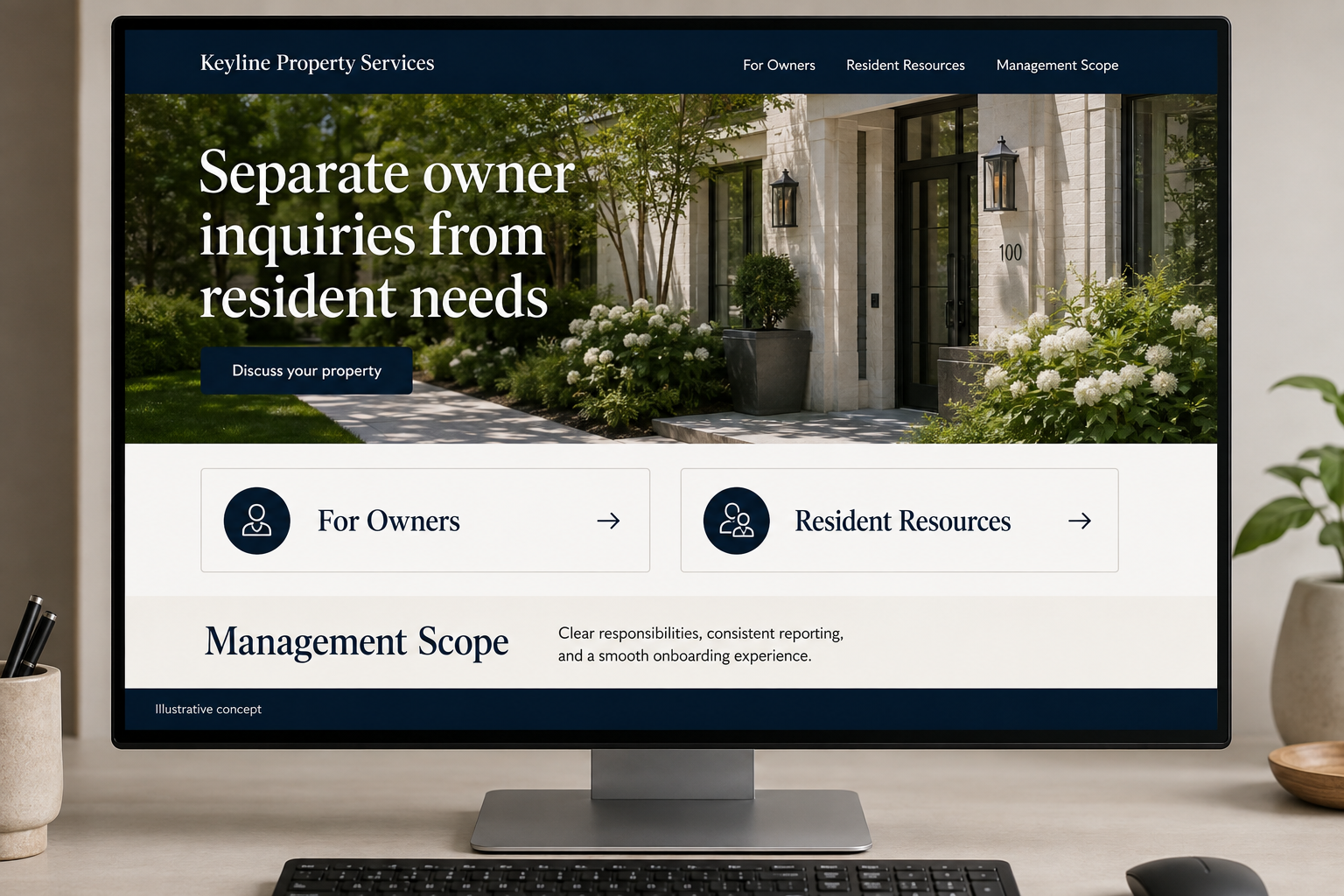
Separate owner inquiries from resident needs
Explore management scope, owner inquiry, and resident resources.
The main action is “Discuss your property”. Supporting sections cover Management scope, Owner inquiry, Resident resources.
A property management website serves people with very different needs. Owners may be comparing a long term service, while residents want a quick route to an existing task. Separate those journeys from the start. Then explain management responsibilities, reporting, and onboarding in enough detail that an owner can decide whether a discussion about their property makes sense.
Separate the owner journey from resident tasks
An owner comparing managers should not compete with a resident trying to report a problem. Give management inquiries, available properties, and resident resources distinct navigation labels. Explain the property types and area the company handles. Keep private account actions in the appropriate portal. The public site should make each route obvious, so a resident does not accidentally send a maintenance request through a sales form that is reviewed by a different team.
Describe management as a set of responsibilities
Explain the actual services offered, how owners receive information, and which tasks require separate agreement. A fictional sample report can show the format without exposing tenant or owner data. Avoid promises about occupancy or returns. Buyers need to understand communication, onboarding, and the division of responsibilities before discussing an individual property. Where fees are displayed, present their scope clearly and keep terms consistent with the current offer rather than using an unexplained percentage alone.
Ask owners about the property and the problem
A useful owner inquiry requests property type, number of units, location, current arrangement, and the reason for considering a change. Do not ask for tenant records or sensitive financial documents in the first form. Let owners describe their priorities, such as clearer reporting or coordination of maintenance. Explain the next discussion and how existing arrangements are reviewed. The website should begin a management conversation without pretending the fit is established from unit count alone.
Measure each audience’s success separately
Track qualified owner conversations independently from resident portal clicks and rental inquiries. High portal use may indicate useful navigation, but it does not measure acquisition. Repeated maintenance messages in the sales inbox signal a routing problem. Content about preparing for a management consultation can attract relevant owners when linked to the service scope and inquiry. Review public resources regularly so outdated instructions do not create extra work for residents or send important requests to an unused destination.
Before you launch
- Separate resident and owner routes
- Label fictional report data
- Explain management responsibilities
- Avoid tenant records in sales intake
Should resident maintenance requests use the owner inquiry form?
Give residents a distinct route that matches the company’s actual process. A sales form may be reviewed by the wrong team or on a different schedule. Clear navigation helps residents reach the right destination and keeps new owner inquiries focused on the management service rather than existing property tasks.