

Qualify jobs by scope and site conditions Explore earthwork scope, site access, and plan upload. The main action is “Send a site brief”. Supporting sections cover Earthwork scope, Site access, Plan upload.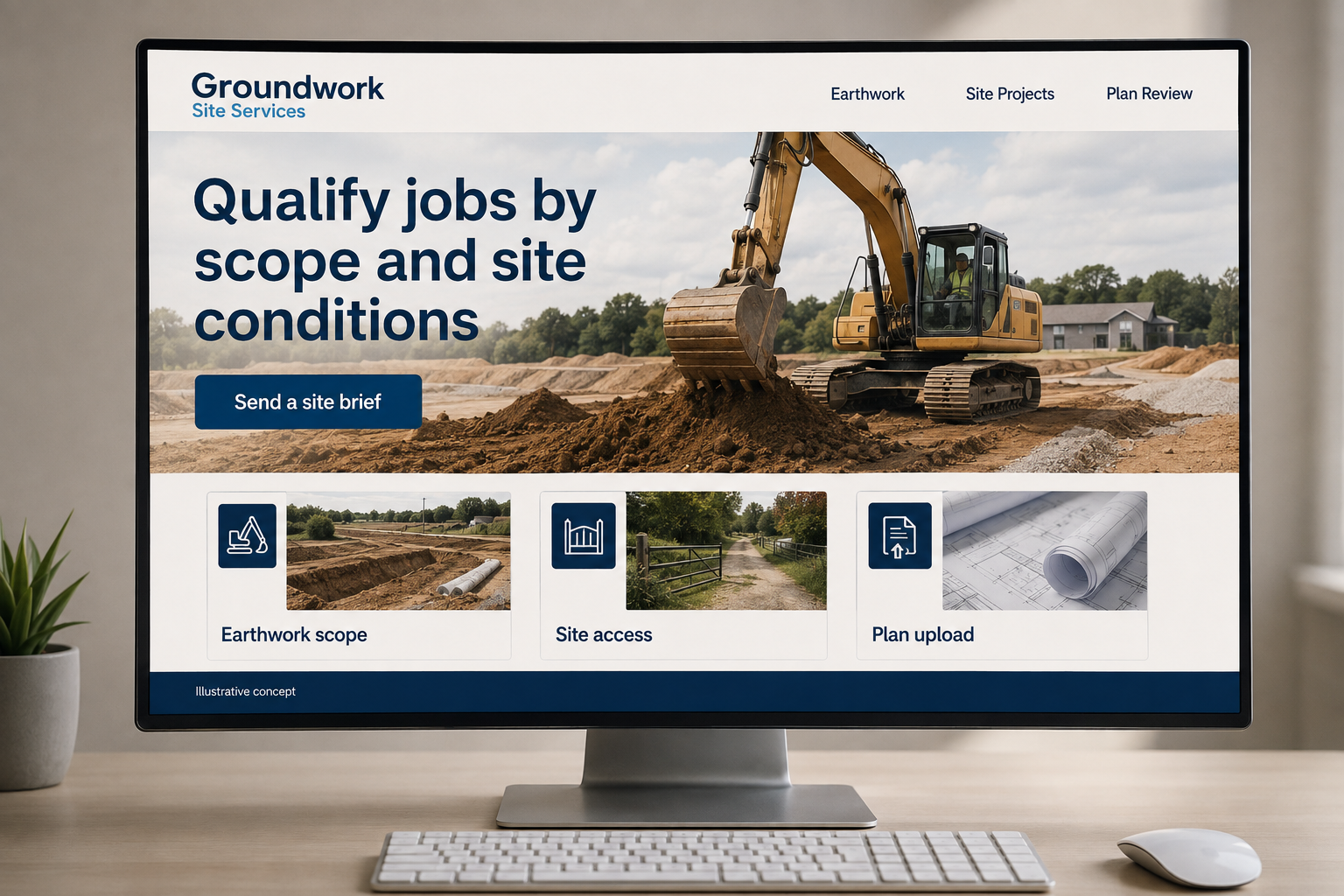
Explore this layout

Excavation buyers need to know whether a contractor fits the task, the site, and the project scale. Equipment photographs alone cannot answer that. Explain the work each service supports, show how access and plans enter the review, and give homeowners and commercial buyers a clear way to submit the information they already have.
Show what the earthwork supports
Excavation customers may be preparing a building site, planning drainage work, or arranging another defined task. Give offered services distinct descriptions and show the scale of work the company accepts. Project photos should explain the purpose and scope, not just display large machines. Visitors need to know whether the contractor fits their project and what information is required before a meaningful discussion of access, plans, and the work at the site can begin.
Make site constraints part of the story
Describe how the company reviews access, available space, existing features, and the relationship to other work. Avoid promising a fixed result from rough dimensions alone. If hauling or material supply is offered, explain whether it is part of the proposal or a separate service. A case study can show how a documented constraint shaped the agreed scope without becoming engineering guidance or suggesting that the same approach applies to another property with different conditions.
Build an inquiry that supports plan review
Ask for location, intended work, approximate project scale, and whether plans are available. Let customers attach documents through an optional secure upload. A homeowner should be able to describe the goal without selecting equipment. Commercial clients may need a direct route for bid packages. Explain the next review step and whether a site visit is required before pricing. Do not treat a requested start date as accepted before the scope and schedule are discussed.
Use accepted projects to sharpen the message
Track inquiries by service type and size, then compare them with projects the business can take on. Repeated requests for unsupported hauling or small jobs may indicate unclear scope. Useful content can explain how to assemble an initial site brief or prepare documents for a quote. Link it to the relevant service. A website earns better inquiries by describing real capabilities and a workable intake process, rather than by repeating broad claims about moving any amount of earth.
Before you launch
- Describe accepted project scale
- Offer optional plan uploads
- Clarify hauling scope
- Ask about site access
Should customers select a machine in the quote form?
Ask them to describe the intended work and site instead. Equipment selection belongs in the contractor’s review of the actual job. A customer can provide location, approximate scale, plans, and access observations without being expected to choose machinery or settle the technical approach before a conversation takes place.