

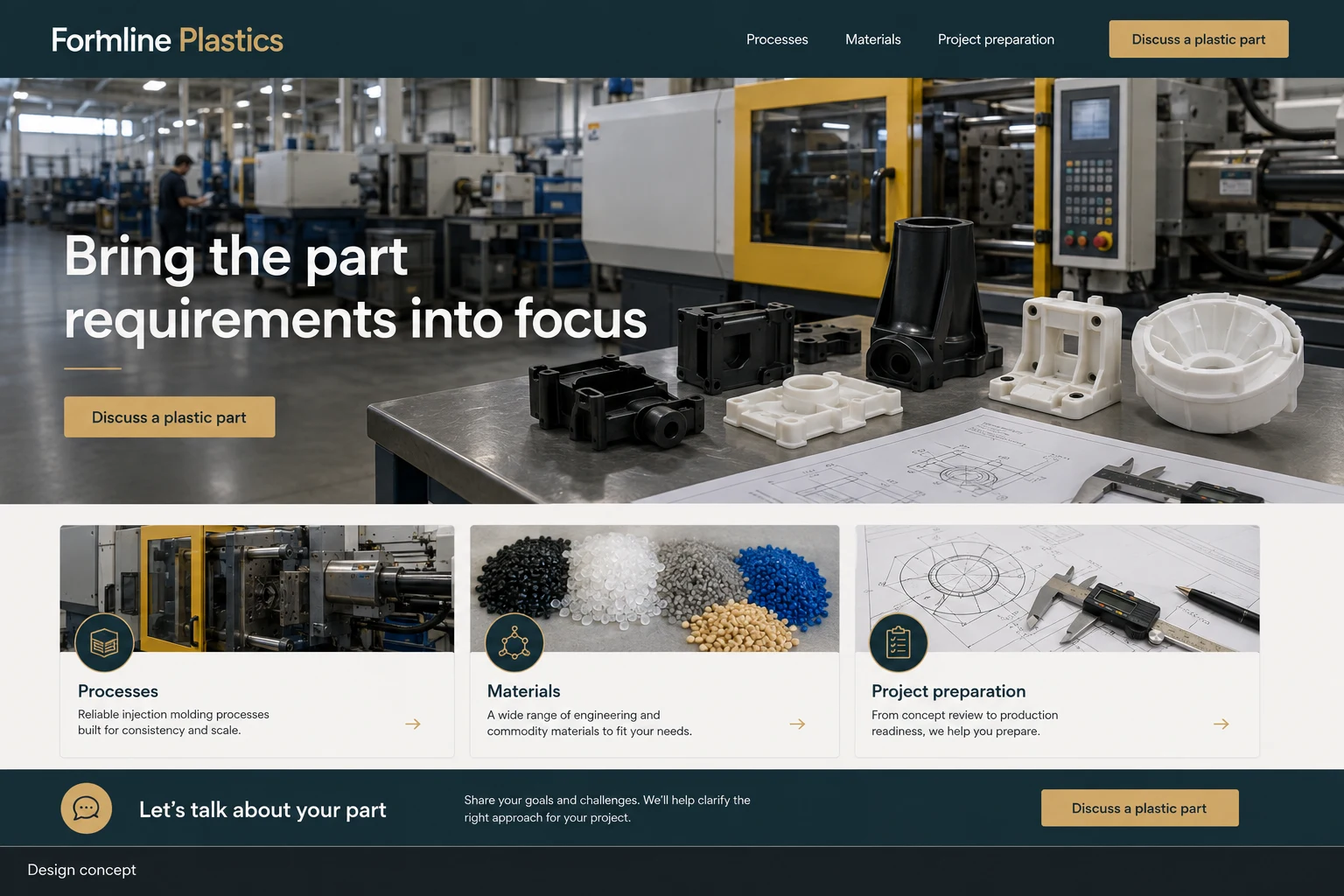
Differentiate molding, machining, extrusion and other processes the manufacturer actually offers. Product-development visitors need material capabilities and practical volume ranges, not a vague factory overview.
Plan the customer’s next step
A product engineer may arrive with a small prototype and uncertain production volumes. The sample should help compare the processes actually offered, rather than assume injection molding is always the answer. Explain how material, geometry and quantity affect a manufacturing review. Tooling and samples deserve separate steps, with inspection requirements tied to the agreed specification. The first inquiry establishes the intended use; drawings and confidential production details move later through a protected channel after scope and confidentiality are settled.
Help engineers identify the right production process
Describe tooling, samples and inspection steps clearly. Certifications and tolerances should be tied to the relevant process and documented specification rather than generalized across every product.
Prepare the plastics manufacturing inquiry
The first inquiry can collect intended use, quantity and project stage. Proprietary drawings and material requirements should follow through a secure review after confidentiality and scope are agreed.
Before this website launches
- Compare offered processes without treating one method as universally suitable.
- Identify supported materials and practical quantity ranges accurately.
- Show tooling and sample approval as separate production stages.
- Check tolerance claims refer to an agreed documented specification.
- Provide secure handling for proprietary drawings after the initial review.
Keep the information useful after launch
Review process descriptions, materials and quantity ranges with manufacturing staff. Test a prototype inquiry and a repeat-production brief using fictional specifications. Check that tooling and sample approval are visible before a final production commitment. Ask reviewers which project details are commonly missing and improve the appropriate service page. Keep certificates and tolerance statements accurately scoped when processes change. Track suitable manufacturing discussions without publishing proprietary geometry, customer designs or commercial production schedules in case studies and analytics.
Discuss your plastics manufacturing website.
Bring your service information, audience needs and preferred project budget to the first conversation. Design and development are quoted separately from managed hosting.