

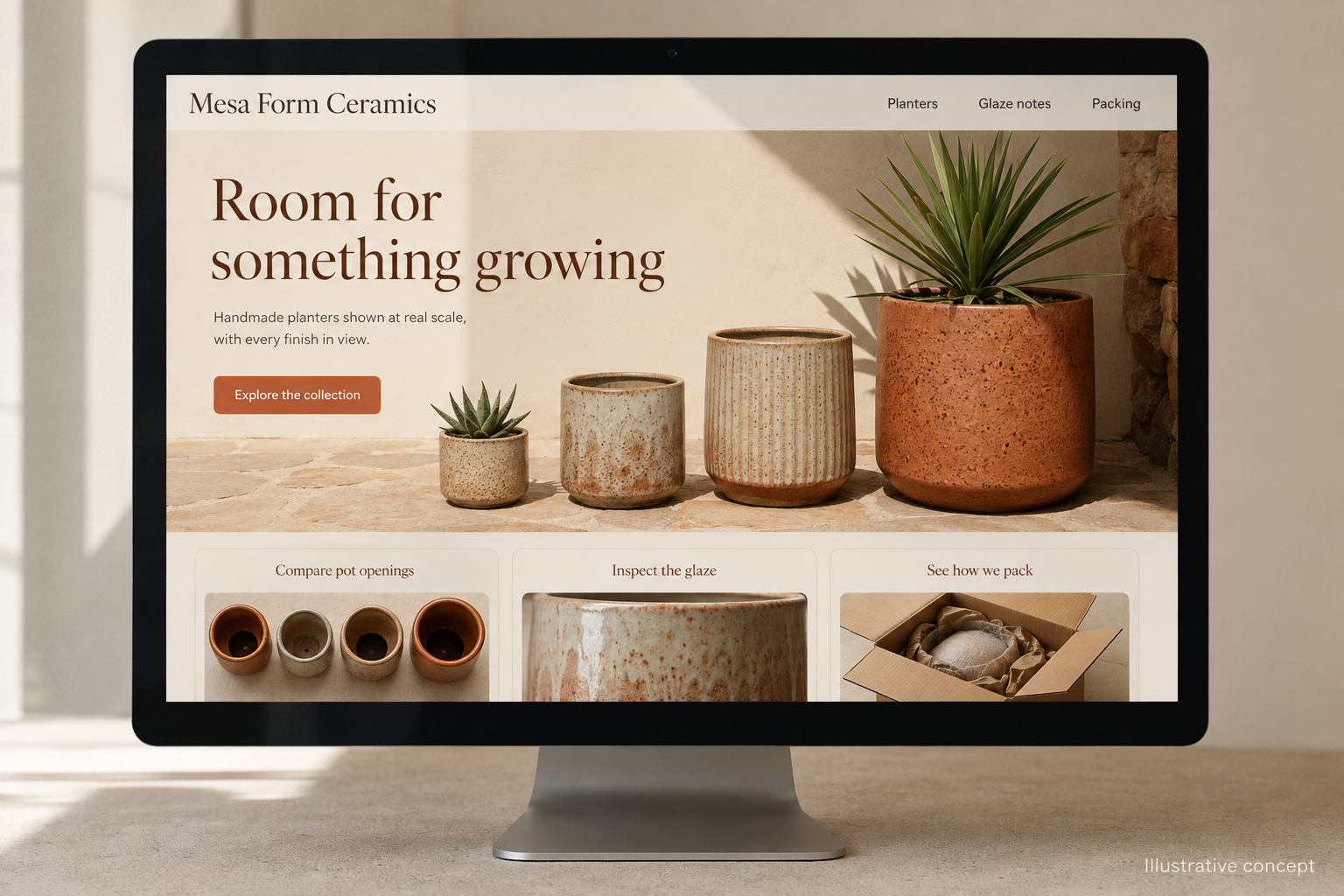
Explore this layout
Room for something growing
Handmade planters shown at real scale, with every finish in view.
The main action is “Explore the collection”. Supporting sections cover Compare pot openings, Inspect the glaze, See how we pack.

Handmade planters are difficult to judge from a single beautiful photograph. A hypothetical Arizona ceramics studio can make online shopping more comfortable by showing the object’s size, surface, and practical details. The desert setting may inform the colors of the design, while the product page does the more important work of explaining what the customer will actually receive.
Show dimensions as an everyday comparison
Photograph each planter next to a familiar object and, where useful, beside a nursery pot of a stated size. List internal opening, overall height, base width, and weight separately. Explain whether a drainage hole and saucer are included. A buyer trying to fit an existing plant should not have to infer the usable opening from an exterior measurement. Let the size comparison remain easy to inspect on a phone.
Make variation visible before purchase
For one-of-a-kind pieces, photograph the actual item being sold and give it a distinct inventory record. For a repeated form, show the realistic range of glaze variation rather than a single unusually polished sample. Describe the surface in concrete terms: matte, glossy, lightly textured, or visibly speckled. Avoid treating every mark as a defect or every variation as identical. The customer needs enough information to choose a piece they will enjoy.
Explain the journey of a fragile parcel
A short packing section can show the protective materials and explain how multiple pots may be packed. Present shipping costs before the final payment screen whenever the destination information is available. State how a customer should report an item that arrives damaged, including which photographs help the studio understand the problem. If shipping methods or dispatch days change seasonally, keep those details in an editable notice rather than inside a permanent artwork description.
Give collection releases a durable home
A collection page can explain the forms, glaze tests, and intended pairings behind a release, with links to pieces still available. Keep sold work visible as an archive only when it is clearly labeled and useful for understanding the studio. Offer an optional notification for the next collection rather than implying that a sold object can be ordered. Measure interest in particular forms and sizes to guide future product photography and production planning.
Before you launch
- Show the internal opening as well as width.
- Identify whether a saucer is included.
- Use actual-item images for unique pieces.
- Test damage-report instructions from an order email.
Is a lifestyle photograph enough for a handmade planter?
A lifestyle image helps someone imagine the piece in a room, but it does not establish fit or finish on its own. Pair it with measurements, a neutral close-up, and a scale reference. If the pictured plant is not included, make that clear next to the image or product description.