

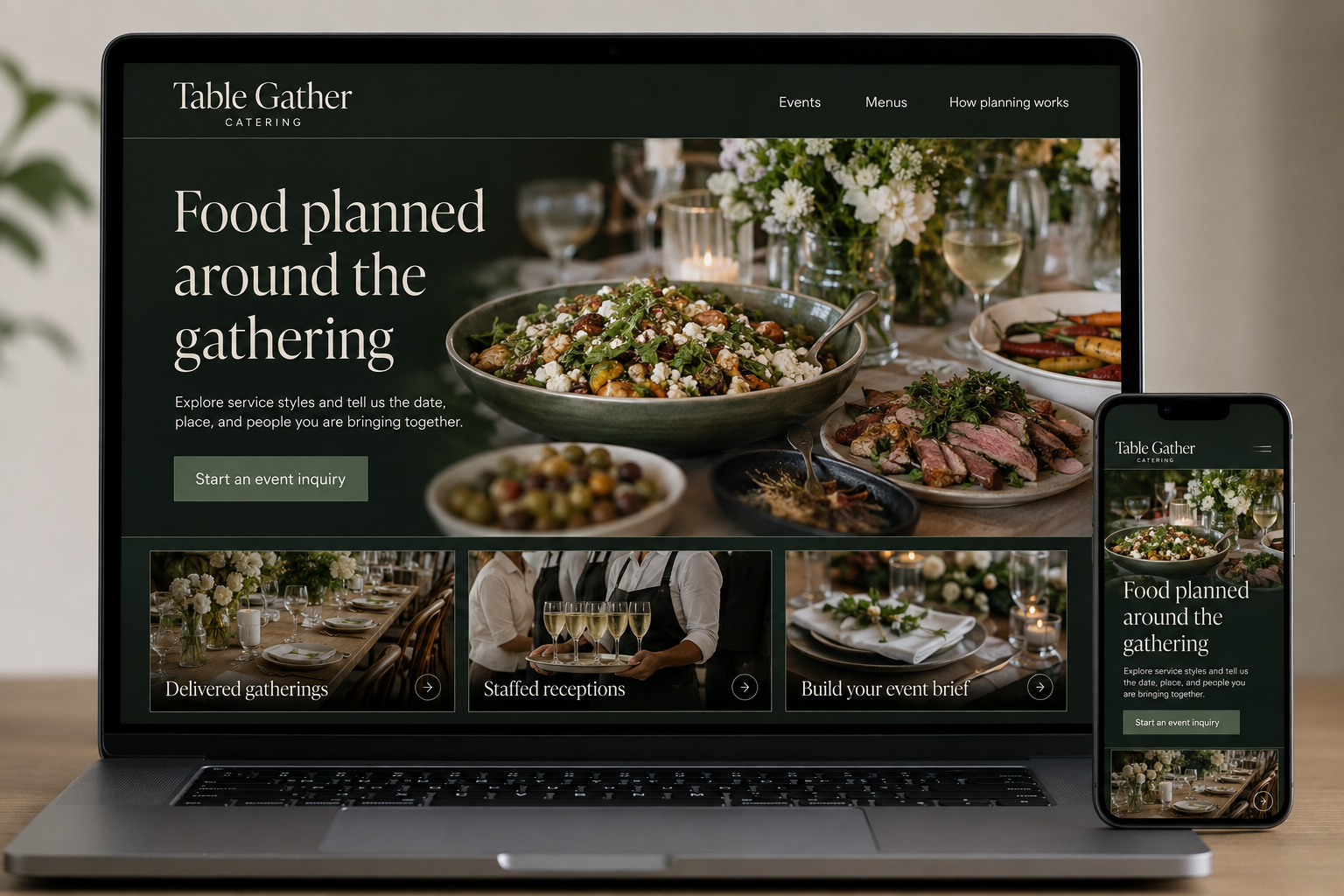
Explore this layout
Food planned around the gathering
Explore service styles and tell us the date, place, and people you are bringing together.
The main action is “Start an event inquiry”. Supporting sections cover Delivered gatherings, Staffed receptions, Build your event brief.

Someone arranging catering is often coordinating several moving parts at once. Guest numbers, venue facilities, timing, service style, and budget all affect the plan. The website should help that person understand what the caterer can provide and what information starts a useful conversation. Beautiful food photographs attract interest, but a clear inquiry process makes that interest possible to act on.
Organize around the event format
Show the kinds of events and service styles the business actually supports. A delivered lunch, staffed reception, and plated dinner involve different responsibilities. Explain those differences with sample formats, clearly identified as examples rather than fixed promises. Describe where setup, serving equipment, staff, and clearing are included or discussed separately. Buyers can then judge whether the caterer matches their event before spending time completing a long inquiry form.
Make menus informative without freezing the offer
Provide sample menus with enough detail to communicate the food and presentation, while explaining how seasonal availability or guest needs influence the final proposal. Identify whether prices are fixed, starting points, or quotation-based. Keep ingredient and dietary discussions accurate and direct individual requirements into the planning conversation. Avoid implying that a menu label alone resolves every guest's needs. The page should support a realistic discussion about options and preparation.
Ask for the details that change the plan
The inquiry form should capture event date, location, approximate guest count, service style, and an outline of the schedule. Ask whether venue facilities are known, but let customers say they are unsure. An optional budget range can help shape a response if its purpose is explained. Confirm that submitting the form requests a discussion rather than securing availability. Show what the team will review and how the next step usually works.
Use content to prepare better conversations
Create practical planning pages about choosing a service format or organizing the information a caterer needs from a venue. Link those pages to relevant offerings and the inquiry form. Measure suitable requests and the percentage that progress to a proposal, rather than celebrating every form submission equally. Review repeated follow-up questions. If venue location or guest count is routinely missing, improve the form and explanation instead of asking staff to repair every incomplete brief.
Before you launch
- Capture event date and location
- Distinguish delivery from staffed service
- Label sample menu pricing
- Explain inquiry versus confirmed availability
Should catering prices be published?
Publish useful pricing when the scope is defined, and explain the variables when it is not. A sample package can show what is included without pretending every venue and schedule costs the same. Customers benefit from enough context to decide whether a conversation is realistic.