

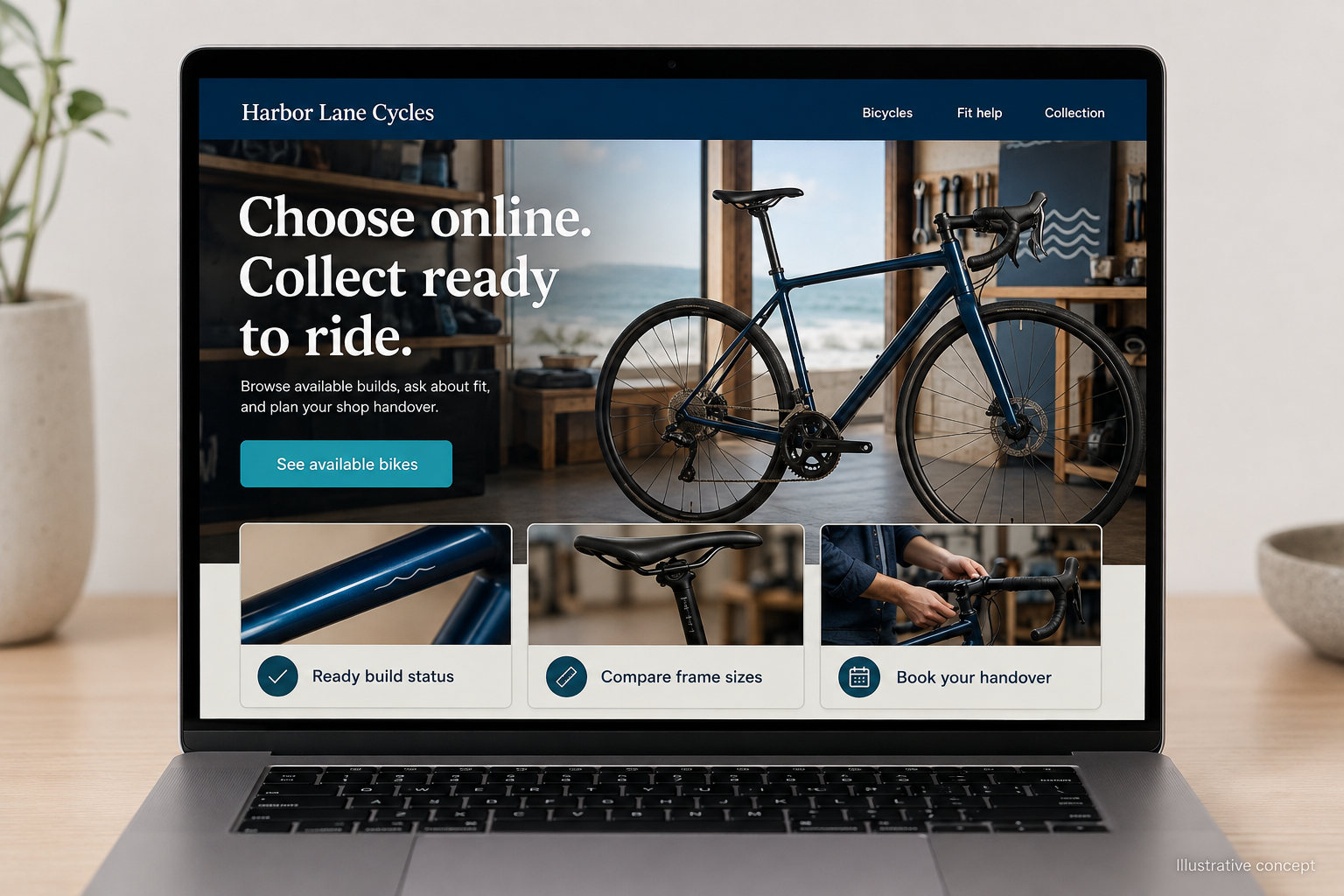
Explore this layout
Choose online. Collect ready to ride.
Browse available builds, ask about fit, and plan your shop handover.
The main action is “See available bikes”. Supporting sections cover Ready build status, Compare frame sizes, Book your handover.

Buying a bicycle online does not always mean having a box delivered. A hypothetical Delaware shop can use its website to sell bikes that customers collect after preparation. That approach needs a different storefront: one that explains fit, confirms what is actually available, and makes the handover feel like a defined part of the purchase rather than an afterthought.
Show the collection arrangement early
Put the real collection address and collection-only status beside the product price. Explain whether payment reserves a particular bicycle, how preparation is scheduled, and when the shop confirms that it is ready. A bike in supplier stock is not the same as a completed build on the floor. Use distinct availability labels so someone planning a journey does not mistake “available to order” for “ready to collect today.”
Help customers arrive with a sensible shortlist
A size chart should explain the manufacturer’s measurements and offer a route to ask about fit. Include stand-over or geometry information where it is supplied, with clear definitions. Avoid promising that height alone guarantees the right size. If the shop offers a fitting appointment, show how to arrange it and whether a purchase is required. Let customers save two or three bikes for discussion instead of forcing an immediate checkout decision.
Make the handover concrete
After preparation is confirmed, offer the appointment choices the shop can actually support. Explain what the customer should bring, whether accessories will be fitted in advance, and how transport home should be considered. Show collection details again in the confirmation message. If another person may collect an order, state the shop’s process without exposing unnecessary personal information. A single place to change the appointment prevents scattered email threads from becoming the booking system.
Use stock pages as useful destinations
Create focused collection pages for commuting, relaxed coastal rides, or compact storage, with selection criteria rather than unsupported claims about a universal best bike. Link to current sizes and realistic preparation information. Measure collection inquiries, appointment attendance, and abandoned reservations separately. If shoppers repeatedly ask whether a bike is assembled, the product card needs a better status label; that question should not depend on reaching a staff member.
Before you launch
- Distinguish supplier stock from completed builds.
- Show collection-only status beside every price.
- Explain the sizing chart’s limits.
- Repeat the collection address in confirmations.
Can a bike be marked in stock before assembly is finished?
Yes, if the page clearly separates stock availability from collection readiness. State that preparation is still required and give the process for receiving a ready-to-collect confirmation. Avoid a same-day implication unless the specific bicycle is prepared and the shop can support that collection window.