

Explore this layout
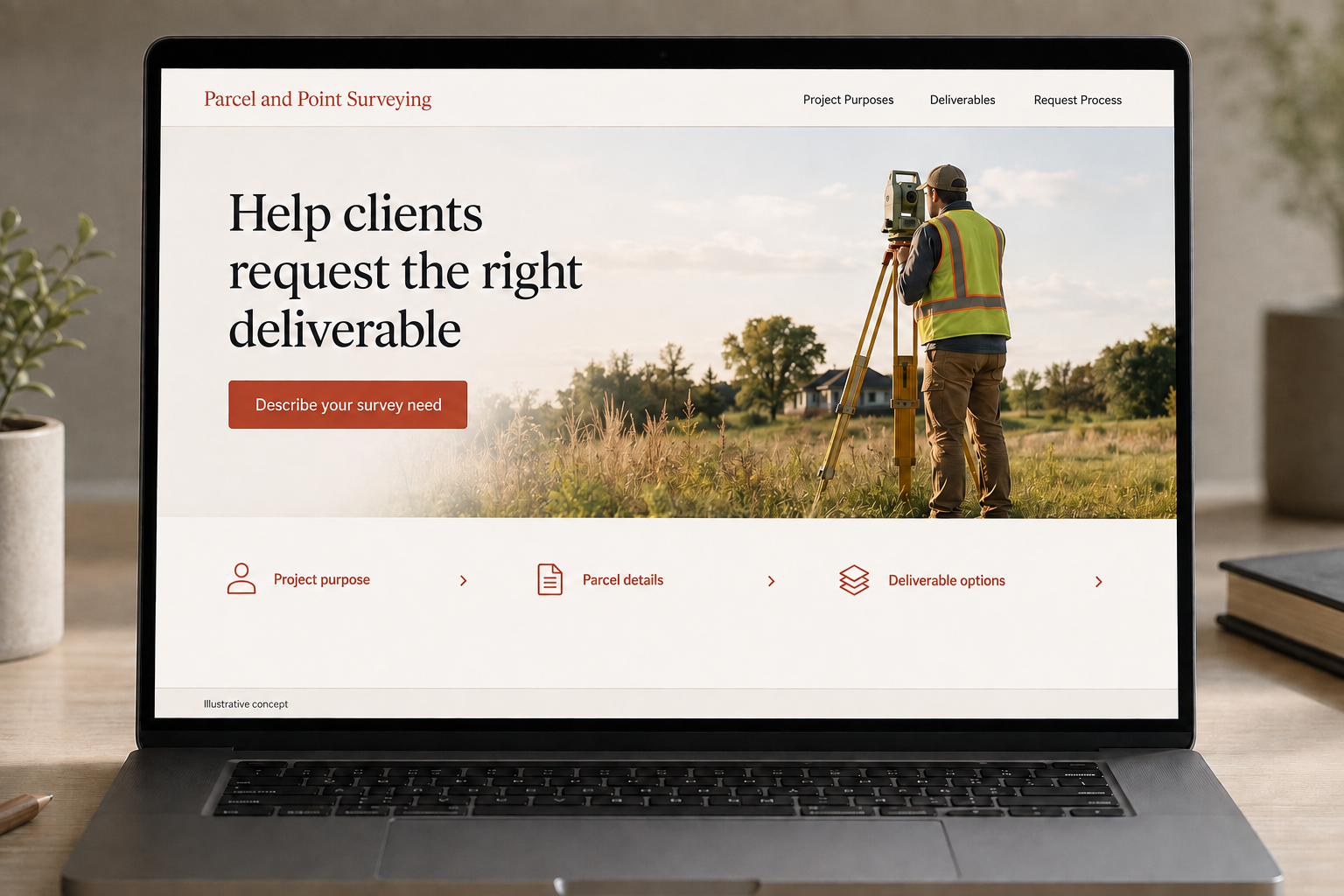
Help clients request the right deliverable
Explore project purpose, parcel details, and deliverable options.
The main action is “Describe your survey need”. Supporting sections cover Project purpose, Parcel details, Deliverable options.
A customer may know why they need a land survey without knowing what to call the deliverable. The website should make room for that. Start with project purpose, explain the firm’s actual services, and show how records and a scope discussion help the team determine the appropriate next step for the request.
Let the project purpose lead the inquiry
A landowner may know they need a survey without knowing the deliverable’s name. Offer routes by purpose, such as planning a project or gathering property information, tied to the services the firm actually provides. Explain that the team will confirm the appropriate scope. Avoid giving boundary or legal conclusions on the website. A readable overview should help someone start a conversation without requiring professional vocabulary before the firm can understand what they are trying to accomplish.
Explain deliverables with clear examples
Show fictional or properly cleared sample formats and explain who typically uses them. Keep sensitive property information out of public examples. Distinguish field work from the documents delivered and identify what the firm needs to define the assignment. Buyers comparing services need more than a list of instrument names. A plain account of the process helps them understand why a request for a price may first require records, project context, and a discussion of intended use.
Ask for records without demanding certainty
An inquiry can request location, parcel information if available, project purpose, and desired timing. Let the customer upload existing documents through a controlled route, but keep that optional at first contact. Include an unsure option for survey type. Explain who reviews the request and what follow up may be needed. The form should gather a useful brief while leaving the determination of scope and deliverables to the professionals discussing the actual project with the client.
Connect service pages to meaningful requests
Track inquiries by project purpose and compare them with accepted assignments. If many requests concern work the firm does not offer, clarify navigation and scope. Educational content can explain which existing records help a consultation or how a sample deliverable is organized, without giving property rights advice. Link it to the relevant inquiry. A useful website reduces the time spent translating a vague request and helps prospective clients understand the next step in commissioning the service.
Before you launch
- Include an unsure service choice
- Ask for project purpose
- Protect property details in examples
- Explain document review
Should the inquiry require a survey type?
Offer that field for informed buyers, but include an unsure option and ask what the work will support. Existing records can be useful without being mandatory at first contact. The firm can then discuss the intended deliverable instead of relying on a service name the customer may have guessed.