

Explore this layout
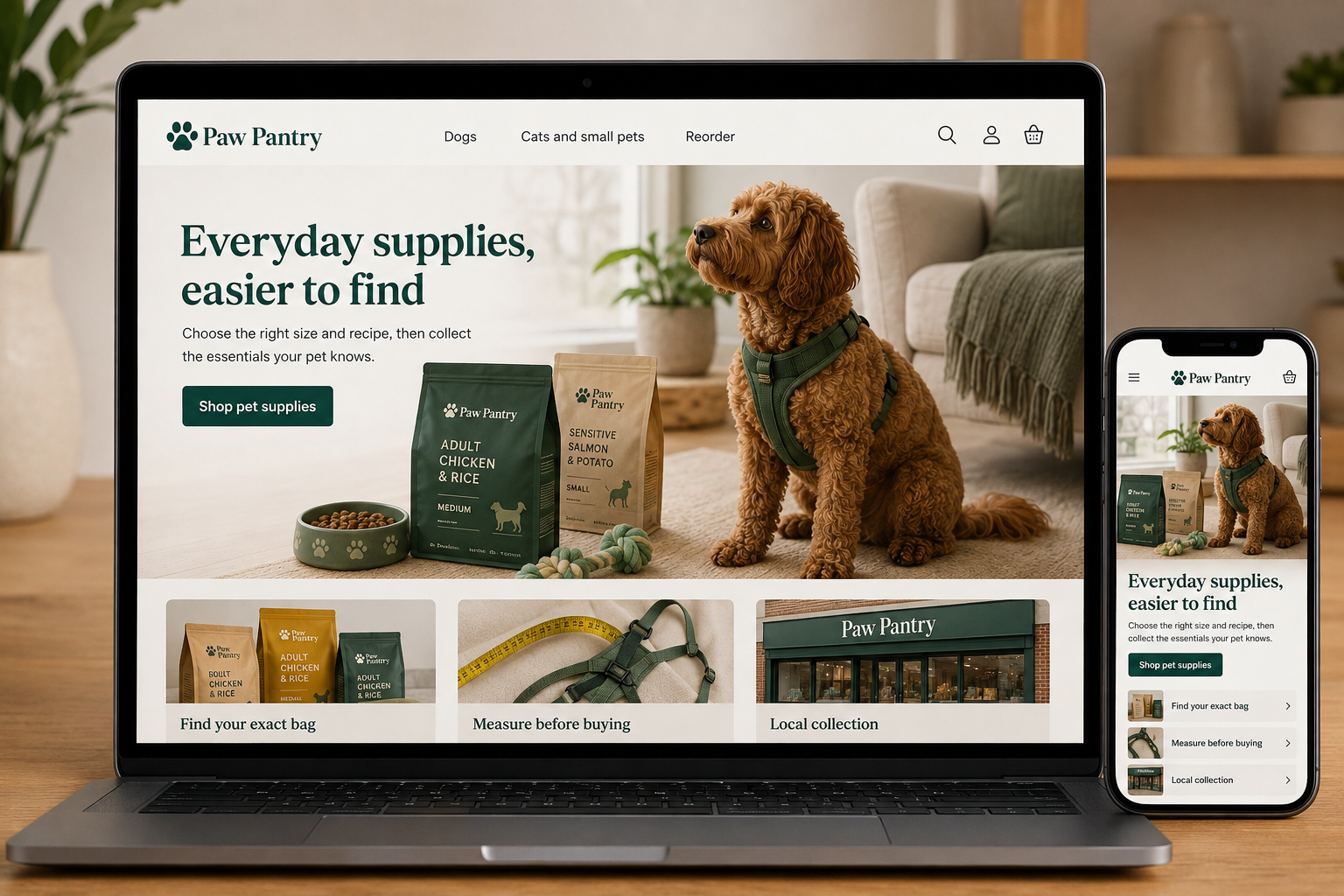
Everyday supplies, easier to find
Choose the right size and recipe, then collect the essentials your pet knows.
The main action is “Shop pet supplies”. Supporting sections cover Find your exact bag, Measure before buying, Local collection.
Pet owners often want the exact product they bought last time, not a new shopping adventure. Others need help navigating unfamiliar sizes, textures, or equipment. A pet supply website should make repeat purchases quick while giving careful browsers enough information to compare. Clear product identification matters especially when similar packaging covers several recipes, life stages, or package weights.
Build sensible species and product paths
Let visitors begin with the animal they are shopping for, then narrow by product type. Keep food, habitat equipment, toys, and everyday supplies distinct so filters remain meaningful. Copy ingredient lists and manufacturer descriptions accurately, and avoid turning merchandising labels into health advice. A shopper comparing litter trays needs dimensions and entry height; someone buying replacement filters needs compatibility. Each category deserves information suited to its actual buying decision.
Make the selected variant unmistakable
Show the chosen recipe, package size, color, or equipment model beside the price and add-to-cart control. Update the photograph when the variant changes if the packaging differs. Do not let a low starting price obscure the cost of the size displayed in the main image. Carry the exact variation into the basket, order confirmation, and reorder history. This reduces avoidable mistakes for customers who recognize a product mainly by its appearance.
Support the familiar weekly errand
Provide a straightforward reorder path and explain any recurring-order arrangement before customers join it. State how substitutions are handled and whether the customer must approve them. For collection, show when orders are prepared and how bulky items are handed over. Delivery information should distinguish local rounds from parcel shipping. These details help owners fit supplies into their routine rather than guessing whether an order will arrive before the current bag runs out.
Use local knowledge without overclaiming
Publish practical guides about measuring for a carrier, comparing storage containers, or choosing the correct replacement part. Keep medical and dietary questions directed to an appropriate professional rather than offering diagnoses through shop content. Measure repeat orders, collection completion, and product-related support requests. A decline in wrong-size returns can be as useful as extra traffic because it indicates that the site is helping shoppers make more accurate choices.
Before you launch
- Repeat exact variants in confirmations
- Show carrier interior dimensions
- Explain substitution approval
- Test reorder links for discontinued products
Should the store recommend food through a quiz?
A quiz can narrow products by factual preferences such as species, package size, or format. It should not imply a diagnosis or prescribe a diet. Keep manufacturer information available and provide a clear route for shoppers who need qualified advice about an animal's individual needs.