

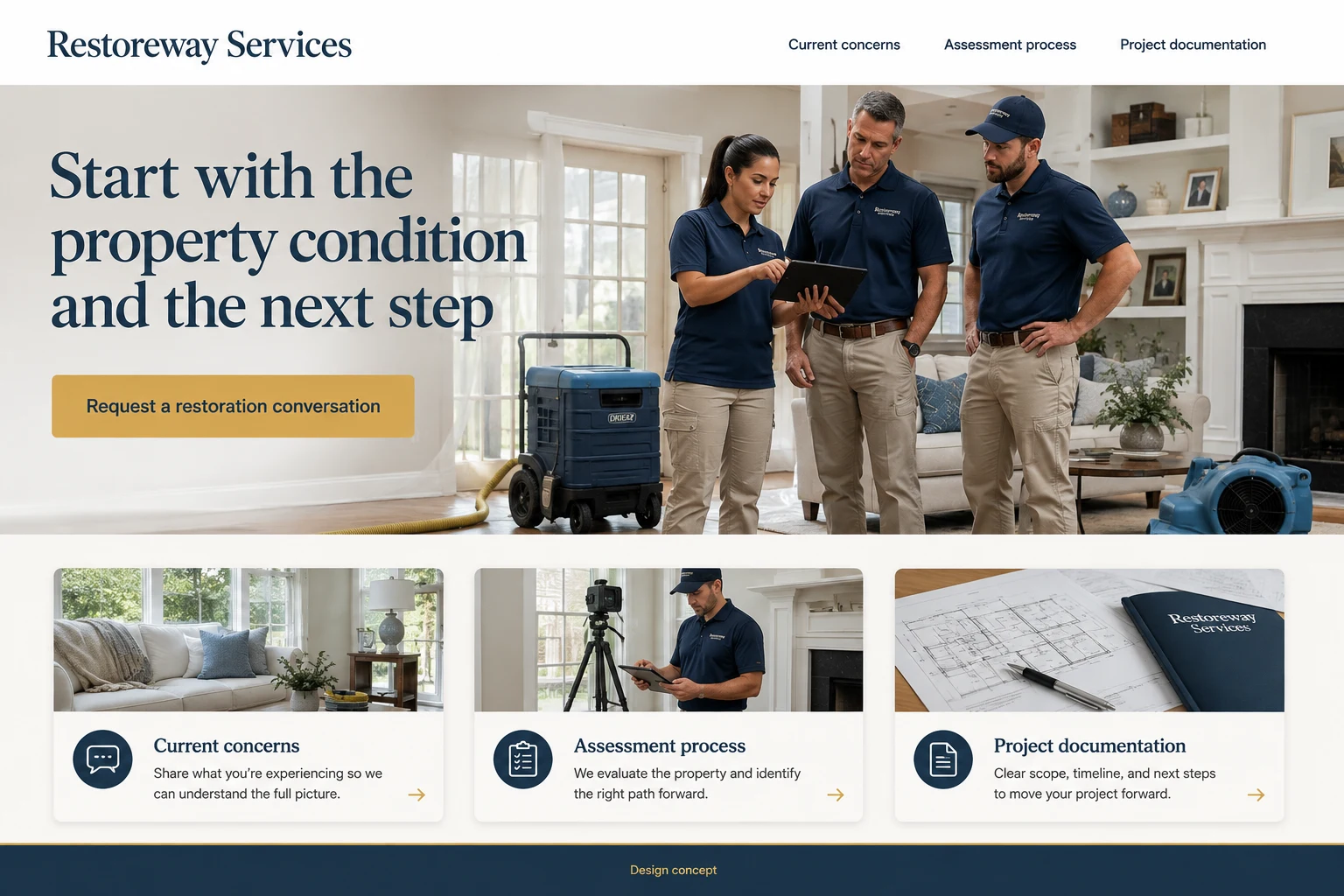
Describe fire, water and other restoration work as distinct service paths. State coverage and response arrangements without promising that every incident has the same immediate remedy.
Plan the customer’s next step
An owner returning to a damaged property may not know whether the immediate need is mitigation, assessment or reconstruction. The sample should explain that sequence and identify the team’s actual coverage. Show how inspection findings and documentation lead to a scope discussion, without turning an incident form into a guarantee of safety or insurance approval. A later rebuild may involve different contractors and timing. Keeping those responsibilities visible helps the visitor ask an informed question during an already difficult situation.
Separate urgent mitigation from the later rebuild
Explain assessment, drying or cleaning, documentation and reinstatement as separate stages. Insurance assistance should be described accurately rather than presented as guaranteed claim approval.
Prepare the restoration companies inquiry
An incident inquiry needs location and the nature of the damage. Keep sensitive insurance files in an agreed secure channel, and avoid giving reassurance that a damaged building is safe from a web message.
Before this website launches
- Distinguish urgent mitigation from later cleaning and reconstruction services.
- Show coverage and response arrangements without an unlimited availability promise.
- Explain assessment and estimate approval before substantial work is described.
- Keep insurance documents in an agreed protected transfer process.
- Avoid certifying building safety from photographs or a general form message.
Keep the information useful after launch
Keep service coverage and incident-review arrangements current with the restoration coordinator. Test different damage scenarios using fictional details and check that urgent enquiries reach an appropriate review step. Ask staff which expectations about assessment, insurance assistance or reconstruction cause confusion. Improve those explanations before adding more form questions. Review project photographs for permission and private property information. Evaluate suitable inspections and clear scope discussions, avoiding claims that an online acknowledgement establishes building safety or guarantees approval by an insurer.
Discuss your restoration companies website.
Bring your service information, audience needs and preferred project budget to the first conversation. Design and development are quoted separately from managed hosting.