

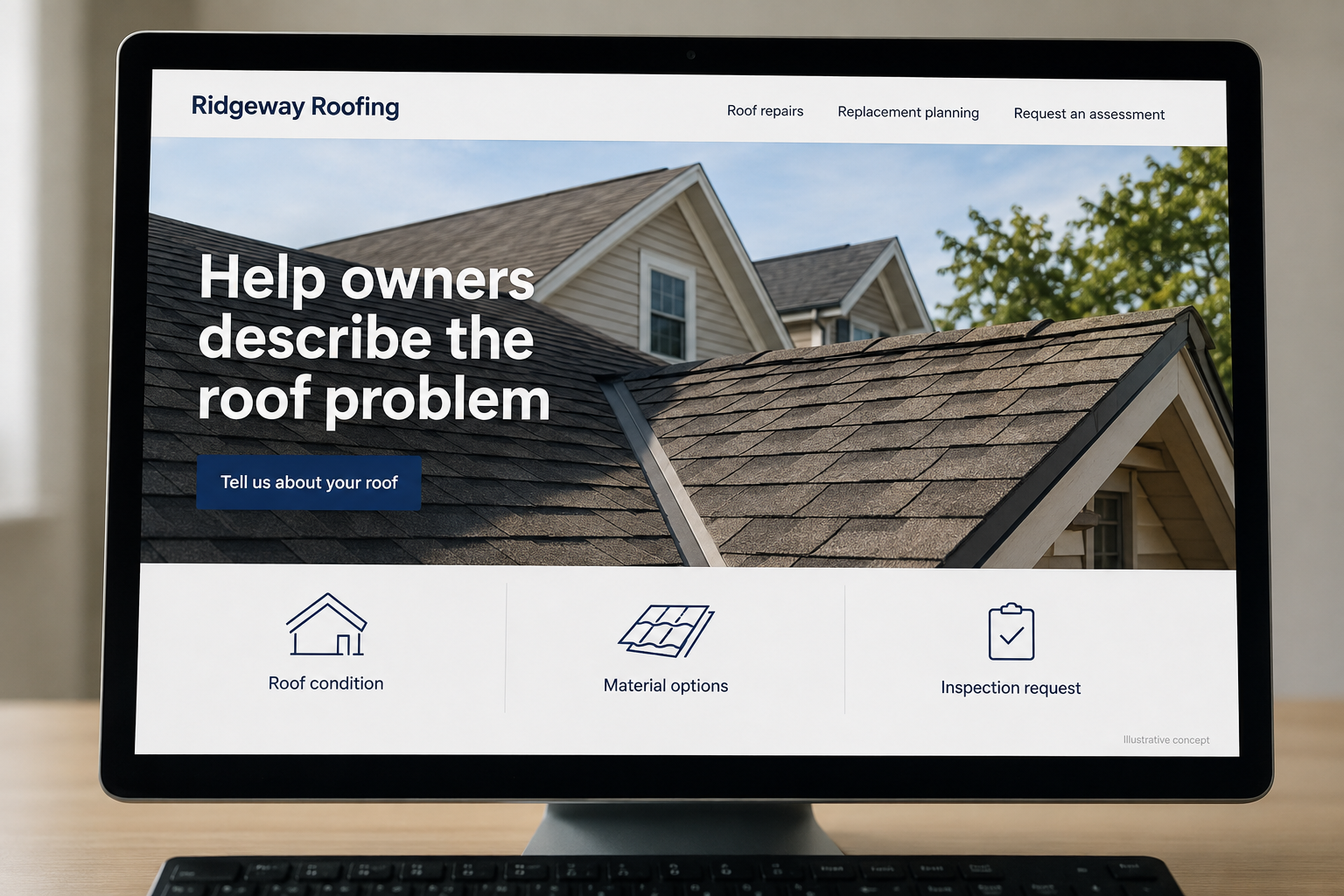
Explore this layout
Help owners describe the roof problem
Explore roof condition, material options, and inspection request.
The main action is “Tell us about your roof”. Supporting sections cover Roof condition, Material options, Inspection request.
A roof leak and a planned roof replacement arrive with very different levels of urgency. A roofing website needs to recognize both. Make it easy to report an active problem, while giving someone planning ahead a clear explanation of inspection, material choices, and the proposal process. The first screen should help the visitor choose the right conversation without making them diagnose the roof themselves.
Separate an active problem from a planned roof
A visitor seeing a leak needs a clear contact route, while someone comparing roof materials may want a slower explanation. Give each path a visible place near the top of the page. State actual service hours and coverage. Do not make the website diagnose damage from a few clicks. The immediate task is to help the customer describe the situation and understand how an inspection request is handled.
Make roof options understandable at ground level
Explain the materials the contractor actually installs, the types of buildings served, and which questions influence a recommendation. Use labeled photos that show roof shapes, details, and completed work from a safe viewpoint. Avoid treating every roof as a simple surface area calculation. A section on what an estimate includes can explain removal, preparation, installation scope, and cleanup without presenting a single price as suitable for every property.
Design the inquiry around useful observations
Ask for the property address, building type, a description of the concern, and a preferred contact method. Allow existing photos without encouraging anyone to climb onto a roof. If the customer is planning a replacement, offer a field for the current material and approximate age when known. The confirmation should explain the next contact step and distinguish an inspection request from an appointment that the business has actually accepted.
Let local evidence support the service pages
Real project summaries can explain a roof replacement or repair in terms customers recognize, with location details shared only as permitted. Connect those examples to the relevant service and coverage page. Track which requests become appropriate inspections and why others do not. If many people ask for a roofing service the company does not provide, make that boundary easier to find before they complete the form or call.
Before you launch
- Separate active-leak inquiries from planned replacement requests.
- Show which roof types your team actually works on.
- State how urgent requests are received and reviewed.
- Provide a photo option without asking anyone to climb onto a roof.
Should the website tell visitors whether they need repair or replacement?
It can explain the factors your team examines, but an online page should not pretend to inspect a particular roof. Offer an assessment route and let the visitor describe what they have noticed. Avoid forcing a replacement request when the owner does not yet know the condition or extent of the problem.