

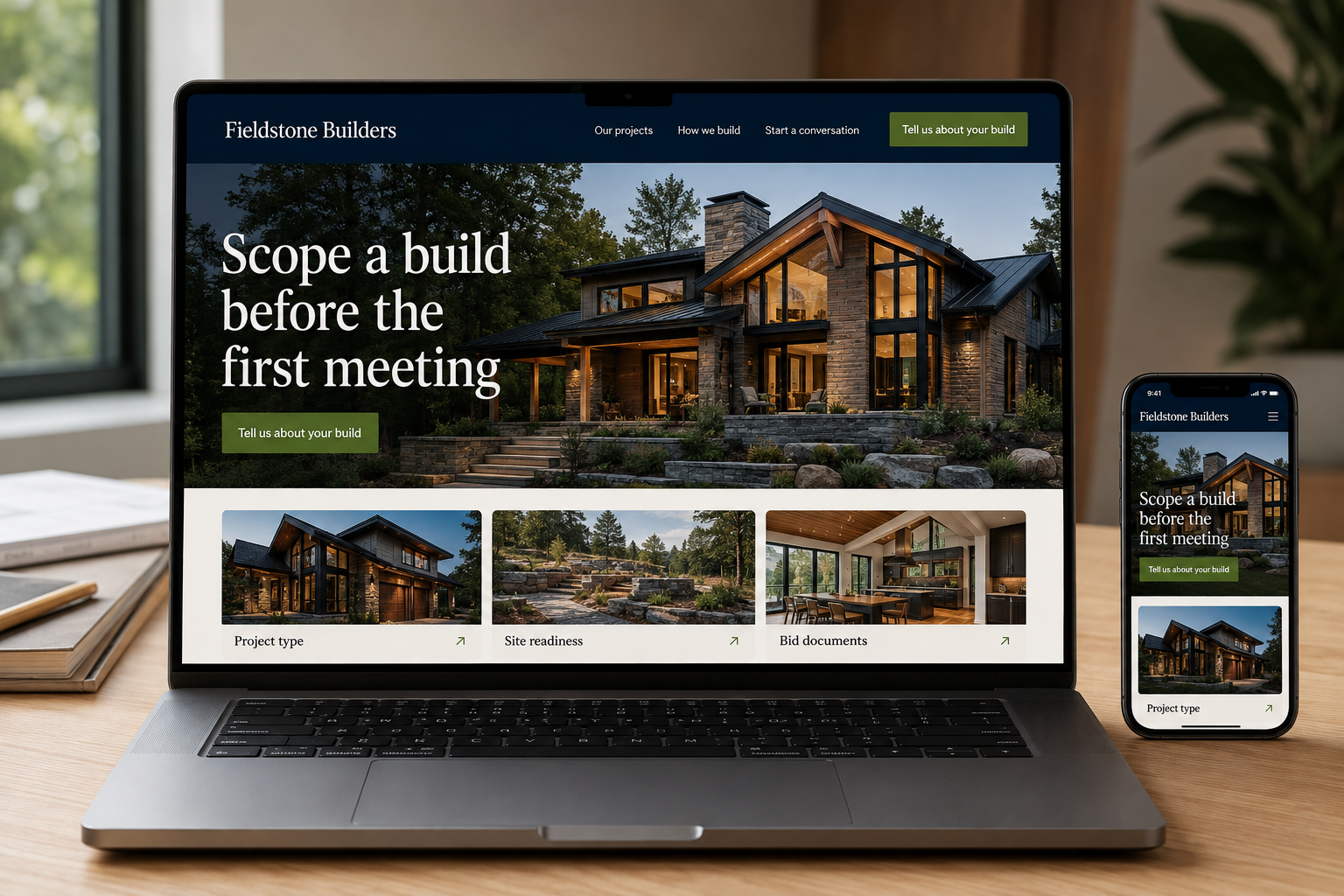
Explore this layout
Scope a build before the first meeting
Explore project type, site readiness, and bid documents.
The main action is “Tell us about your build”. Supporting sections cover Project type, Site readiness, Bid documents.
A prospective client looking at a construction website is usually trying to settle a practical question: can this team handle the building I have in mind? Photographs help, but they rarely answer it alone. A useful site explains the work you take on, shows how past projects were approached, and gives people a sensible way to discuss a job that may still be taking shape.
Show the kind of building work you take on
A homeowner planning an addition and a facilities manager seeking a commercial build need different evidence. Give each a clear route from the first screen. Describe the size and type of projects the company accepts, the area it serves, and how early it can join planning. A project gallery becomes useful when each project explains the original brief, the constraints, and the work actually delivered.
Explain what happens before a proposal
Many visitors do not have drawings or a settled budget yet. Outline the steps between an initial conversation and a priced scope: reviewing the site, understanding the intended use, discussing drawings, and identifying missing information. Say which documents help without making them a condition of contact. This gives an early stage owner a sensible starting point while helping a bid ready buyer send the right package.
Make project inquiries easier to review
Use a project form with separate fields for location, project type, expected timing, and planning stage. Allow a small document upload only if someone can review it securely. A budget range can be optional and explained as a way to discuss fit. Keep urgent questions out of a long form. On a phone, visitors should see the main contact action without navigating through a full portfolio.
Measure conversations that become viable projects
A construction website does not need to maximize every form submission. Track which service pages bring inquiries that match the work you want, which visitors request a consultation, and where people abandon the project form. Ask the team why leads were unsuitable. If most mismatches involve project size, revise that explanation near the gallery and contact action instead of simply buying more visits to the same page.
Before you launch
- Label project galleries with the actual scope delivered.
- Explain whether you welcome inquiries before drawings exist.
- Try the inquiry form with a commercial and a residential brief.
- Name the person or team who reviews new project requests.
Can a construction website help when most work comes through referrals?
Yes. A referred client often visits the website before calling. Give that person enough detail to confirm that the introduction makes sense: project types, relevant examples, service area, and your approach to early discussions. The site can prepare a better first conversation even when it did not create the original introduction.