

Find the bike for your everyday ride Compare practical options, ask about fit, or arrange a workshop visit. The main action is “Explore bicycles”. Supporting sections cover Commuting choices, Frame availability, Book an assessment.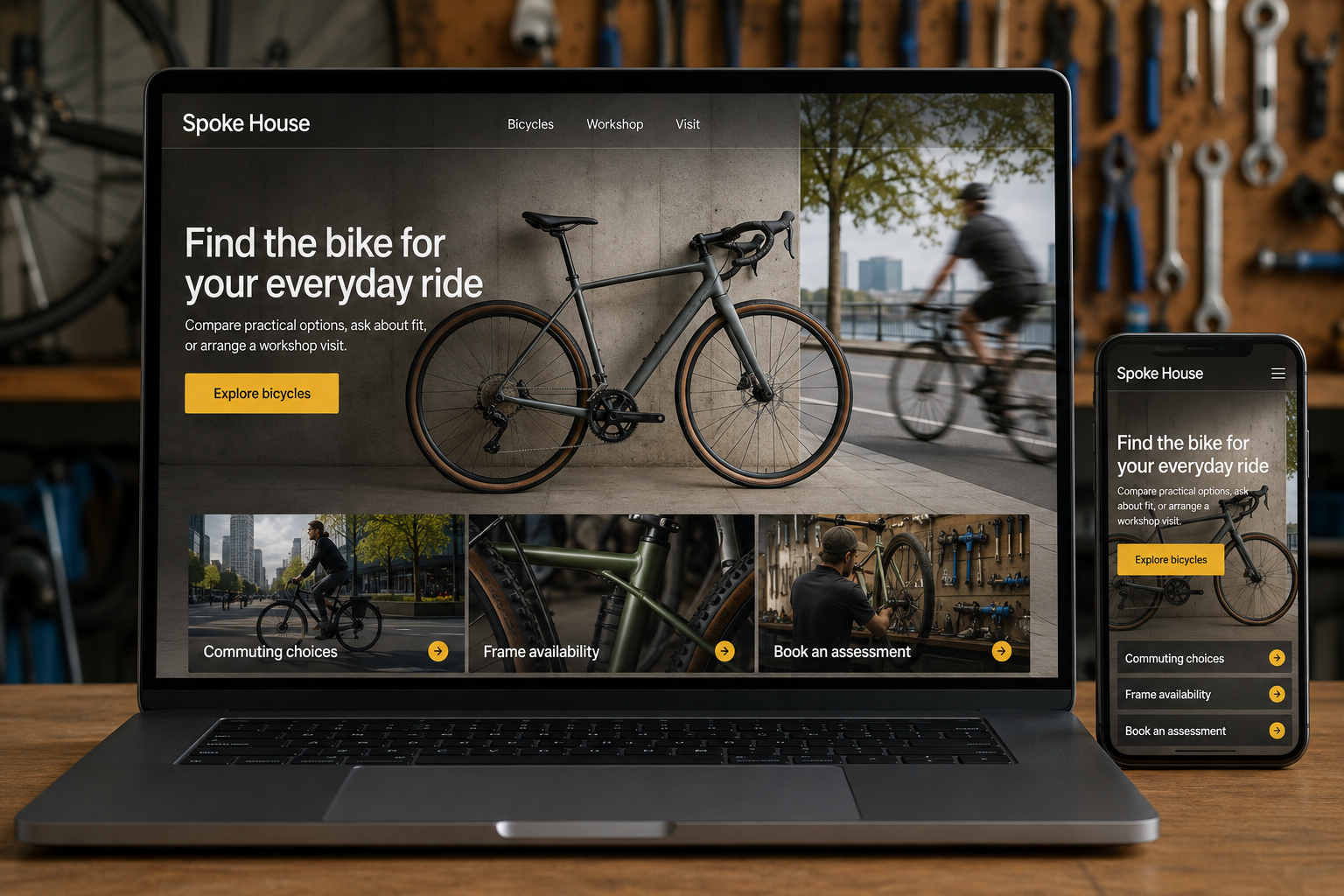
Explore this layout
Someone replacing a commuter bike has different questions from a parent buying a child's first bicycle or a rider booking a brake adjustment. A good shop website makes those paths obvious. It should help people arrive with the right expectations and useful questions, while leaving room for the fit checks and conversations that benefit from an in-person visit.
Start with the kind of riding
Lead product browsing with intended use, then offer filters that matter within that category. A commuting customer might compare mounting points, carrying options, and riding position; a trail rider may start elsewhere. Explain unfamiliar specifications in context rather than filling the page with acronyms. Include what comes with the bike and what remains optional. This makes comparison useful even for customers who have not yet learned the language of cycling.
Use sizing as a conversation starter
Show the manufacturer's sizing information and explain the shop's fitting or test-ride process. Avoid presenting a height chart as a guarantee of comfort. Let customers ask about a particular model and size directly from its page, carrying that information into the inquiry. Display availability by size so a large frame in stock does not suggest every version is ready. State how reservations or transfers work before encouraging a visit.
Separate repairs from retail checkout
The workshop route should ask what bicycle the customer has, what is happening, and whether they need a diagnosis or a listed service. Describe what a service includes and how additional work is agreed. If the first booking reserves an assessment rather than a completion time, say so plainly. Customers should understand whether they are choosing a drop-off window, waiting appointment, or collection slot before submitting the request.
Turn common questions into useful visits
Create guides around decisions staff explain repeatedly, such as carrying groceries or preparing a bicycle for storage. Link those pages to relevant products and workshop options without prescribing unnecessary purchases. Measure test-ride inquiries, suitable repair bookings, and product reservations separately. A rise in workshop calls may be welcome, but it tells you something different from an increase in bike sales. Review the pages against those distinct customer journeys.
Before you launch
- Display stock for each frame size
- Define what a workshop slot reserves
- Carry model details into inquiries
- List test-ride arrangements clearly
Should customers buy a bicycle online or reserve it?
That depends on how the shop handles sizing, assembly, and handover. Offer direct purchase where those details are clear. A reservation or consultation can suit buyers who need a fit discussion, provided the website explains any deposit and what happens after they submit it.