

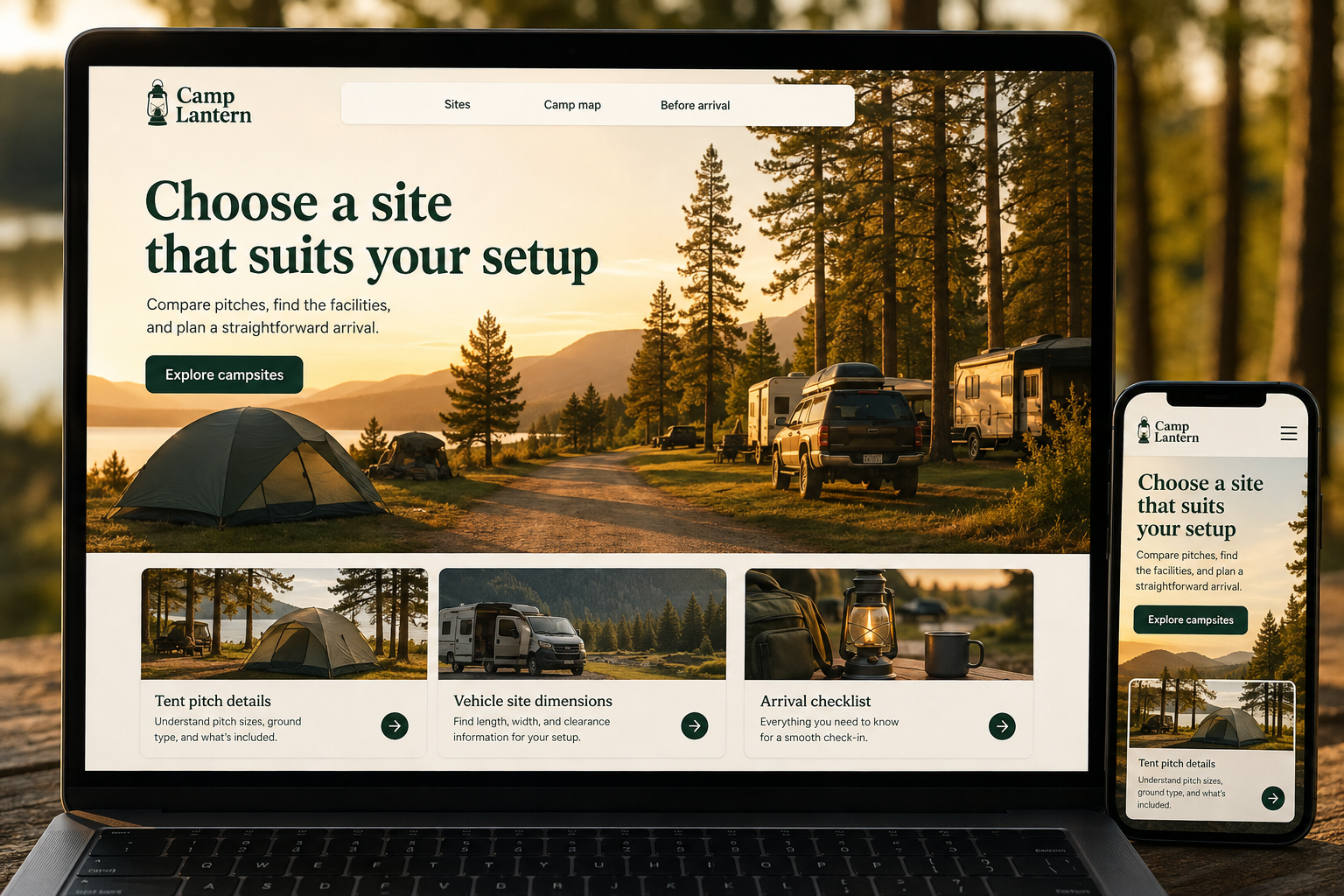
Explore this layout
Choose a site that suits your setup
Compare pitches, find the facilities, and plan a straightforward arrival.
The main action is “Explore campsites”. Supporting sections cover Tent pitch details, Vehicle site dimensions, Arrival checklist.

Booking a campsite involves more than choosing a pleasant photograph. Campers need to know whether their tent or vehicle fits, which facilities are nearby, and how arrival works. A campground website should help people choose an appropriate site before they commit to dates. Accurate maps and clearly defined site types can prevent a mismatch that no amount of scenic language will solve.
Show what each site type accommodates
Describe usable dimensions, surface, vehicle limits, and any provided hookups in consistent terms. Distinguish tent pitches, vehicle sites, cabins, and other accommodation rather than blending them into a single availability grid. If individual sites differ substantially, show those differences during selection. Label photographs of the actual site or representative type. Customers should not book a compact pitch while assuming the large riverside image on the homepage describes every available space.
Make the map support a real decision
Use a legible map with site identifiers, facilities, access routes, and relevant features the campground has verified. Provide a text alternative or accompanying descriptions so the information does not depend on interpreting color alone. Explain distances or terrain where useful without overstating ease of access. A map should help campers understand the layout and ask informed questions, not simply decorate the page with trees and icons that cannot be connected to a reservation.
Clarify arrival and occupancy arrangements
Show check-in windows, late-arrival procedures, maximum occupancy, and the campground's actual rules before booking. Explain what is included in the rate and what requires a separate selection. Ask for vehicle or equipment details when they affect site suitability. A booking confirmation should repeat the site type, dates, and important arrival information. If a request needs staff approval, say so clearly instead of displaying a success message that looks like a confirmed reservation.
Help guests prepare for this campground
Publish a practical packing and arrival guide based on the facilities the site actually provides. Separate general outdoor suggestions from site-specific information and avoid implying that a checklist covers every condition. Measure availability searches, suitable reservations, and questions about site fit. Review cancellations or changes caused by misunderstood dimensions and facilities. The most valuable improvement may be a better photograph of a pitch or a clearer explanation of the hookup arrangement.
Before you launch
- Publish usable site dimensions
- Match map numbers to bookings
- Collect equipment details when needed
- Explain late-arrival arrangements
Should campers choose an exact pitch online?
Offer exact-site selection when the booking system and campground operations can honor it. Otherwise, make clear that guests choose a site category and receive an allocation later. Explain how specific needs are reviewed so the map does not create an expectation of a particular pitch that has not been reserved.