

Small pieces, carefully considered Explore studio jewelry, understand the details, or begin a conversation about a custom piece. The main action is “Explore the collection”. Supporting sections cover Ready-to-wear pieces, Find your size, Start a custom brief.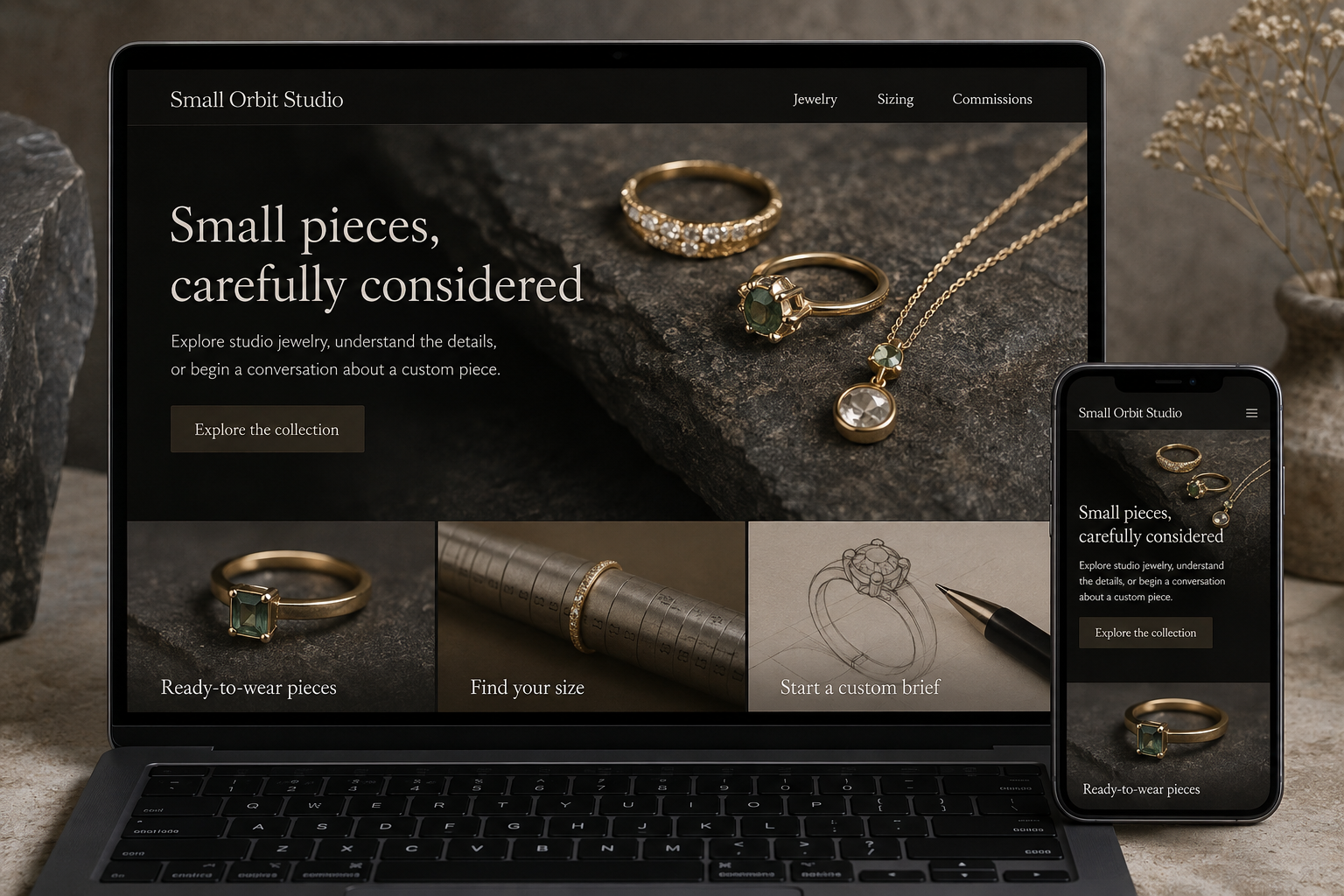
Explore this layout
Jewelry can be a personal purchase, a gift, or the beginning of a custom project. Those journeys need different information. A studio website should show the maker's visual language while making materials, scale, and ordering steps concrete. A close-up photograph may be beautiful, but it cannot tell a buyer how a pendant sits or whether a ring is available in their size.
Give the piece a physical presence
Show the jewelry on a person or beside a useful scale reference, alongside detailed photographs of closures and surfaces. State dimensions, materials, finish, and what the purchase includes. Describe handmade variation honestly where it applies. Keep care information specific to the actual materials rather than copying a universal paragraph across the catalog. The customer should understand the object they will receive, including any differences between a display sample and their finished order.
Make sizing and timing visible
Place size selection and the sizing method near the purchase action. Explain whether a piece is ready to dispatch, made to order, or produced in a limited batch. If resizing is available, describe the inquiry process and any relevant limits without suggesting every design can be adjusted. Gift buyers need a route for uncertain sizing, such as asking the studio a question before ordering. Clear timing also matters when a purchase marks a particular date.
Give commissions a separate conversation
A commission page should outline the kinds of projects the studio accepts and show concept development only where the examples are real and approved for publication. Ask about the intended piece, preferred materials, timeframe, and approximate budget. Explain what happens after the inquiry and when a quotation becomes possible. Do not make a sketch upload compulsory; some customers can describe the feeling they want more easily than a finished design.
Use editorial content to resolve hesitation
Answer practical questions about finishes, necklace lengths, or how to choose between available styles. Link those explanations to relevant pieces and invite an inquiry when the decision depends on personal preferences. Measure product questions, commission suitability, and completed purchases separately. If many visitors ask whether a photographed chain is included, fix the listing first. Useful content supports considered buying rather than adding elaborate language around a detail the page has failed to state.
Before you launch
- Show scale on each product
- Identify chain and packaging inclusions
- Separate ready-made and made-to-order timing
- Carry chosen size into checkout
Should custom jewelry have a buy-now price?
Only when the customization has a clearly defined scope and price. Open-ended commissions need an inquiry process because materials and design work can change the proposal. Explain the steps and any consultation charge so customers know what they are agreeing to before the project develops.