

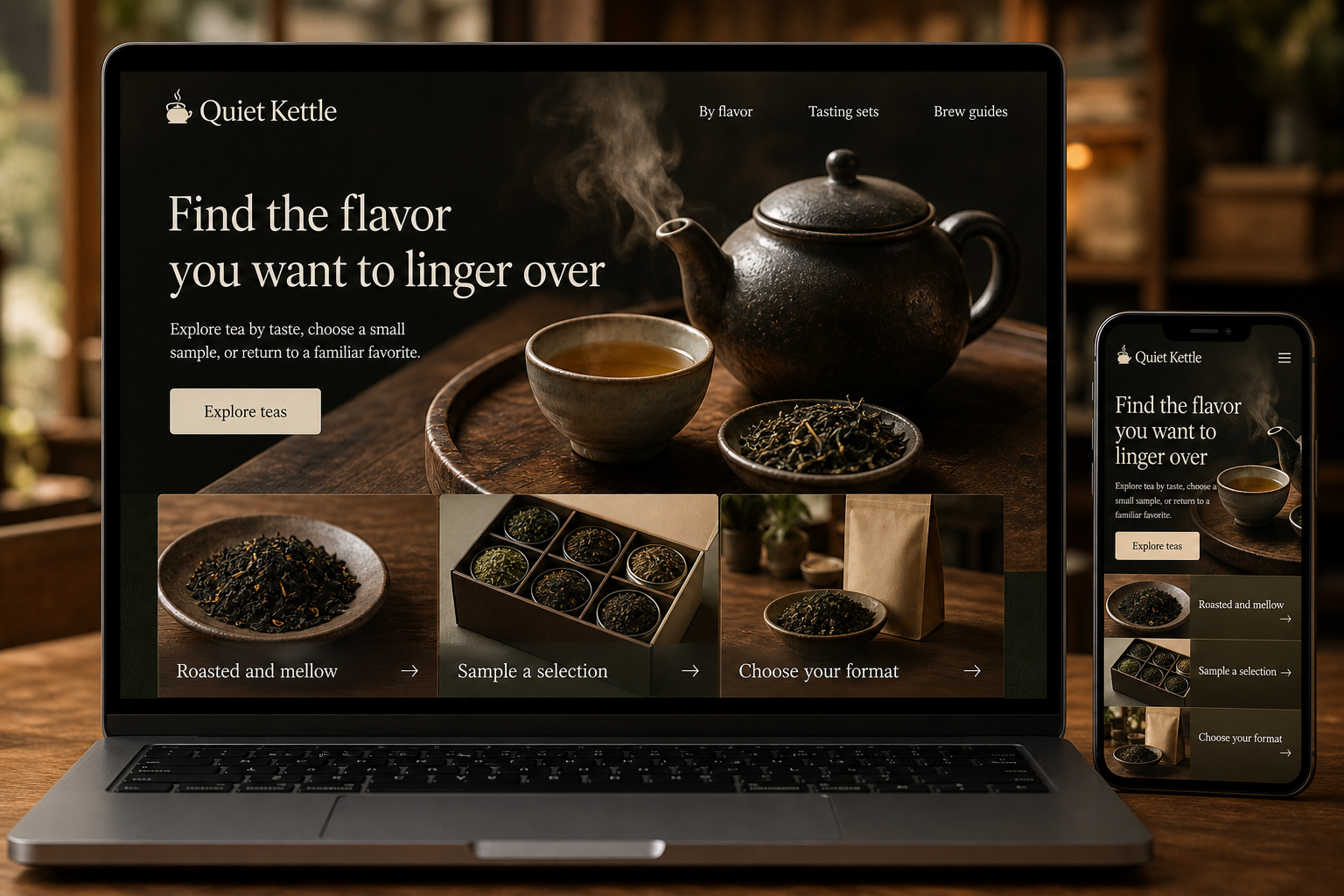
Explore this layout
Find the flavor you want to linger over
Explore tea by taste, choose a small sample, or return to a familiar favorite.
The main action is “Explore teas”. Supporting sections cover Roasted and mellow, Sample a selection, Choose your format.
Tea names can be fascinating and unhelpful at the same time. A newcomer may not know what a regional name suggests about taste, while a returning customer wants the exact leaf they enjoyed last month. A well-designed shop gives both people a clear route. Flavor descriptions, preparation information, and visible package sizes can make exploration feel approachable rather than exclusive.
Offer flavor as a starting point
Let customers browse by broad taste preferences alongside tea type and origin where documented. Explain tasting notes as impressions rather than ingredients unless an ingredient is actually present. A tea described as nutty should not leave someone wondering whether nuts have been added. Keep ingredient and allergen information distinct and accurate. Short descriptions of body, aroma, and preparation style can guide discovery without expecting the buyer to understand specialist tasting vocabulary first.
Show the format and quantity
Make loose leaf, tea bags, sachets, and gift formats easy to distinguish. Display net weight or count beside the price and explain what accessories are needed. If a photograph includes a pot or cup, state whether it is part of the purchase. Provide the supplier's preparation guidance in accessible text, while making room for personal preference. Avoid turning a serving estimate into a promise when individual portion sizes can vary considerably.
Use samples to support exploration
A tasting set should explain the contents, quantity of each tea, and how customers can find a full-size version afterward. Link from the set to individual products and retain a clear record of the selection when contents change. For recurring purchases, explain frequency, billing, substitutions, and how choices are managed. A returning drinker should be able to reorder a familiar product without being pushed through a discovery quiz on every visit.
Write about the cup rather than miracles
Useful content can compare brewing tools, explain storage, or introduce different flavor profiles. Avoid unsupported health claims and focus on the drinking experience the product actually offers. Measure sample-to-full-size purchases, product searches, and repeat orders. If customers often ask whether a tea is flavored or naturally aromatic, improve the listing structure. Clear distinctions build a better buying experience than increasingly elaborate descriptions of wellbeing or authenticity.
Before you launch
- Separate tasting notes from ingredients
- Show weight or sachet count
- Link sampler contents to full sizes
- Label accessories sold separately
Is a tea subscription the best first feature?
Start with reliable product pages and easy repeat ordering. A subscription becomes useful when the shop can explain selection, timing, and changes clearly. Some drinkers want the same tea regularly; others want discovery, so the site should distinguish those expectations before enrollment.