

Make a morning of the market Check the next date, see who's joining, and plan your visit to the stalls. The main action is “Plan market day”. Supporting sections cover Confirmed stalls, Find the market, Vendor applications.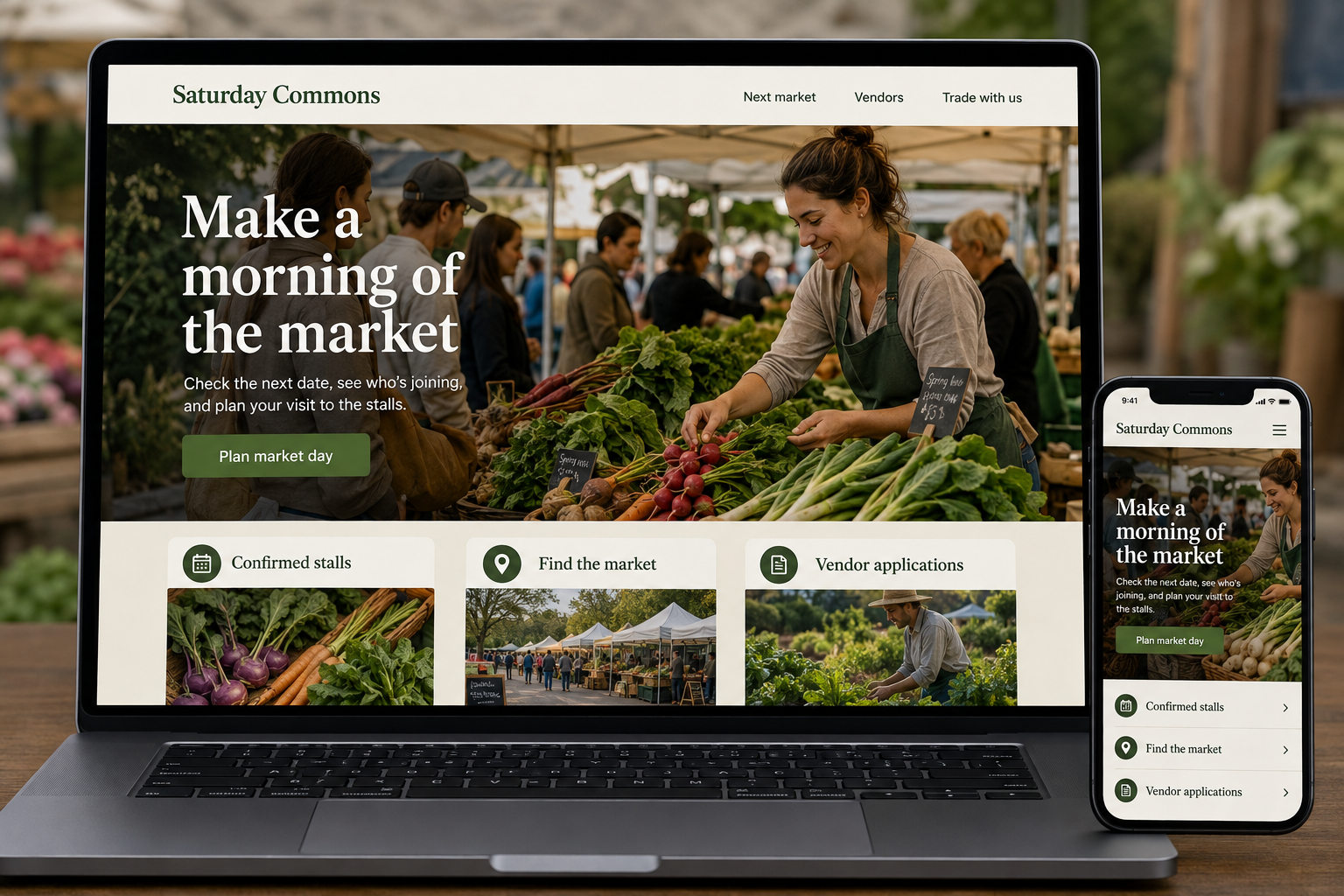
Explore this layout
A market website serves people arriving with shopping bags and people arriving with a stall. Their questions overlap around dates and location, but their next steps differ. The site should help shoppers plan a worthwhile visit while giving vendors a clear participation route. Because attendance and products can change, the publishing process needs to make updates straightforward for the organizing team.
Make the next market unmistakable
Put the next date, opening time, location, and any cancellation notice in a consistent place. Explain the usual schedule without making readers calculate which Saturday or Sunday is coming next. Add verified arrival and access details, including where shoppers can find current travel information if needed. If the market moves seasonally, label each venue clearly. A visitor should not travel to the old site because an archived announcement outranks the current event page.
Treat vendor attendance as changing information
Give vendors short profiles explaining what they sell and how customers can find them. Distinguish regular participants from vendors confirmed for a particular date. Product availability should be described realistically, especially where harvests or small batches vary. Link to vendor-owned ordering information where appropriate instead of copying a catalog the market cannot maintain. A date-specific vendor list can help shoppers decide what to bring and whether to arrange a preorder with an individual seller.
Give prospective traders a clear route
Explain the kinds of stalls considered, the application stages, and the information organizers need. Ask for product type, business contact details, and desired dates without implying that submission guarantees a place. Keep operational requirements in a maintained vendor resource rather than scattering them across old emails and public blog posts. Separate general applications from existing-vendor updates so staff can route messages correctly and avoid losing a change to an already confirmed stall.
Publish updates people can use
A weekly note can highlight confirmed stalls, a practical change, or an activity at the market. Link it to the permanent visit page and keep past notices dated. Measure direction requests, vendor profile use, and appropriate applications separately. Ask volunteers which questions they answer repeatedly at the entrance. Those answers can improve maps, signs, and website copy together. A dependable update routine is more valuable than a crowded homepage full of undated promotional messages.
Before you launch
- Display the next actual market date
- Label confirmed vendor attendance
- Separate trader applications from updates
- Mark seasonal venue changes
Should each market date have its own page?
It is useful when the vendor list, activities, or location changes meaningfully. Keep a permanent visit page as the reliable starting point and link each dated listing from it. If every date is identical, a maintained schedule may be simpler than publishing many nearly empty event pages.