

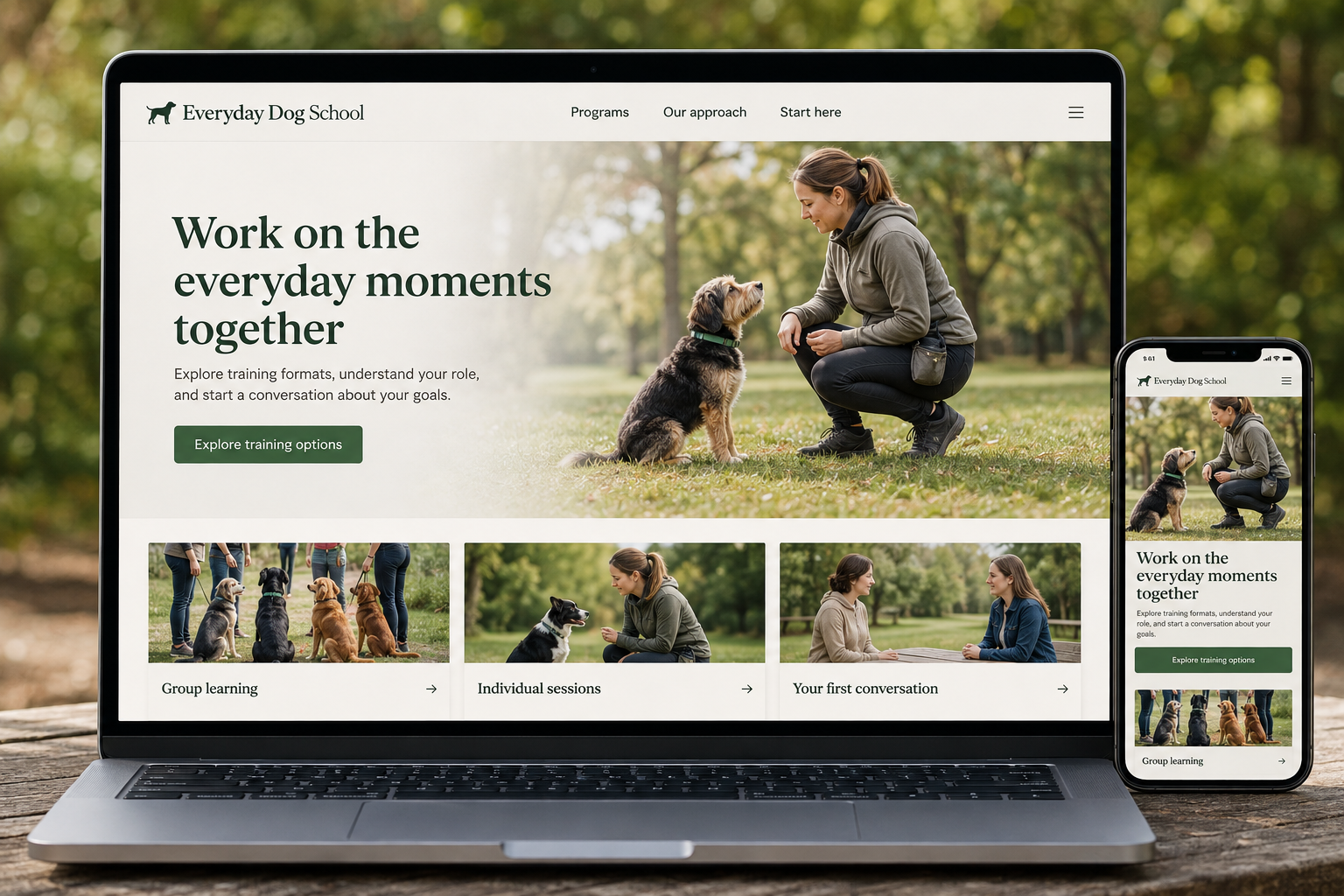
Explore this layout
Work on the everyday moments together
Explore training formats, understand your role, and start a conversation about your goals.
The main action is “Explore training options”. Supporting sections cover Group learning, Individual sessions, Your first conversation.

Owners looking for training may describe a daily frustration rather than a named program. They want walks, visitors, or everyday routines to feel more manageable. The website should help them understand what the trainer offers and which conversation comes first. Clear explanations of methods, formats, and participation can make an inquiry useful without claiming that a fixed package guarantees a particular outcome.
Start with the owner's practical goal
Organize services around the situations the trainer actually works with, using plain descriptions and clear boundaries. Explain whether support is offered through classes, individual sessions, or another format. Avoid diagnosing a dog from a website checklist or implying that every concern fits the same course. Give owners a way to describe the issue in their own words. The site should help route the inquiry, leaving individual assessment to the trainer's established professional process.
Describe how people participate
Explain the trainer's approach accurately and show what owners do during and between sessions. State where sessions take place, approximate length, group arrangements, and what is included. If a course expects home practice or attendance across several dates, make that visible before booking. A visitor comparing options needs to understand the commitment, not just the number of sessions. Use real, permission-cleared examples without presenting one dog's progress as a promise for all participants.
Make program selection a considered step
For introductory inquiries, collect the dog's age, broad goals, preferred format, and practical scheduling information as appropriate. Explain when a call or assessment is needed before joining a class. Keep booking language precise about what is being reserved. Show the actual attendance requirements and preparation instructions for accepted participants. Customers should not be placed into a group solely because a calendar slot was available if the program requires an individual discussion first.
Judge the website by suitable conversations
Track inquiries that match the trainer's scope, assessment bookings, and class enrollments separately. Review why some requests are redirected and make service boundaries clearer where appropriate. Publish useful explanations of the available training formats or how to prepare questions for an initial discussion. Avoid filling pages with sweeping behavioral advice. The website's job is to help owners understand the service and begin a relevant conversation, not to replace an assessment of a particular dog.
Before you launch
- Explain owner participation between sessions
- Distinguish classes from individual support
- State when assessment comes first
- Describe training approach accurately
Should the homepage promise a fixed result in a fixed number of sessions?
No. Explain what the program covers, how progress is reviewed, and what participation involves. Individual circumstances differ. Clear scope and a realistic process give prospective clients more useful information than a guarantee that every dog and owner will reach the same outcome on the same schedule.