

Look closer at the work Explore current exhibitions, read artist context, and ask about individual pieces. The main action is “See current exhibitions”. Supporting sections cover On view now, Artwork details, Arrange a viewing.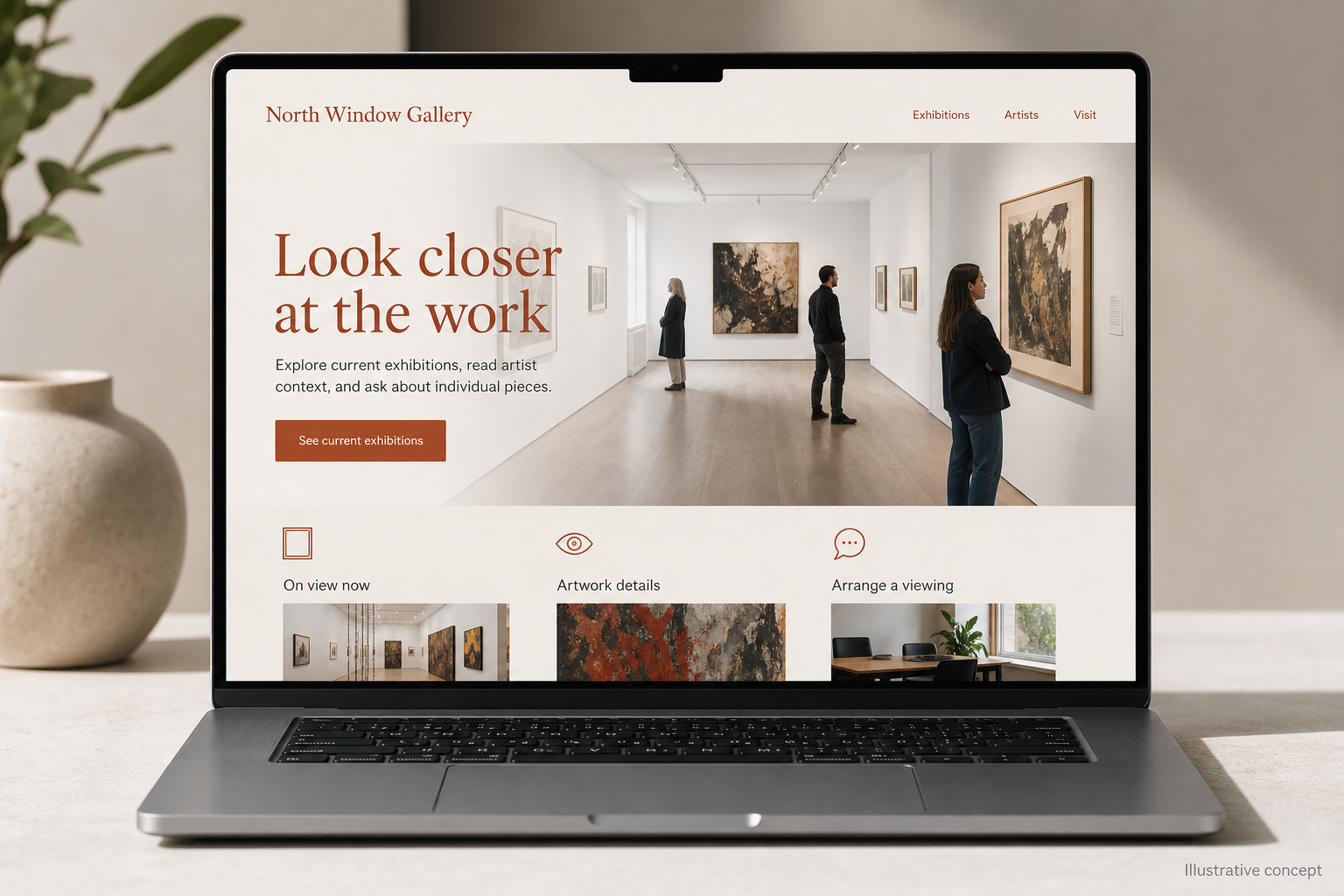
Explore this layout
A gallery website serves people who want to look, learn, visit, and sometimes acquire work. Those purposes can support one another when the structure is clear. Exhibition pages should communicate the program, while artwork records provide the details a collector needs. The site can remain visually quiet and considered without hiding dates, dimensions, availability, or the practical route for asking a question.
Give exhibitions a clear identity
Show the exhibition title, artist or artists, dates, and a concise account of the work on view. Distinguish installation photographs from individual artwork images. Mark ended exhibitions as part of the archive and link to current programming. Keep opening events separate from the exhibition's full run so visitors do not mistake one evening's date for the entire show. Accurate credit and permission information should travel with published images and supporting text.
Make artwork records dependable
Provide title, maker, date where known, medium, dimensions, and edition information where applicable. Explain framed versus unframed dimensions if both affect the decision. Use accurate images and note any relevant limitations in online color representation. Show availability in the manner the gallery can maintain reliably. If price is supplied by inquiry, make that route direct and carry the work's identifier into the message so the customer does not need to transcribe the details manually.
Support visits and conversations separately
Keep hours, location, appointment arrangements, and verified access information easy to find. Collector inquiries may need information about shipping, viewing, or additional images, while a general visitor simply wants to know when the doors are open. Offer clear paths for both. Explain what happens after an artwork inquiry without implying a reservation or completed purchase. If viewing appointments are available, show whether the requested time requires confirmation from the gallery team.
Use writing to deepen a useful encounter
Publish artist conversations or exhibition essays with accurate attribution and permission where needed. Link them to relevant works and the exhibition page. Measure visit information use, artwork inquiries, and engagement with the program as distinct outcomes. Avoid treating every reader as an immediate buyer or inventing investment claims about artworks. The website can support curiosity and a considered collecting conversation through reliable detail, clear context, and a maintained exhibition archive.
Before you launch
- Include medium and dimensions
- Separate opening night from exhibition dates
- Carry artwork identifiers into inquiries
- Label past exhibitions clearly
Should a gallery publish prices online?
That depends on its sales approach and the work involved. If prices are shown, keep them current and explain inclusions such as framing where relevant. If an inquiry is required, make it simple and specific to the artwork so interested visitors can ask without searching for a general contact address.