

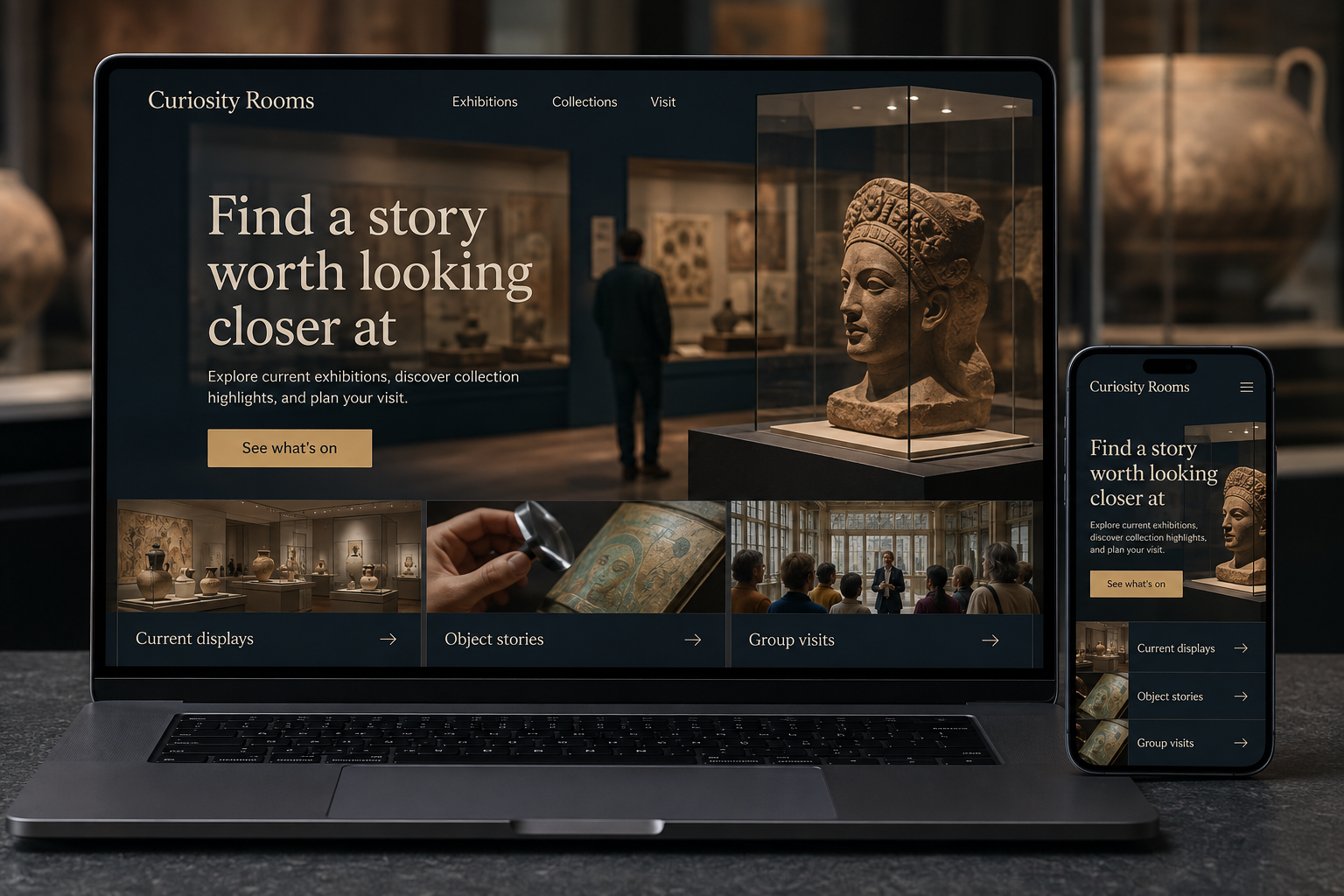
Explore this layout
Find a story worth looking closer at
Explore current exhibitions, discover collection highlights, and plan your visit.
The main action is “See what's on”. Supporting sections cover Current displays, Object stories, Group visits.
Museum visitors may arrive online with a specific exhibition in mind or only a few spare hours to fill. The site should help both turn curiosity into a visit. Collections and stories deserve room to breathe, but practical information must remain close at hand. A thoughtful website makes it easy to understand what is currently on, who it may interest, and how to attend.
Separate current exhibitions from the archive
Give each exhibition a clear date range, location within the museum, and explanation of what visitors will encounter. Mark temporary closures or timed-entry requirements visibly. Past exhibition pages can remain valuable as an archive, with their status obvious and links to current programming. Avoid a homepage carousel that mixes ended and upcoming events without dates. Visitors should not need to interpret publication timestamps to know whether the display they found is still open.
Build a dependable visit page
Keep opening hours, admission arrangements, address, and practical access information together. Explain whether tickets cover the whole museum or specific exhibitions. Use descriptive text alongside maps and photographs. If a facility is unavailable or an entrance changes, update the visit page first. A guest planning around a family group, mobility requirement, or short visit needs concrete details, and should have a clear contact route for questions the published information does not settle.
Give schools and groups their own route
Explain the formats, approximate durations, group sizes, and booking process for organized visits. Ask for a preferred date, group type, numbers, and learning interests where relevant. State whether a request holds a slot or requires staff confirmation. Provide useful preparation information without requiring teachers to search several old attachments. Group organizers need to understand what the museum provides and what they remain responsible for arranging before they can confidently propose the visit.
Let interpretation lead back to the collection
Publish short object stories or thematic guides with accurate attribution and image permissions. Connect them to related collection records and current opportunities to visit. Measure exhibition-to-ticket journeys, group inquiries, and use of practical visitor information. High reading time on an object story is valuable, but it is a different outcome from a completed booking. Keeping those purposes distinct helps the museum support both public learning and attendance without forcing every article into a sales pitch.
Before you launch
- Label ended exhibitions clearly
- Explain ticket coverage
- Maintain a single practical visit page
- Show group request confirmation steps
Should the entire collection be online before launch?
No. Start with a manageable selection of accurately described objects and clear visitor information. A larger collection database can follow when records, rights, and maintenance are ready. A small, well-curated digital selection is more useful than many incomplete records that leave visitors uncertain about what they can see in person.