

Find a useful way to take part Explore current programs, see volunteer roles, or learn how contributions support the work. The main action is “Explore our work”. Supporting sections cover Find a program, Current volunteer roles, Giving choices.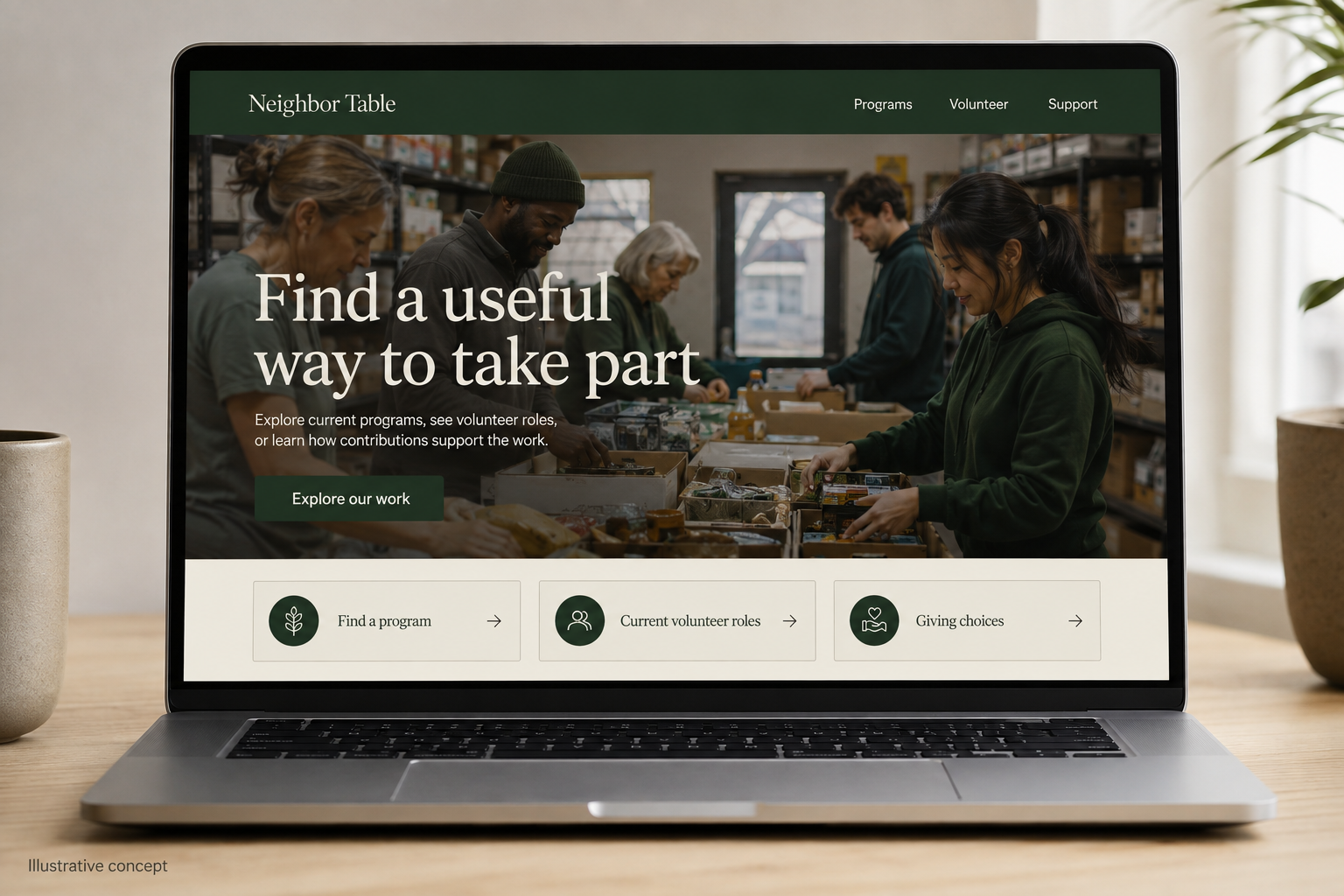
Explore this layout
A visitor may arrive at a nonprofit website wanting to help, needing a service, or checking what the organization actually does. Those are different and equally important journeys. The site should make programs understandable and participation specific. Clear information about current work and practical next steps is more useful than a large emotional headline that leaves people unsure where their time or contribution would go.
Show the work in concrete terms
Describe each active program, whom it serves, where it operates, and how people access it. Use accurate examples and permission-cleared stories, avoiding unnecessary personal detail about participants. Explain the organization's role rather than implying it provides every related service. Keep eligibility or referral information current through the appropriate program team. Visitors seeking help need a clear route that does not force them through a donation campaign before they can find practical information.
Make volunteering a real role
List current opportunities with the tasks, time commitment, location, and the organization's actual onboarding process. Distinguish a one-day event from an ongoing role. Explain when an application will be reviewed without promising a placement. Let people register interest where no suitable opportunity is currently available, clearly labeling that status. A potential volunteer should understand what they would do and what preparation is needed before committing time or submitting personal information.
Explain giving choices plainly
Show the purpose of a fundraising appeal and how donations are handled according to the organization's actual arrangements. Make one-time and recurring options distinguishable, with the selected amount and frequency repeated before payment. Provide accurate organizational information and a contact route for questions. Avoid invented impact equivalences that claim a particular sum always produces a specific outcome. A clear explanation of the work and funding need can support giving without manufacturing certainty.
Keep evidence and updates connected
Publish current program updates and appropriate reports, distinguishing completed work from plans. Link stories to relevant participation or service pages. Measure service inquiries, volunteer applications, and completed donations separately so one purpose does not overshadow the others. Review searches and messages that reveal missing information. An organization that keeps a small set of useful pages current can serve its community better than one with a large archive of undated announcements and unclear next steps.
Before you launch
- Separate seeking help from offering help
- Publish actual volunteer time commitments
- Repeat donation amount and frequency
- Date program updates and appeals
Should every nonprofit page ask for a donation?
A donation route can remain available, but each page should serve its main audience. Someone seeking a program needs access information; a volunteer needs role details. Place relevant next steps prominently and let fundraising support the broader site rather than interrupt every practical journey.