

Meet the animal, understand the next step Explore current profiles, learn how adoption works, or find out about fostering. The main action is “Meet the animals”. Supporting sections cover Individual profiles, From inquiry to meeting, Fostering responsibilities.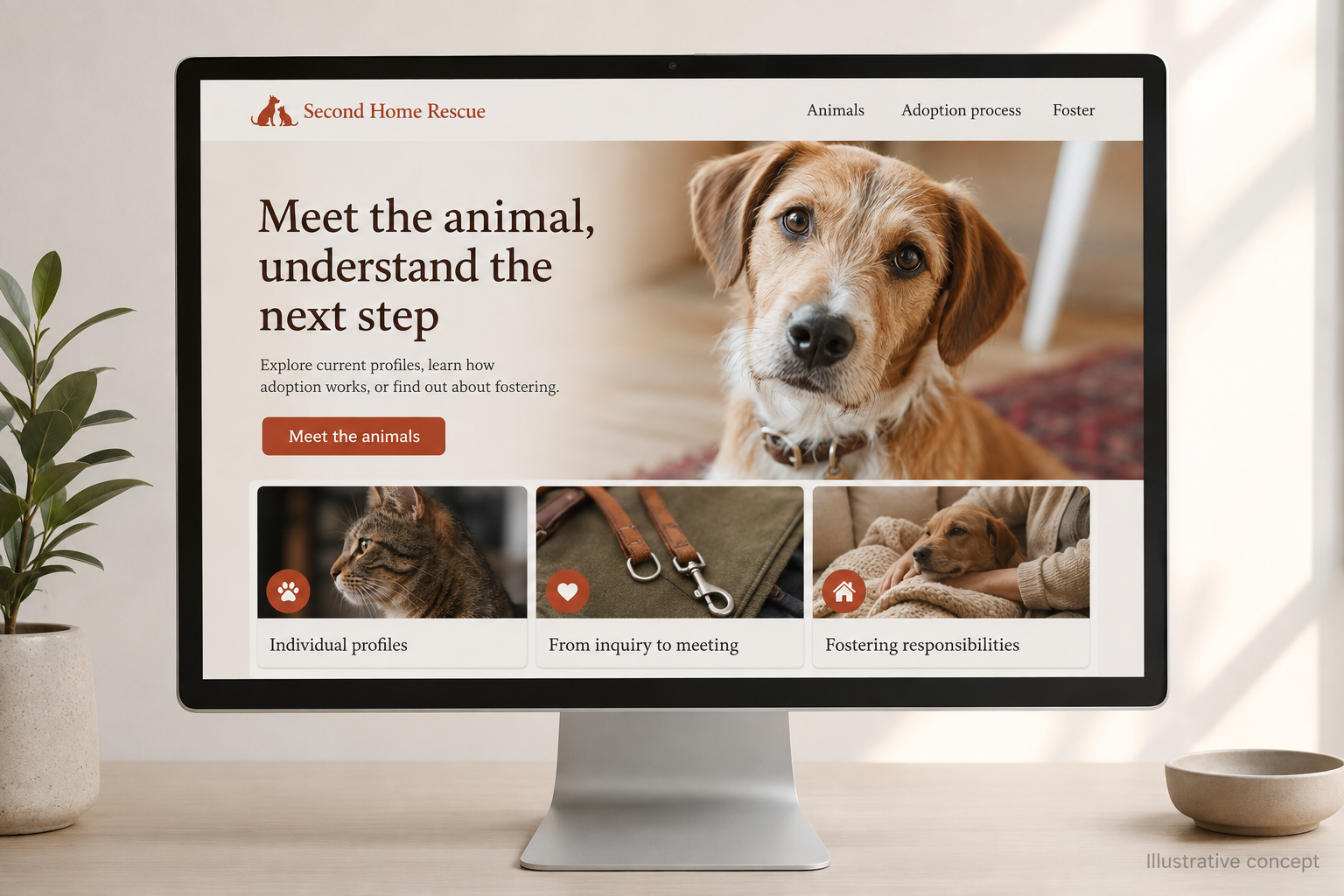
Explore this layout
An animal's photograph can inspire an immediate response, but an adoption decision needs more context. Potential adopters want to understand the individual animal and the rescue's process. The website should make that information easy to find while supporting fostering and other ways to help. Clear profiles and thoughtful application steps can encourage suitable inquiries without promising that every visitor and animal will be the right match.
Make profiles individual and current
Describe each animal using observations and information the rescue can support, clearly distinguishing known history from uncertainty. Include age estimates where relevant, practical needs, and the type of home being considered through the organization's own assessment process. Use current photographs and keep availability status updated. Avoid sentimental invented biographies or blanket claims about temperament. A profile should help someone begin an informed conversation, not turn a complex individual into a few promotional adjectives.
Explain adoption as a sequence
Show the stages from initial interest through discussion, meetings, review, and any final arrangements the rescue uses. State whether an inquiry is specific to one animal or a general application. Explain fees and inclusions accurately where applicable. Keep sensitive applicant information within the appropriate application process and avoid asking for more than the current stage requires. A submitted form should not look like an animal has been reserved or an adoption has already been approved.
Give fostering its own practical page
Describe the kinds of fostering sought, expected responsibilities, support provided, and how duration is discussed. Explain the application and matching process without implying that every volunteer can immediately take any animal. Let prospective fosterers ask questions about their circumstances through the rescue's established route. Keeping fostering separate from adoption helps people understand that the commitments and arrangements differ, and it gives the team a more useful basis for responding to offers of help.
Use updates to support thoughtful participation
Publish permission-cleared stories about completed adoptions, current needs, or volunteer work without exposing unnecessary personal information. Link them to current profiles or relevant support pages. Measure suitable adoption inquiries, foster applications, and completed support actions separately. Review repeated questions about fees, availability, or the process. If people frequently assume that a profile means immediate collection is possible, make the steps clearer. Useful content supports considered participation as well as the initial emotional connection.
Before you launch
- Update animal availability promptly
- Distinguish observations from unknown history
- Explain inquiry versus reservation
- Give fostering a separate route
Should every animal have an instant adoption button?
Use a clear inquiry or application action that reflects the rescue's actual process. Adoption usually involves discussion and review, so the interface should not imply an immediate transaction unless that is genuinely how the organization operates. Help visitors understand the next step and what information the team will consider.