

Explore this layout
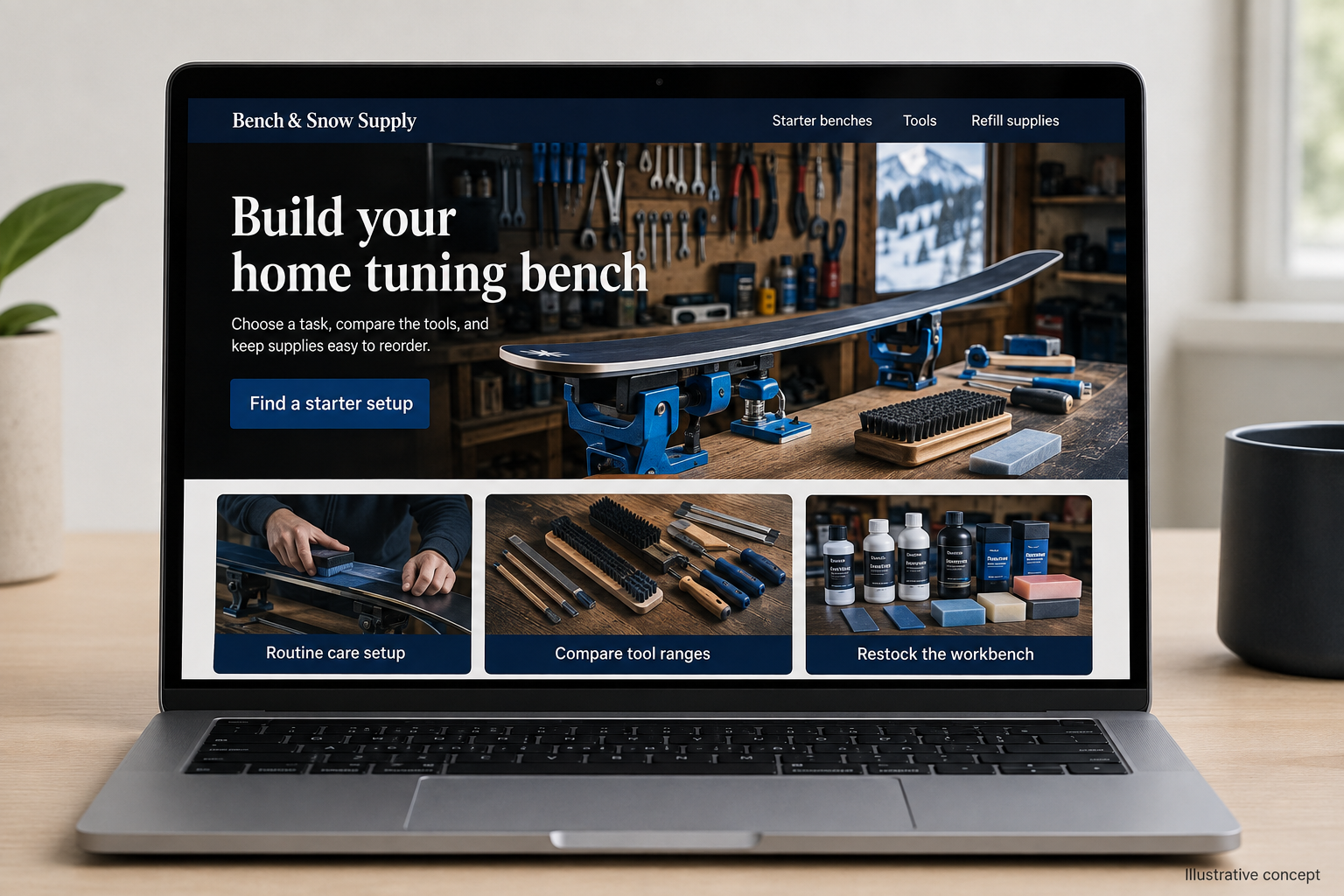
Build your home tuning bench
Choose a task, compare the tools, and keep supplies easy to reorder.
The main action is “Find a starter setup”. Supporting sections cover Routine care setup, Compare tool ranges, Restock the workbench.

The first home ski-tuning purchase often begins with uncertainty about the workbench rather than the product brand. A hypothetical Colorado workshop selling tuning equipment should help customers distinguish a basic maintenance setup from more involved tools. The useful design question is what the buyer wants to do, what equipment they already own, and which instructions belong with the purchase.
Organize the shop by the intended task
Give beginners an entrance for routine care and experienced customers a direct path to individual tools. Describe the tasks covered by each starter set and the work it does not address. List the bench, vise, or other support equipment required separately from the kit contents. A simple workspace illustration can make those dependencies visible. Keep technical vocabulary available for knowledgeable buyers while adding short definitions where a newcomer first encounters it.
Put specifications into comparison views
When tools vary by adjustment range, dimensions, or compatible accessories, show those differences in a compact comparison. Product pages should identify included parts and relevant replacement items. Link to the supplied instructions rather than improvising a universal procedure for all equipment. If a tool requires an informed choice, provide a question route that asks about the customer’s existing setup. A photograph of the working edge is often more useful than another branded packaging shot.
Separate durable equipment from supplies
Wax, brushes, replacement abrasives, and reusable tools have different reorder patterns. Build a saved workbench list that lets an owner replenish the needed supplies without buying the original starter set again. Show package sizes and storage information from the product documentation. Avoid automatic replenishment intervals that assume every household uses equipment at the same rate. An optional reminder or editable shopping list may fit occasional home maintenance better than a fixed subscription.
Make tutorials support a purchase decision
A guide to assembling a small tuning space can show the role of each item and link to the corresponding category. Label the example equipment so the reader knows which setup the photographs demonstrate. Track tutorial visits that lead to a starter-set comparison, a technical question, or a supply reorder. If readers purchase extra tools they later return as unnecessary, revisit the kit explanation rather than counting the larger initial basket as success.
Before you launch
- List workspace equipment excluded from kits.
- Show tool adjustment ranges consistently.
- Link replacement supplies from durable tools.
- Test beginner navigation without brand knowledge.
Should a first-time customer buy the most complete tuning kit?
Not automatically. The page should explain the tasks each set supports and the equipment the customer already needs. A smaller set may be easier to understand and use for a limited purpose. Offer a comparison and a way to ask about the planned work before presenting optional additions.