

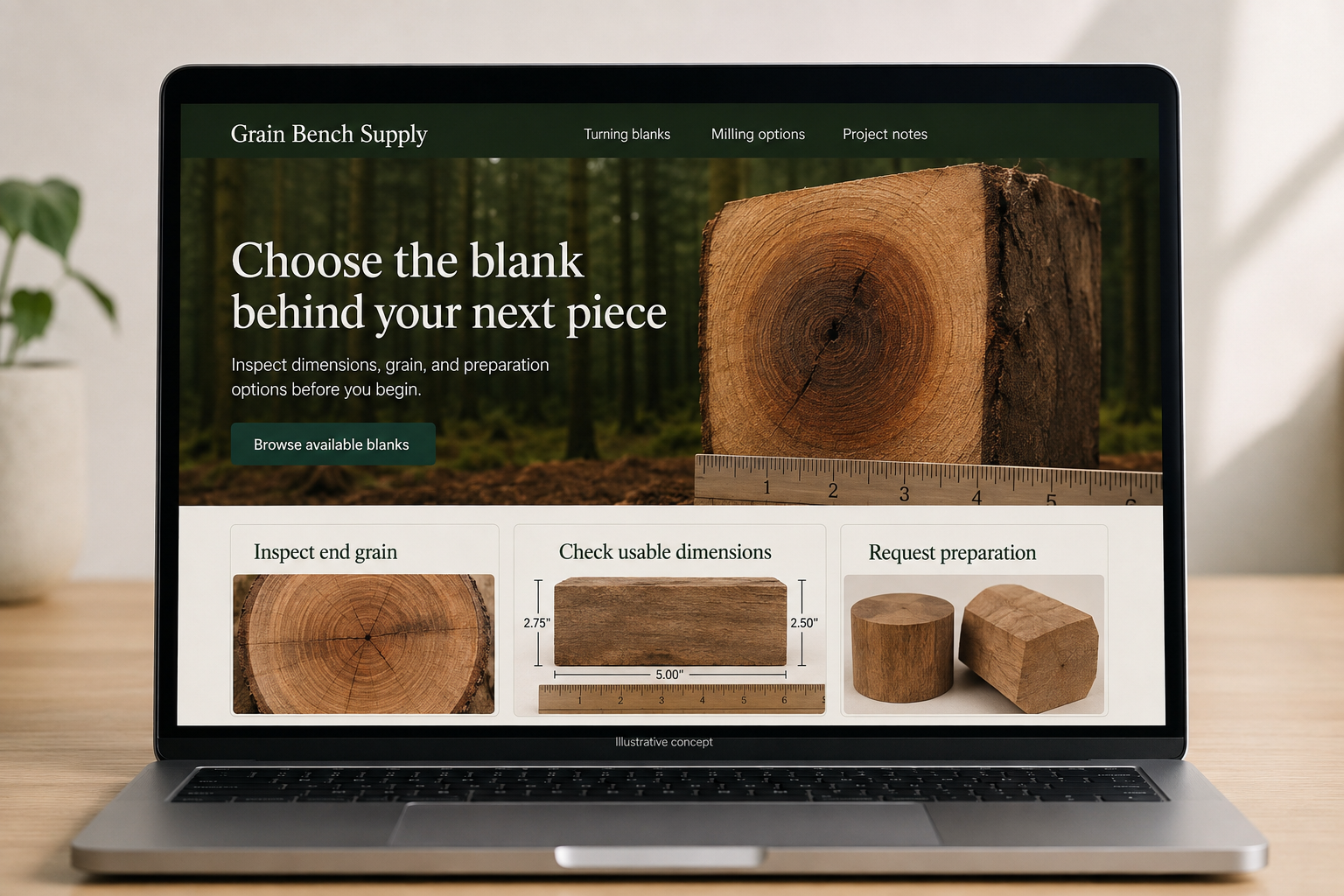
Explore this layout
Choose the blank behind your next piece
Inspect dimensions, grain, and preparation options before you begin.
The main action is “Browse available blanks”. Supporting sections cover Inspect end grain, Check usable dimensions, Request preparation.

A woodturner buying a blank online is choosing working material, not just an attractive block. A hypothetical Kentucky supplier should show the usable dimensions, grain, and stated condition of the stock. The website needs to leave room for natural variation while giving a customer enough concrete information to decide whether a piece suits the project on their bench.
Lead with the dimensions that survive preparation
List the measured dimensions and explain whether they describe rough stock or a prepared blank. If the supplier gives an estimated usable size, identify the assumptions behind it instead of mixing that estimate with the exterior measurement. Show units consistently and include orientation where grain direction matters. A project filter can help narrow the catalog, but it should not imply that every piece in a category will suit every possible finished design.
Photograph the piece someone will receive
For individually selected stock, use multiple views of the actual blank with a readable identifier. Include end grain and any feature that affects the buyer’s choice, such as a visible check or irregular edge. For repeatable small blanks sold from a batch, explain the expected variation and show representative examples. Avoid wetting or editing the surface in a way that suggests a finished appearance without telling the customer what the photograph demonstrates.
Explain condition and milling options precisely
Use the supplier’s actual drying and storage information, with dates or measurements where those are part of its records. Do not substitute a vague adjective for a meaningful condition description. If milling is optional, explain what is removed, how the final size is confirmed, and whether that service changes the dispatch process. Keep a clear boundary between a stocked product and a custom request that needs staff review before a final price is available.
Use project stories to teach selection
An example bowl or spindle project can show the starting blank beside the finished object and explain the dimensions chosen. Identify the example as the workshop’s own demonstration when that is the case. Link to comparable available stock without implying an exact grain match. Measure specification questions and custom milling inquiries, then improve the fields buyers struggle to interpret. A helpful selection guide can attract customers who already have a project and need the right material.
Before you launch
- Label rough and prepared measurements separately.
- Photograph end grain on individual blanks.
- Explain surface treatment used in product images.
- Confirm dimensions after optional milling.
Should every wood blank have its own product photograph?
Individual photographs are especially useful when grain, shape, or visible features drive the price and purchase decision. Standard small blanks can use representative batch images if variation is clearly described. In either case, provide dimensions and condition information; a beautiful grain photograph cannot establish whether the material fits the planned work.