

Explore this layout
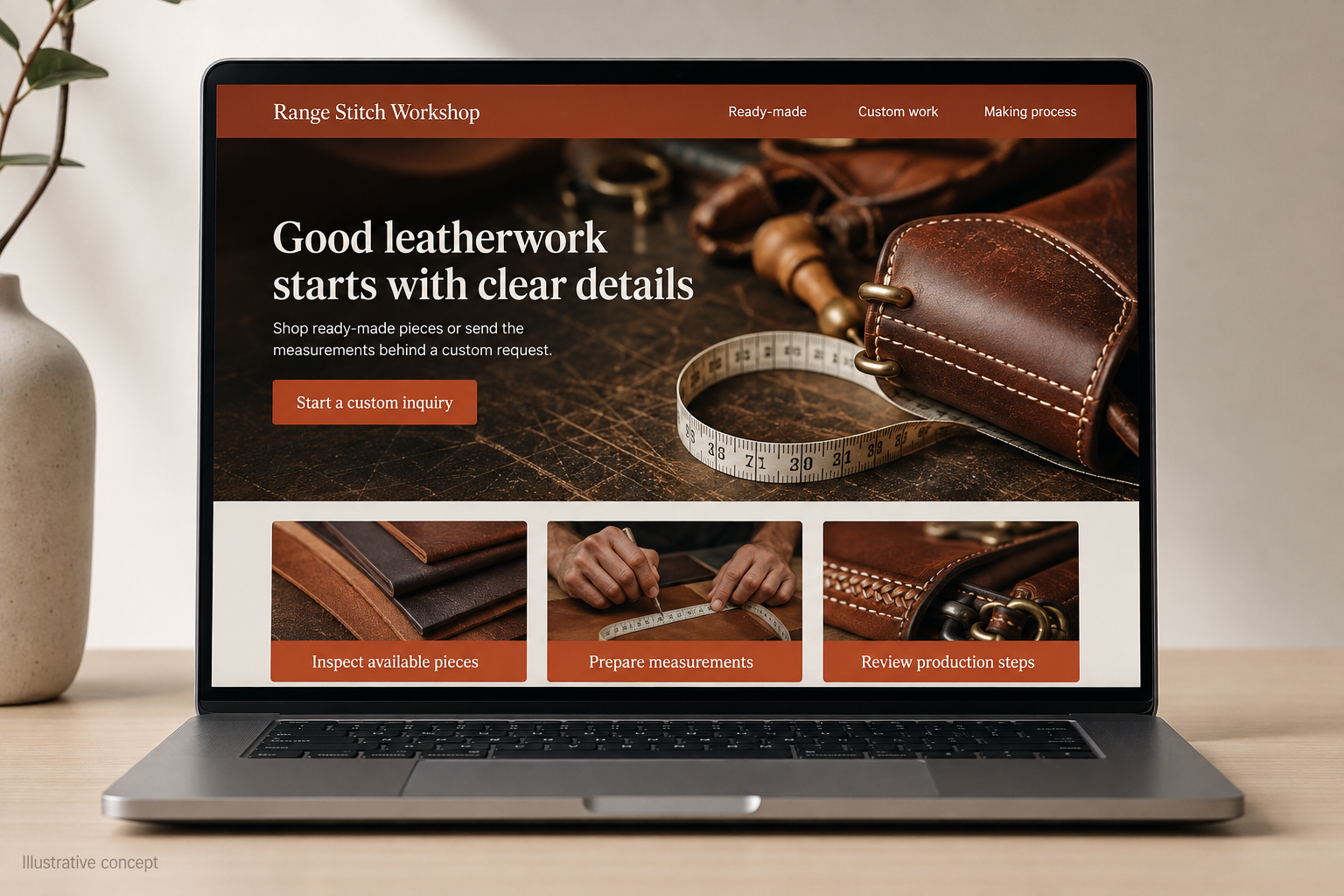
Good leatherwork starts with clear details
Shop ready-made pieces or send the measurements behind a custom request.
The main action is “Start a custom inquiry”. Supporting sections cover Inspect available pieces, Prepare measurements, Review production steps.

Custom leatherwork often starts with information that cannot be captured by a color selector. A hypothetical Montana tack workshop should distinguish a ready-made item from an order that needs measurements and review. The website can make that conversation more organized by showing what the maker needs, how options are confirmed, and when a request becomes a defined order.
Separate the shelf from the work queue
Give stocked goods a direct shopping path with exact dimensions and actual availability. Send custom-fit requests to a structured inquiry that explains the review process. If an example photograph shows an earlier design, identify it as an example rather than current stock. A starting price should state what it covers and what remains to be confirmed. Avoid giving a custom request the appearance of a fully specified product that can ship immediately.
Make measurements easy to review
Use diagrams that identify the workshop’s required measurement points and units. Let the customer attach relevant photographs through an appropriate private form, with guidance on what should be visible. Repeat the supplied values in a review summary so mistakes can be spotted. Do not produce a confident fit promise from incomplete information. Provide a clear route for the maker to ask follow-up questions before agreeing on the final specifications.
Show the milestones of the order
Explain the sequence from inquiry to specification, approval, production, and dispatch. Describe which decisions remain changeable at each stage and how the workshop communicates progress. Keep lead-time information connected to the current queue rather than embedding a fixed promise in every product description. If payment is staged, describe the workshop’s actual arrangement plainly before commitment. The customer should know what the next response will contain and which action is expected from them.
Publish projects as useful examples
A project page can show a completed piece, the requested features, and the design decisions that shaped it, with the owner’s permission where needed. Leave out private measurements and contact details. Link to the relevant inquiry route and explain that a similar request still needs review. Measure inquiry completeness and the number of clarification rounds. Improving one measurement diagram may do more for the customer experience than adding many nearly identical custom-product pages.
Before you launch
- Mark prior custom work as example projects.
- Repeat submitted measurements in a review summary.
- Keep personal fitting records out of public galleries.
- State the next milestone after an inquiry.
Should a custom leatherwork request use a standard checkout?
Only after the workshop can define what is being ordered. When fit, dimensions, or construction still need review, an inquiry with a specification summary is more useful. A clearly priced ready-made item can use ordinary checkout, while custom work follows the approval process the business can actually support.