

Explore this layout
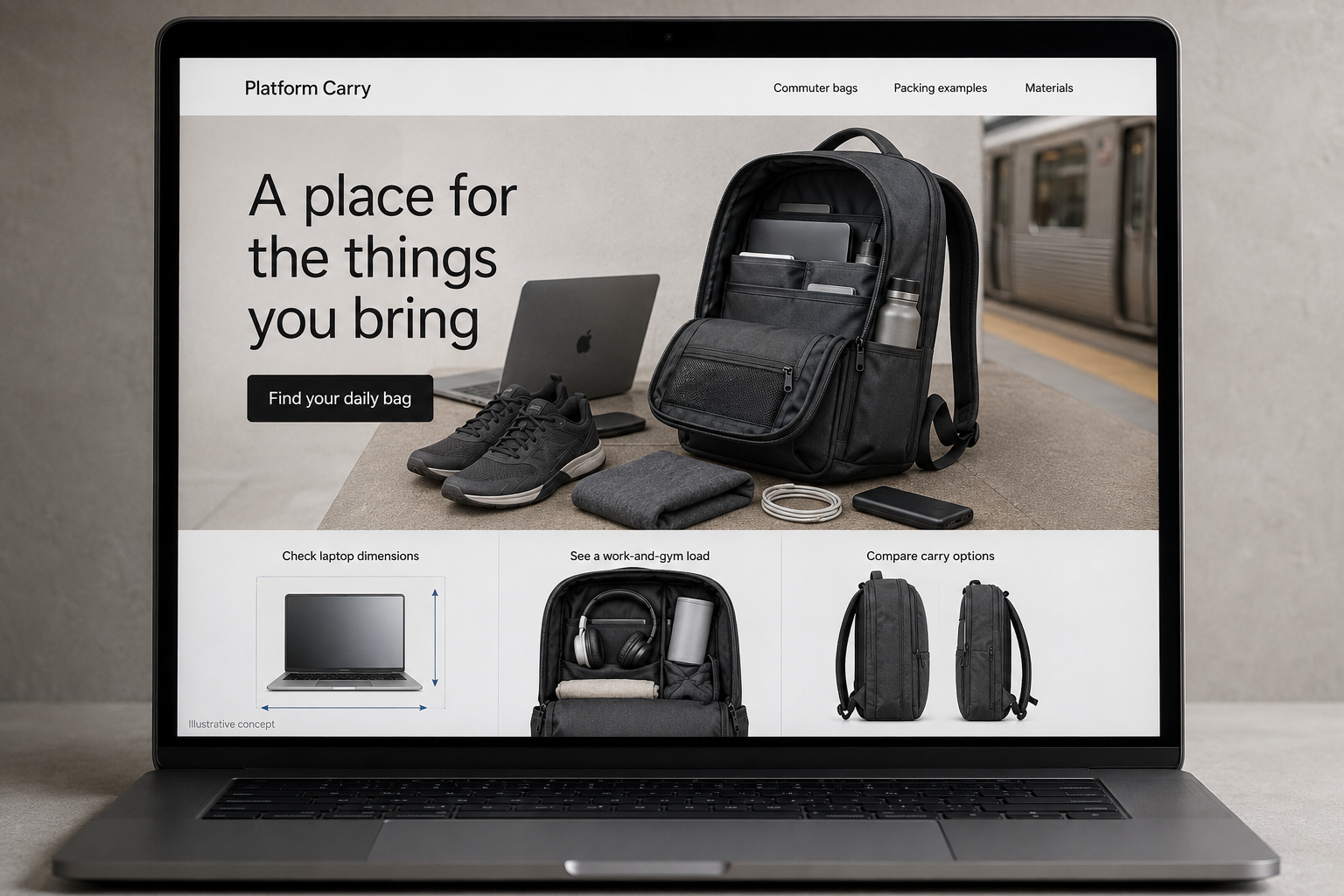
A place for the things you bring
See real packing examples and compare the measurements behind each bag.
The main action is “Find your daily bag”. Supporting sections cover Check laptop dimensions, See a work-and-gym load, Compare carry options.

A bag can look spacious online and still fail to hold the laptop, lunch box, and folded layer someone carries each day. A hypothetical New Jersey commuter-bag maker should show capacity through familiar objects and actual measurements. The site can help shoppers picture the transitions between walking, riding, and sitting without claiming that one shape suits every routine.
Show the objects inside the compartments
Photograph a realistic packing arrangement and identify the dimensions of the laptop or other reference items used. List the usable laptop-compartment measurements rather than relying only on a screen-size label. Show the opening as well as the interior, since a rigid object must pass through it. If a bottle pocket stretches, explain the tested example without treating it as universal. Customers need evidence that relates to the objects they already own.
Make carrying views practical
Include front, side, and back views that show the bag worn, with the relevant product dimensions and model information where appropriate. Demonstrate the strap adjustment range and any change between shoulder and hand carry. A close view of the grab handle and fastening can clarify how the bag is handled in a confined space. Avoid filling every image with styling props that obscure the actual silhouette or make the product appear smaller.
Describe weather features accurately
Use the maker’s documented material and construction descriptions, distinguishing fabric characteristics from claims about the entire assembled bag. Show zipper covers, base material, and any included rain cover. Explain care instructions and the limitations the maker specifies. A product photograph in dramatic rain should not imply performance that has not been established. For shoppers carrying electronics, clear wording about the bag’s actual features is more useful than an undefined promise of all-weather protection.
Compare routines instead of lifestyles
A guide can contrast a compact laptop-only load with a fuller work-and-gym example, listing the objects in each. Link to the exact bag used and explain which compartment holds what. Let buyers compare external size and empty weight in one view. Track returns related to laptop fit and searches for specific dimensions. Those questions indicate where a measurement table or packing photograph would improve the purchase decision more than another broad commuting article.
Before you launch
- Show usable laptop-compartment dimensions.
- Photograph the compartment opening.
- List the objects in every packing example.
- Distinguish fabric features from whole-bag claims.
Is a “fits a 15-inch laptop” label sufficient?
It is a useful shorthand, but laptop bodies differ even when their screen labels match. Provide the usable compartment dimensions and, if relevant, the opening dimensions. Name the size of the example device in the photograph so customers can compare their own equipment before relying on the shorthand.