

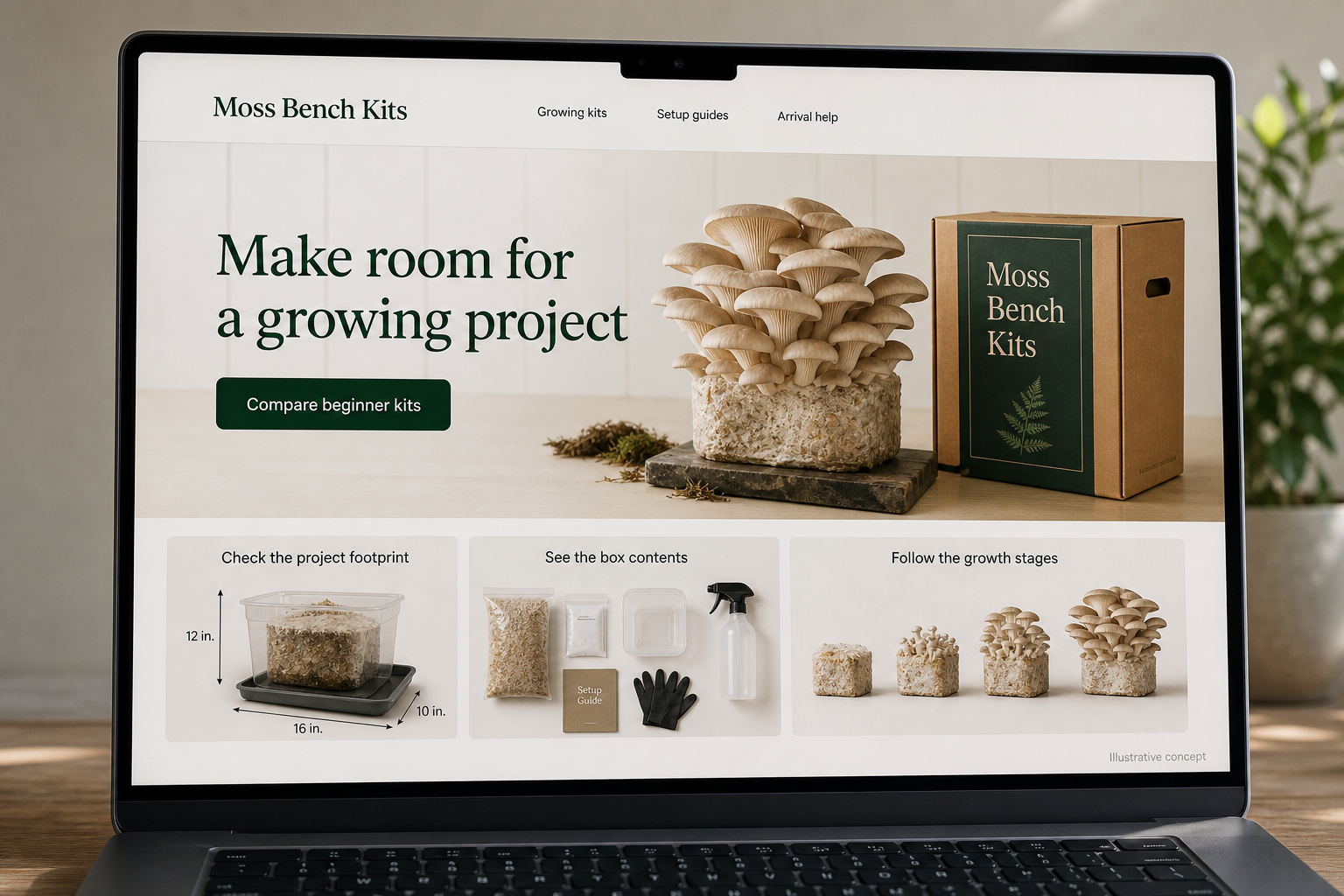
Explore this layout
Make room for a growing project
See the kit, check the setup, and follow the instructions from arrival onward.
The main action is “Compare beginner kits”. Supporting sections cover Check the project footprint, See the box contents, Follow the growth stages.

A first mushroom-growing kit is an experiment someone makes room for at home. A hypothetical Oregon kit shop should help the customer understand the project before placing it in the cart. The website needs to explain the supplied materials, the conditions described in the kit instructions, and the timing of arrival without promising that every household will get an identical result.
Match the project to the available space
Describe the kit’s footprint and the environmental conditions specified by the producer. Use a simple illustration to show its size in a realistic household setting. Explain whether the kit is designed to start promptly after arrival or can be stored according to particular instructions. Avoid suggesting that a state name or season alone establishes suitability. A short comparison of the shop’s actual kits can help someone choose based on the space and attention they can provide.
Open the box in the product photography
Show every supplied component and label any spray bottle, tray, or other item used in the demonstration but sold separately. State the kit’s identification and intended project clearly, using the producer’s own information. Explain the difference between a ready-to-start kit and a supply pack that requires additional preparation. A finished harvest photograph can illustrate the activity, but it should be identified as an example rather than a promise of quantity or appearance.
Coordinate arrival with a real calendar
Let a customer see the dispatch process and any supported scheduling choices before purchasing a time-sensitive project. Separate the shop’s preparation period from carrier transit and explain what happens if a gift recipient will be away. Keep the arrival guide accessible from the order message. If the shop has a concern-reporting process, ask for the information and photographs that help identify the kit and its condition without making the customer guess what staff need.
Use progress guides to support participation
Create illustrated guidance tied to the exact kit, with clear stages and the producer’s instructions. Avoid turning the page into advice about identifying wild mushrooms or making health claims. Link the guide from the product and packaging so customers can find it again. Track arrival questions and visits to particular stages of the instructions. A repeated point of confusion may require a better photograph or label, while repeat purchases can indicate interest in another clearly explained project.
Before you launch
- Show the kit’s assembled footprint.
- Label demonstration tools sold separately.
- Identify harvest photographs as examples.
- Link order messages to the exact kit instructions.
Can a growing-kit page promise a fixed harvest?
It should describe the producer’s stated project expectations accurately and avoid presenting an example as a guarantee. Conditions and handling can vary. Show what is supplied, the instructions the customer will follow, and the shop’s support process so the purchase is based on an understandable activity rather than a promised quantity.