

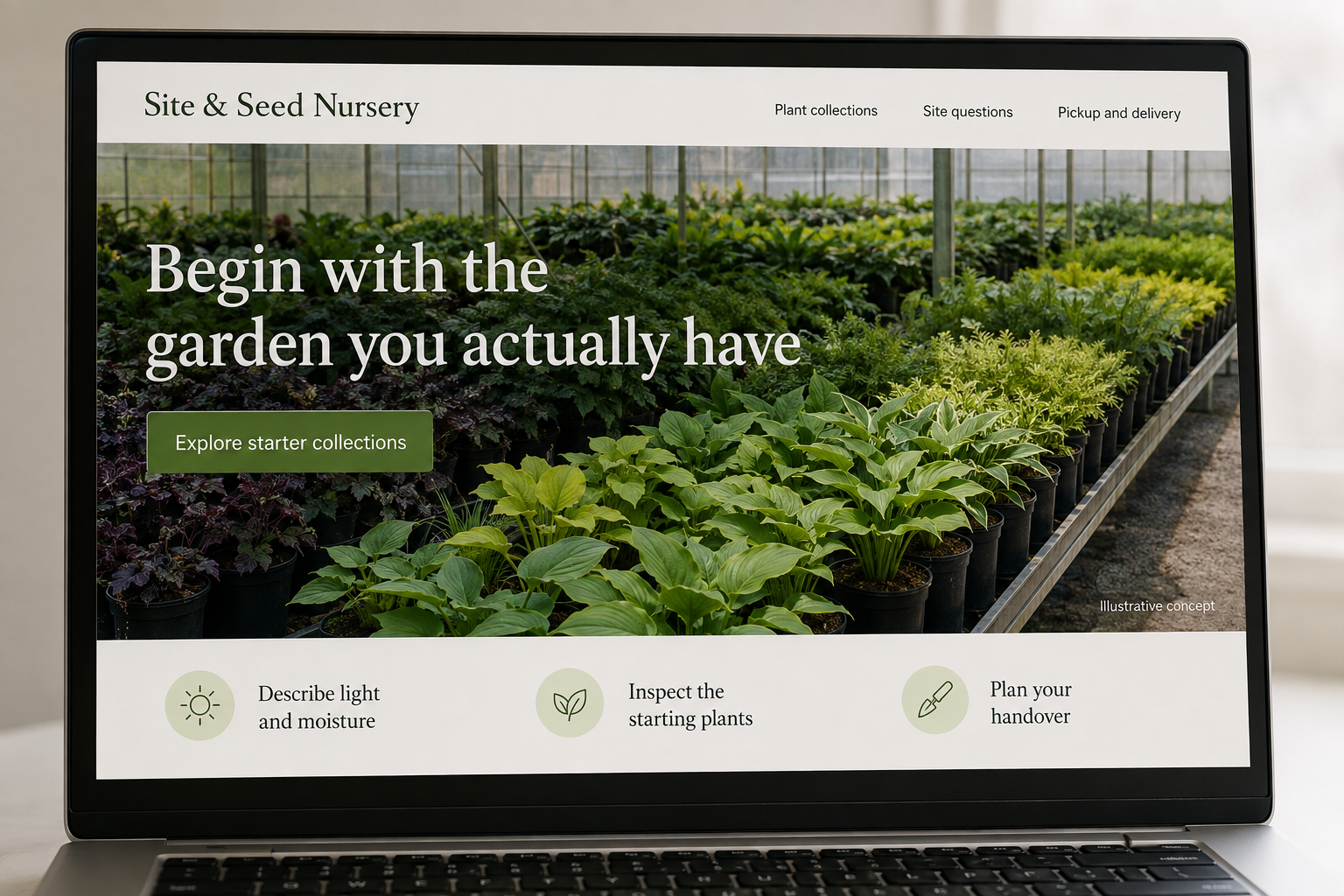
Explore this layout
Begin with the garden you actually have
Describe the space, inspect the plant list, and plan how your collection arrives.
The main action is “Explore starter collections”. Supporting sections cover Describe light and moisture, Inspect the starting plants, Plan your handover.

A plant collection labeled for an entire state can still be wrong for the light and moisture in one garden. A hypothetical Virginia nursery should use its website to ask about the site before promoting a starter bundle. The useful buying journey combines a clear plant list, the nursery’s own selection guidance, and fulfillment arrangements appropriate to the actual products.
Ask about the planting space first
Provide simple prompts for the light, moisture, available area, and other conditions the nursery uses in its selection process. Explain unfamiliar terms with concrete descriptions and let uncertain buyers request help. Do not treat a state or postal code as a complete assessment of the garden. A suggested collection should show the assumptions behind it. This lets a customer compare the recommendation with the space they have rather than accepting an unexplained result.
Show the actual plants inside a collection
List each plant by its accurate catalog identity, supplied size, quantity, and relevant nursery guidance. Photograph the young stock being sold as well as any clearly labeled mature example. Explain substitutions before purchase and preserve access to the details of any replacement. Avoid an attractive mature-garden rendering that implies an immediate result. The customer should understand the starting material and the planning assumptions behind the pictured arrangement.
Keep pickup and shipment requirements clear
If some plants are collected while others can be shipped, label the difference on collection cards. Show the actual pickup location, preparation process, and handover arrangements. For shipped products, check the destination against the nursery’s maintained availability rules. Keep temporary stock or dispatch notices current. A collection should not promise a single convenient fulfillment option if its components need different arrangements; explain the plan before the customer commits to the full set.
Teach customers how to read the selection
A planning page can explain why the nursery grouped particular catalog plants for an explicitly described example site. Include the starting quantities and assumptions, with links to the individual listings. Keep claims about local suitability accurate and reviewed by the nursery rather than inferring them from a decorative theme. Track incomplete site questionnaires and substitution concerns. Those questions can reveal missing definitions and help the business create useful discovery content grounded in its actual inventory.
Before you launch
- Show the assumptions behind suggested collections.
- Distinguish young stock from mature examples.
- List every supplied plant and quantity.
- Label collection-only items before checkout.
Is a state name enough to recommend a plant collection?
No. Conditions can differ between individual sites, so a useful selection process asks about the actual garden. Explain the light, moisture, space, and other assumptions the nursery uses. The state label can help organize the guide, but it should not replace the information needed to choose from the nursery’s catalog.