

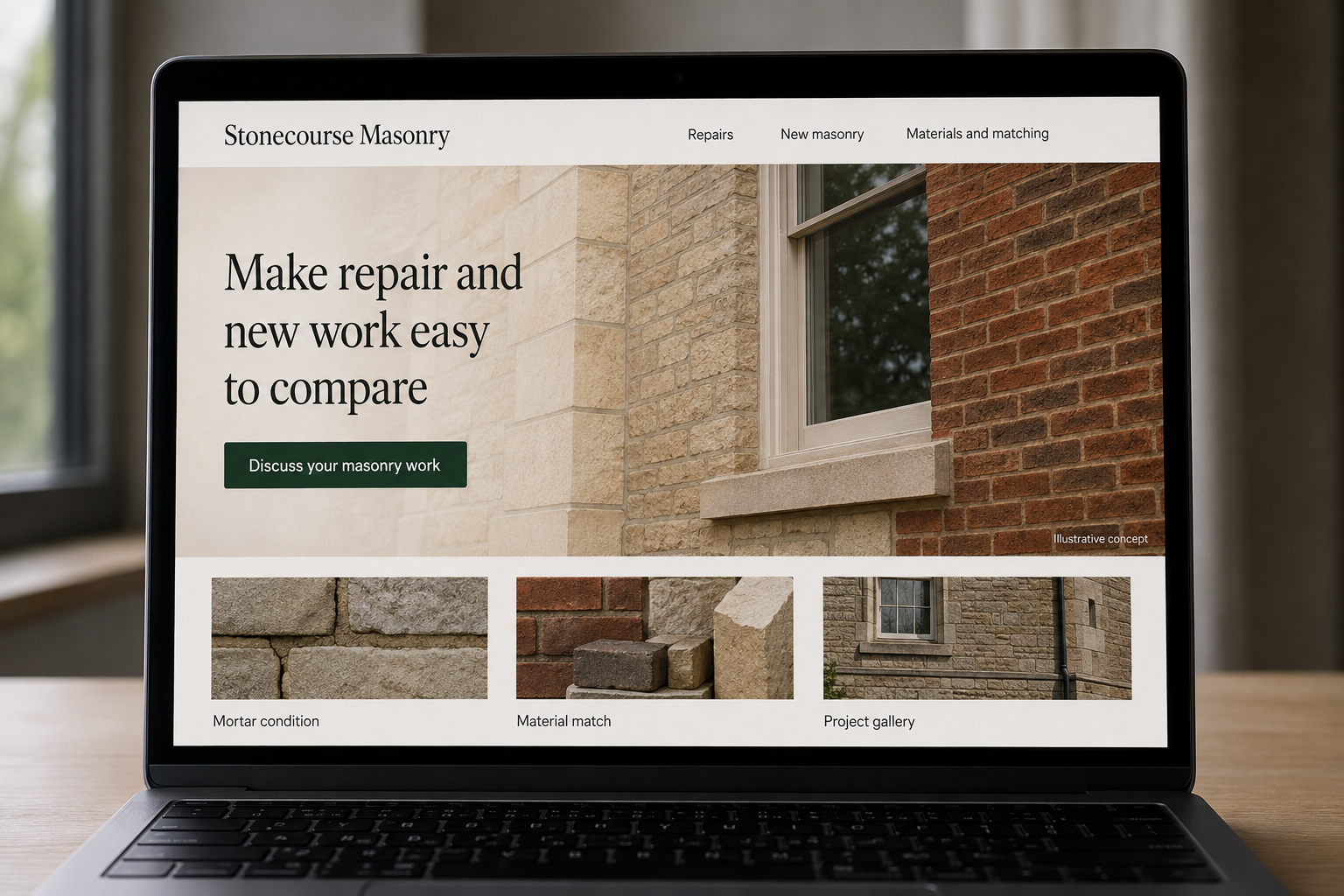
Explore this layout
Make repair and new work easy to compare
Explore mortar condition, material match, and project gallery.
The main action is “Discuss your masonry work”. Supporting sections cover Mortar condition, Material match, Project gallery.

People seeking masonry work may be trying to match an old wall, repair weathered joints, or build something entirely new. A gallery organized only by attractive stonework leaves those needs mixed together. Give repair and new construction their own paths, and explain how photographs, material matching, and a site visit help establish the appropriate scope for the particular structure.
Separate masonry repair from new construction
An owner worried about worn mortar is looking for a different conversation from someone planning a new garden wall. Give repair, restoration, and new work distinct paths when they are offered. Show the materials the business handles and explain that matching existing work can require close review. A visitor should be able to identify the relevant service without knowing the correct technical term for the condition they are seeing outside.
Use close views with wider context
A detail photograph can show workmanship, but pair it with an image of the whole feature so readers understand scale and use. Explain whether the project involved rebuilding, matching material, or constructing something new. Avoid presenting an image as proof of a structural diagnosis. Captions can describe the observed starting condition and the agreed scope without turning a gallery into instructions for assessing the safety of another property remotely.
Ask about the material and the goal
A useful inquiry requests the location, the part of the property involved, the customer’s concern, and available photos. Give an unsure option for material type. For new work, ask about dimensions and whether plans exist. Explain whether the next step is a site visit or document review. Keep appointment requests separate from confirmed bookings, especially when access or the project’s nature must be discussed before a visit can be arranged.
Turn specific examples into useful discovery pages
People may search for a particular kind of masonry work rather than a broad contractor category. Publish substantial pages only for real services, using original examples and practical scope explanations. Link related repair and new work pages where the distinction helps a reader. Measure accepted site visits by service type. If visitors repeatedly request a method the company does not offer, clarify the page rather than adding more ambiguous keywords.
Before you launch
- Distinguish repair examples from new masonry work.
- Show close views when material matching matters.
- Explain what a site assessment needs to establish.
- Let visitors describe the age and location of the structure.
How should we present masonry repair photographs?
Use consistent viewpoints where possible and explain the visible work, such as joint repair or replacing damaged units. Avoid implying that every underlying condition is apparent in a photograph. A concise scope note makes the example more useful and helps a prospective customer understand why their own structure still needs assessment.