

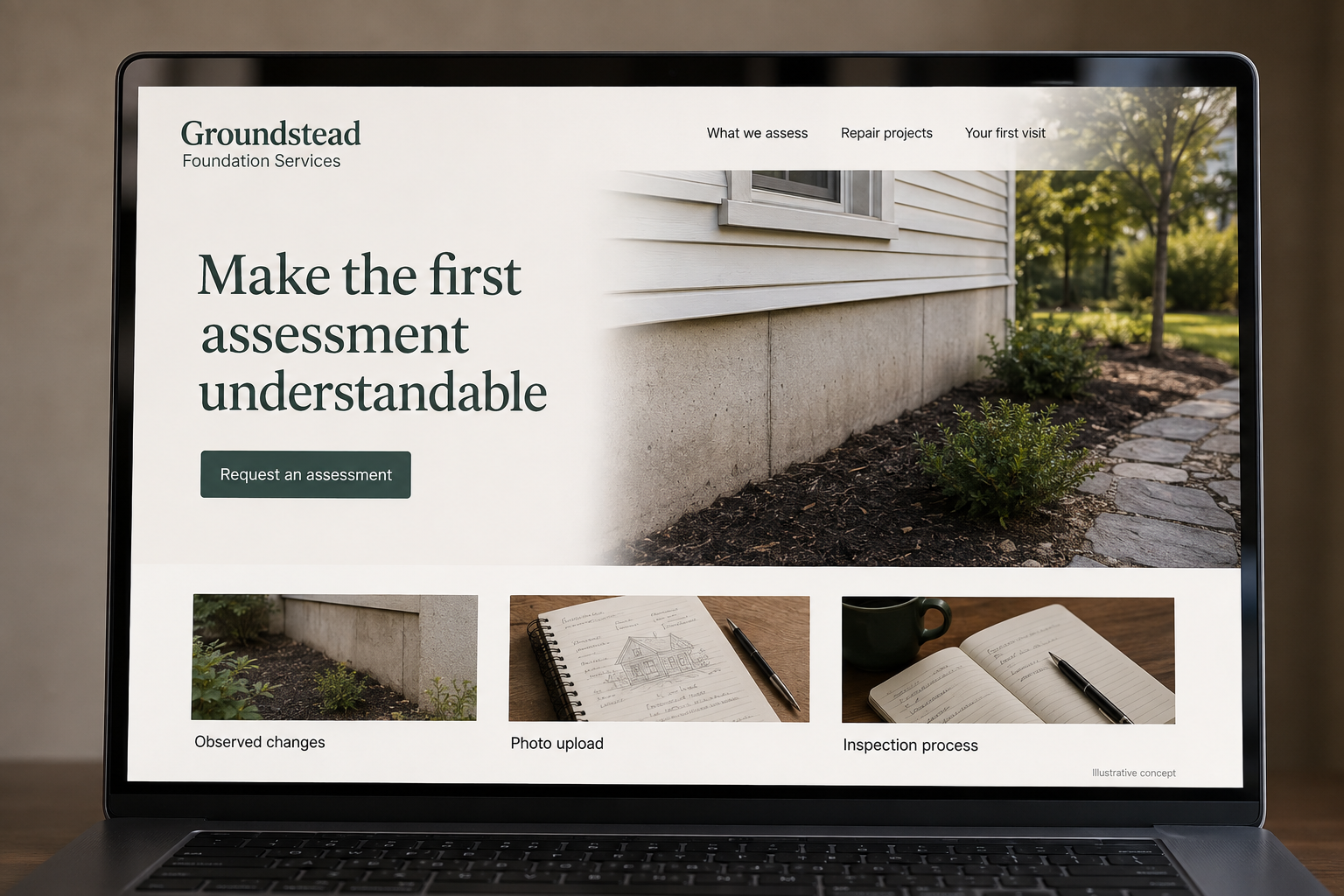
Explore this layout
Make the first assessment understandable
Explore observed changes, photo upload, and inspection process.
The main action is “Request an assessment”. Supporting sections cover Observed changes, Photo upload, Inspection process.
A crack in a wall can leave a property owner worried and unsure whom to call. A foundation repair website should provide a calm starting point. Explain how an assessment works, invite a description of what the owner has noticed, and distinguish the services your company provides. Avoid turning a photograph gallery into an online diagnosis of a building you have not inspected.
Respect the concern without diagnosing it online
An owner who notices a crack may already be anxious. Use calm language that explains the assessment process and gives a clear contact route. Do not label every visible mark as structural failure or claim that a photograph proves the cause. Show the kinds of properties and foundation work the company actually handles. The website’s first job is to help the visitor describe an observation and arrange the right discussion.
Explain what an assessment can establish
Describe the information gathered before any proposal, the role of a site visit, and how findings are communicated. If the business uses outside specialists for particular reviews, state that accurately. Keep repair method pages tied to the situations the team evaluates, rather than promising one method suits every building. A sample report format can show how observations and proposed scope are separated without inventing a customer case or a technical conclusion.
Ask for a timeline of observations
A useful inquiry can request where the change appears, when it was first noticed, and whether the owner has earlier photos or reports. Make document uploads optional and secure. Do not ask customers to enter unsafe spaces to gather information. Explain whether the initial contact is a scheduling call or a paid assessment discussion. This gives the office context while keeping the website within its role as an intake and education tool.
Use evidence with careful labels
Real project stories should explain the agreed scope and documented work without suggesting that every similar looking building needs the same repair. Avoid dramatic before images that create fear without context. Track inquiries that proceed to suitable assessments and note recurring misunderstandings. If readers treat educational examples as a diagnosis of their property, revise captions and calls to action so the page points clearly toward an individual review of the actual site.
Before you launch
- Keep observation requests separate from diagnostic claims.
- Explain the assessment and proposal sequence.
- Identify the work performed in each repair example.
- Allow owners to attach existing inspection documents if available.
Should we publish a gallery of different crack types?
Only with careful explanations of its limits. A gallery can help owners describe what they see, but it should not assign a repair to their property from an image alone. Keep the assessment route visible and explain that the building, site, and history need to be considered together.