

Explain inspections without alarming owners Explore fireplace type, service history, and visit scope. The main action is “Request a chimney visit”. Supporting sections cover Fireplace type, Service history, Visit scope.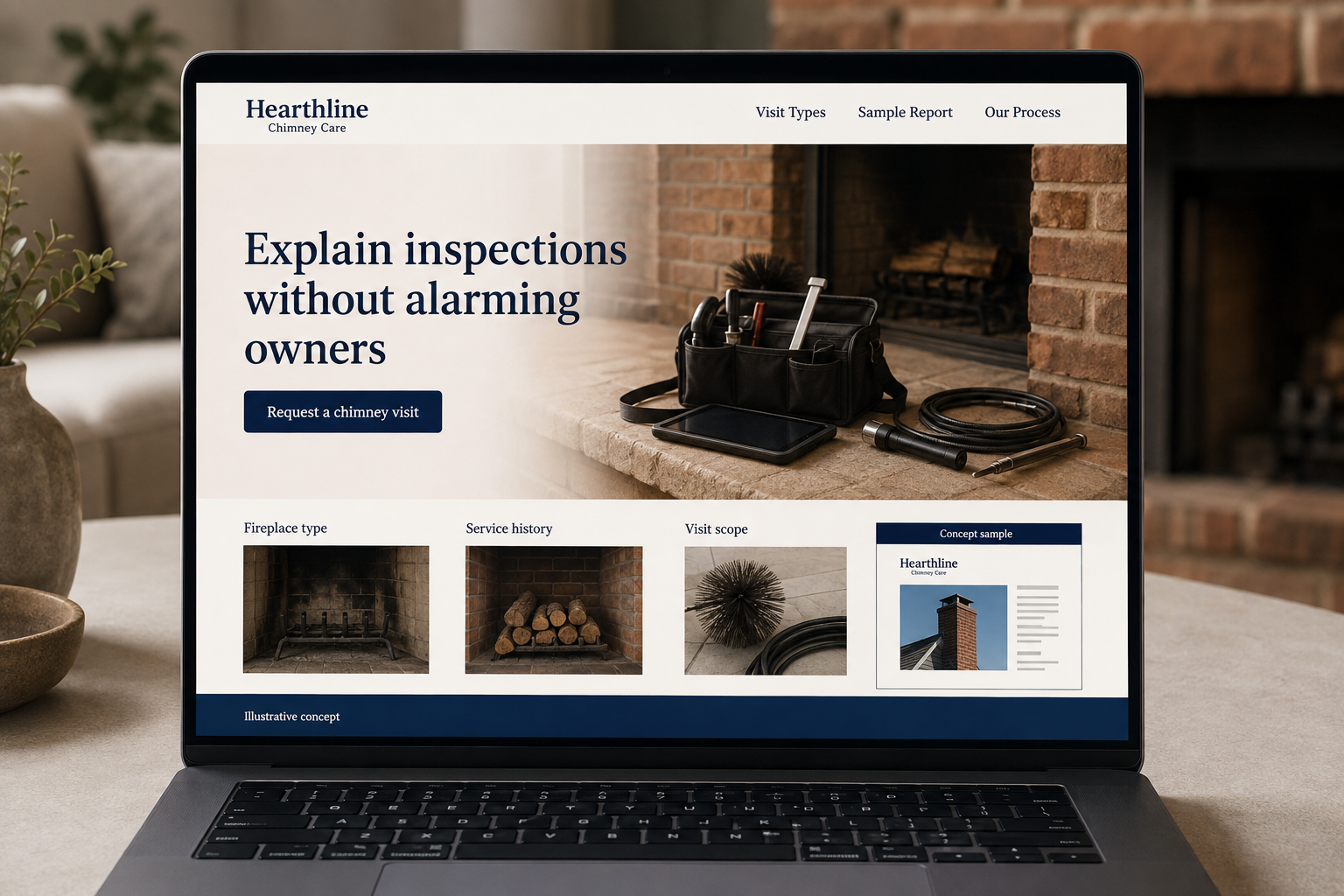
Explore this layout
A chimney service page should make an appointment understandable before it tries to sell one. Owners need to know the visits offered, what a report looks like, and which questions can only be answered after review. Calm explanations and a clearly labeled sample deliverable give them more useful context than a gallery of alarming defects.
Make the type of visit clear
Chimney customers may be asking about a routine service, an inspection, or a visible concern. Explain the visits the business actually offers and how they differ. Use plain language about the information gathered and the report provided. Avoid diagnosing a chimney from a photo or implying a universal service interval. The page should help the owner understand what to request and what the professional will discuss after reviewing the specific fireplace or chimney.
Give reports a place in the explanation
A sample report layout can show how observations, images, and recommendations are presented, using clearly fictional example data. Explain whether the customer receives written findings and how further work is proposed. Separate cleaning from repair where those are distinct services. A gallery should describe the agreed job and materials without presenting every similar looking chimney as needing the same work. This gives customers a calmer, more useful basis for an initial conversation.
Ask about the fireplace and previous work
An inquiry can request the property location, fireplace type when known, the reason for contact, and any available service history. Photos can be optional. Do not ask visitors to climb, remove parts, or enter difficult areas to complete the form. Explain whether the next step is a call or a scheduled visit. Returning customers should be able to ask about a prior report without submitting their full property history again through a new inquiry.
Use service questions to guide content
Track requests by visit type and note the points staff repeatedly explain. If customers assume a cleaning appointment includes every inspection service, revise the comparison where booking begins. A guide to gathering existing service records can help visitors prepare without giving repair or safety instructions. Link that guide to the relevant service. Measure suitable bookings and clearer expectations rather than relying on dramatic photographs to create concern and push every reader toward the same action.
Before you launch
- Explain each visit type
- Remove identifiers from report samples
- Ask about available service history
- Keep repair claims project specific
Is a sample report useful on a chimney website?
Yes, if it shows the format clearly and contains no private customer details. Label fictional examples as fictional. Explain how observations and recommendations are organized so visitors can understand the deliverable without assuming that an example finding says anything about their own chimney or fireplace.