

Help buyers specify the pack around the product Explore product dimensions, pack quantities, and sample request. The main action is “Build a packaging brief”. Supporting sections cover Product dimensions, Pack quantities, Sample request.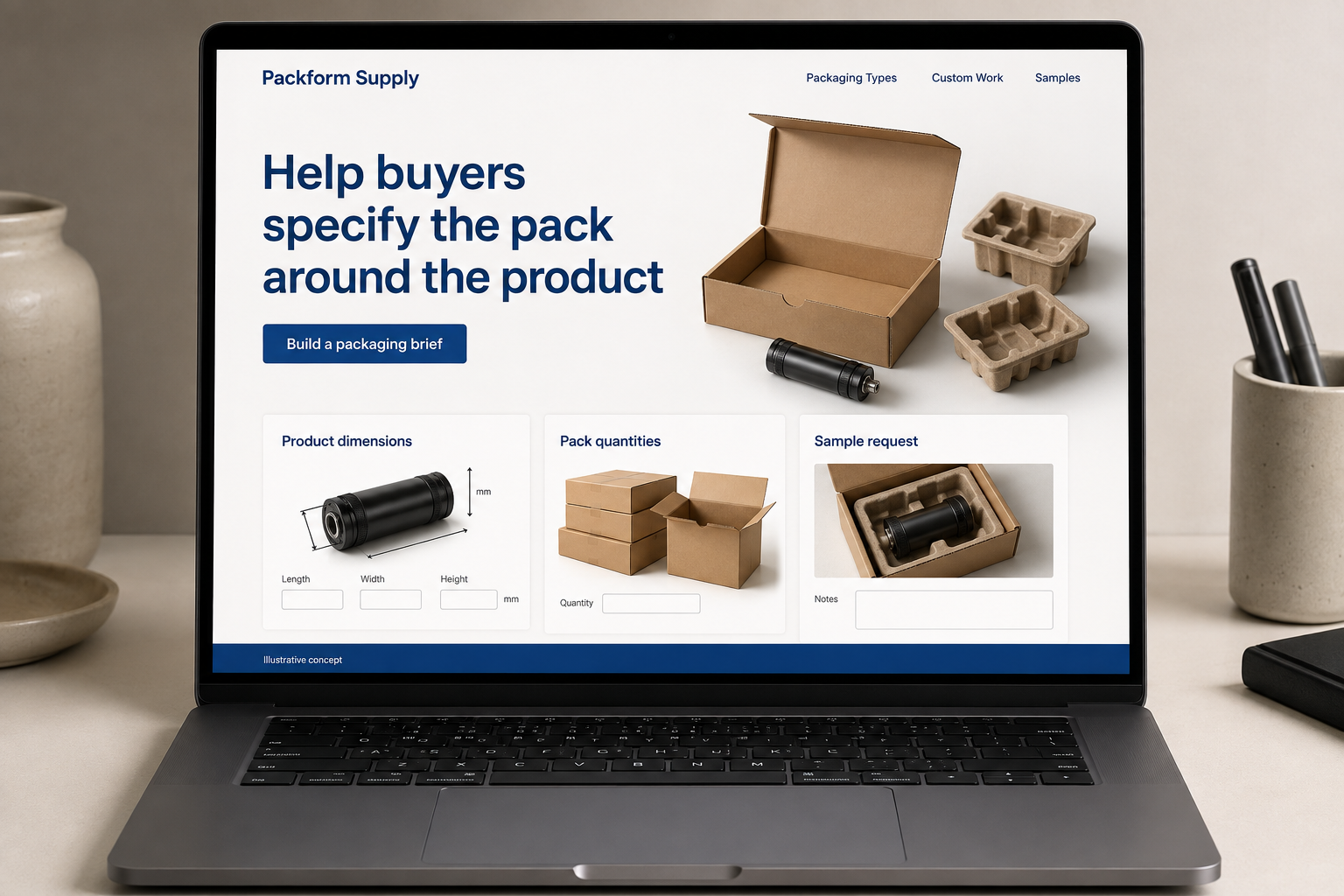
Explore this layout
A packaging buyer may know the size of the product and the problem with the current box while having no name for the better format. A supplier’s website should welcome that starting point. Show useful product categories, explain stock and custom options, and make dimensions, quantities, samples, and artwork review part of one understandable purchasing journey.
Start with what the packaging must hold
A buyer may know the product dimensions and shipping problem before knowing the right packaging format. Offer routes by use alongside product categories. Explain the materials, sizes, and customization actually available. Avoid implying that one pack suits every product or transport condition. A useful catalog helps visitors make a shortlist and request a sample or discussion, while making clear which requirements must be reviewed before the supplier can confirm an appropriate packaging specification for the customer.
Make quantities and customization visible
State how stock products differ from custom work, including actual order conditions and lead time information where maintained. Do not hide minimum quantities until the inquiry is submitted. Show print areas, finishing choices, and sample options in context rather than as a maze of unexplained codes. Buyers comparing suppliers need to understand what can be ordered directly, what requires a quote, and which details influence the process before a final package and production arrangement can be agreed.
Collect a product and packing brief
Ask for the product’s size, general characteristics, intended use, quantity range, and whether artwork or an existing pack is available. Keep sensitive product details optional at first contact. Let visitors request help when they do not know the packaging term. Explain sample handling and who reviews a custom inquiry. The form should carry selected catalog items into the request so the buyer does not need to copy product codes and repeat the same information in a separate message.
Measure samples and quotes that lead somewhere
Track stock inquiries, custom quote requests, and sample requests separately. If visitors repeatedly assume a custom design is available in tiny quantities, improve that explanation beside the relevant action. Content about preparing a packaging brief can attract useful buyers and make the sales discussion more concrete. Link it to the appropriate product family. Evaluate suitable orders and clearer specifications rather than the raw number of catalog views or broad claims about protecting every possible product in every situation.
Before you launch
- Show minimum quantities beside custom-package options.
- Carry selected package codes into sample requests.
- Distinguish stock orders from custom quotation work.
- Let buyers describe the product without packaging jargon.
Should a custom-packaging inquiry begin with a box style?
A known style is useful, but it should not be required when the buyer needs help choosing. Ask about the product dimensions, general characteristics, intended use, and quantity range. Explain how samples or specifications are reviewed before the supplier confirms a package, rather than making an uncertain style choice decide the entire request.