

Help operations teams assess storage fit Explore product profile, receiving needs, and order flow. The main action is “Discuss your product flow”. Supporting sections cover Product profile, Receiving needs, Order flow.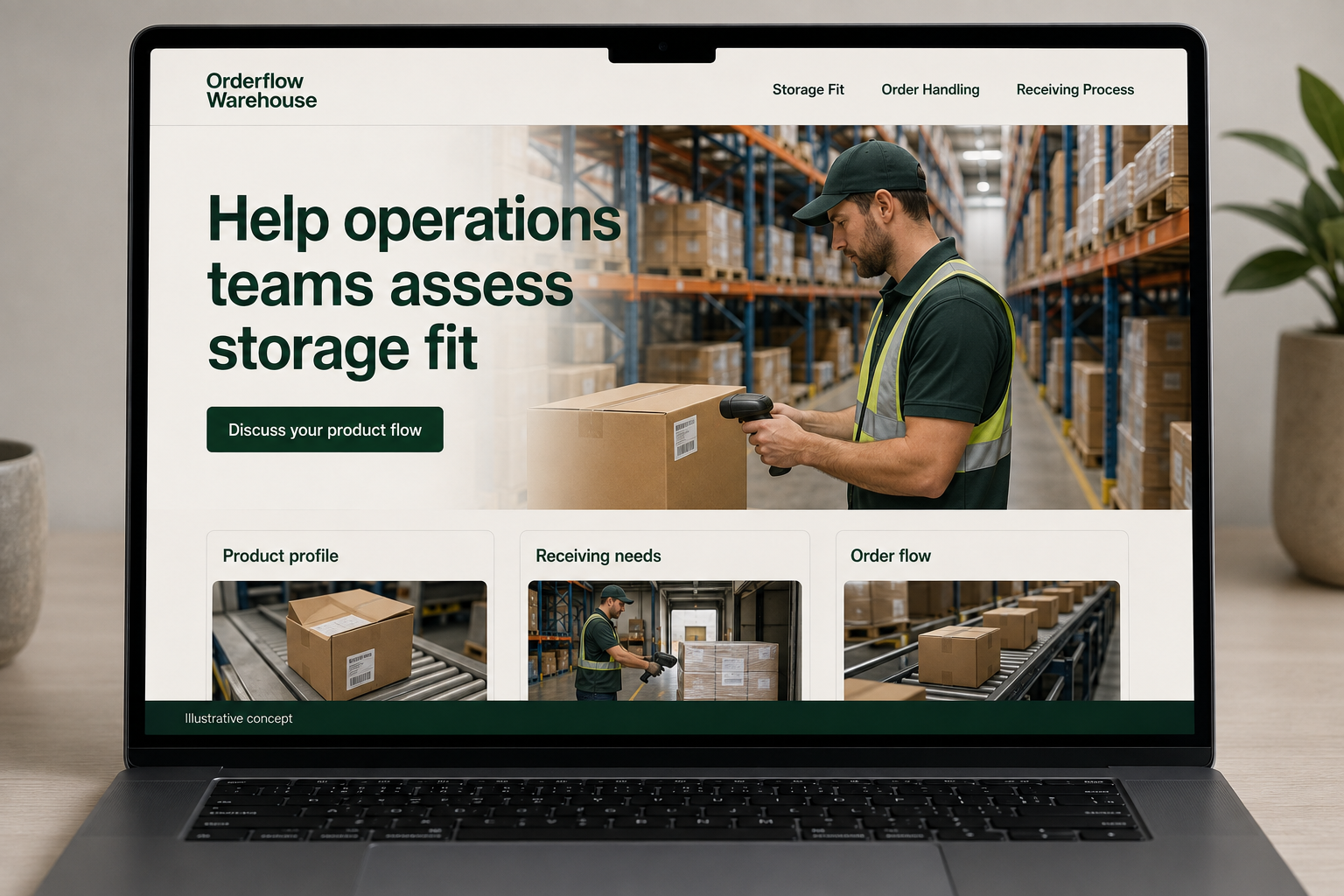
Explore this layout

Floor area alone does not tell an operations team whether a warehouse suits its products. The buyer needs to understand receiving, storage, order handling, and dispatch as a connected service. A warehousing website should show those handoffs and ask for a concise product-and-volume profile, giving both sides a practical starting point before detailed inventories and integration requirements enter the discussion.
Help operations teams assess the fit
A warehouse buyer needs to know whether the facility and service model suit the products and order flow. Explain the storage types, handling capabilities, and related services actually offered. Avoid a broad claim that every product can be accepted. Give a clear route for a capacity discussion. The first page should help a prospective customer identify a plausible match before asking them to submit detailed commercial records or arrange a lengthy sales meeting with the team.
Show the flow through the operation
Describe receiving, storage, order handling, and dispatch at a level a buyer can follow. State which stages the business handles and which involve customer systems or other providers. A clearly labeled sample workflow can show the handoffs without revealing client information. Buyers need to understand more than the building’s size. The useful question is how their products and orders would move through the offered service and where further scoping or integration discussion is required.
Ask for a product and volume profile
A first inquiry can request general product type, storage needs, approximate volume, order pattern, and desired start period. Let the customer explain unusual handling questions without uploading a full inventory file. Keep sensitive business data for a controlled follow up process. Explain who reviews the profile and what further information helps establish fit. Do not turn a capacity inquiry into a promise of available space before the warehouse has assessed the specific requirements and timing.
Measure suitable operations conversations
Track inquiries by product profile and requested service, then compare them with accepted discovery calls. If many visitors expect services the facility does not provide, clarify the workflow and capability pages. Content about preparing a warehousing brief can attract relevant teams and improve the initial discussion. Link it to the inquiry. Evaluate useful opportunities and clearer scope rather than relying on warehouse photographs or total floor area to communicate a service that depends on many operational details.
Before you launch
- Show which receiving-to-dispatch stages are included.
- Ask for order pattern as well as storage volume.
- Label sample workflows as illustrative.
- Keep full inventory files out of initial public inquiries.
Is storage capacity the most useful headline for a warehouse site?
Capacity can matter, but it does not establish product or service fit. Explain supported storage and handling arrangements, the order flow, and the information reviewed before space is confirmed. Buyers need to understand how their operation would use the facility, not merely compare building sizes without context.