

Explain ongoing responsibility before a sales call Explore service scope, onboarding plan, and reporting example. The main action is “Discuss ongoing IT support”. Supporting sections cover Service scope, Onboarding plan, Reporting example.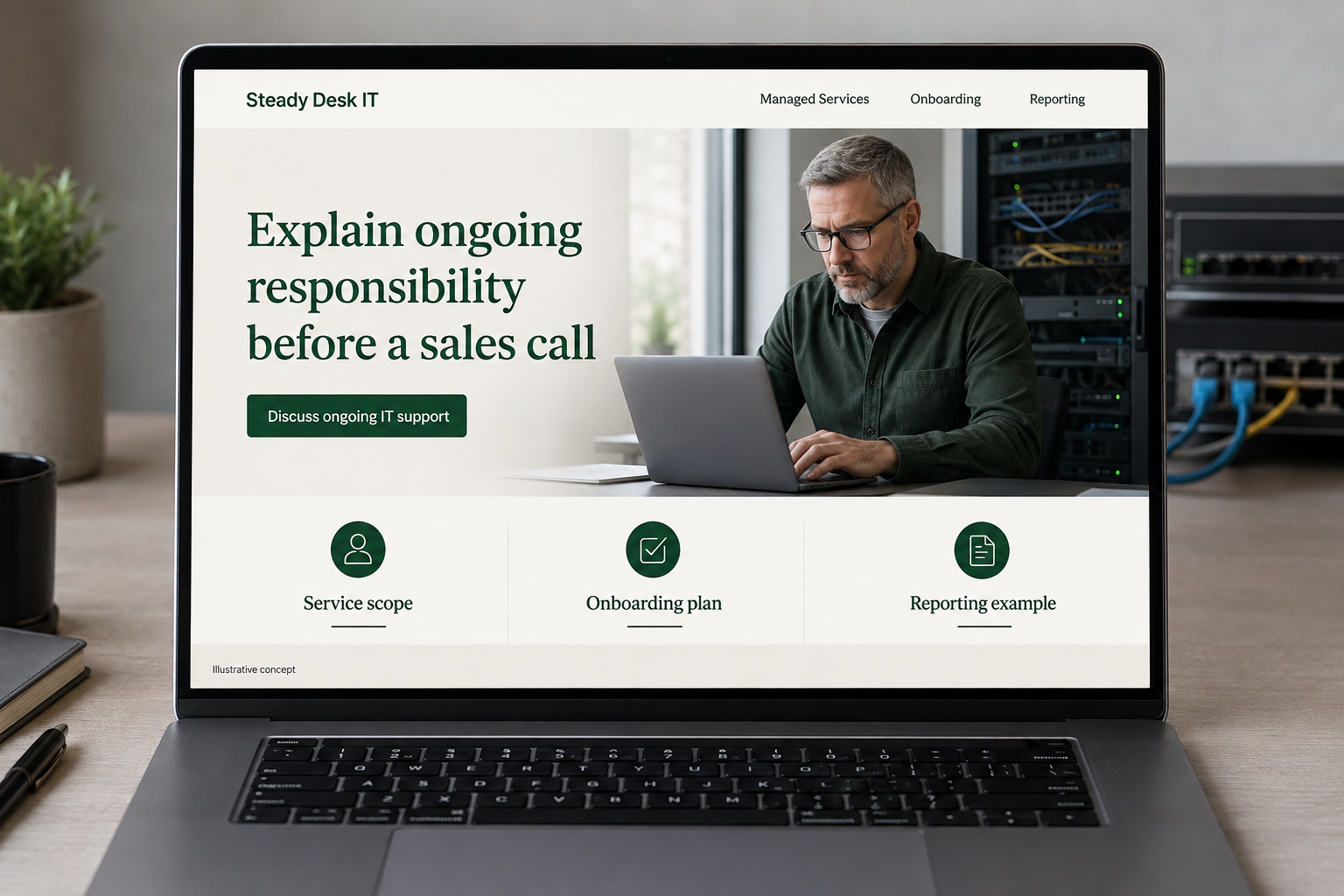
Explore this layout
Choosing ongoing IT support means deciding who will take responsibility for recurring work and how the organization will ask for help. A managed-provider website should make that relationship concrete. Explain service scope, onboarding, reporting, and the treatment of separate projects before asking a prospect to compare monthly figures that may represent very different arrangements.
Explain who is responsible for what
A managed IT buyer needs to understand the ongoing relationship, not merely a list of support tasks. Describe the actual service scope, communication routes, and responsibilities that remain with the customer. Avoid suggesting that a plan eliminates every technology problem. Give organizations a clear way to discuss their environment and priorities. The page should help a decision maker assess whether the service model fits before they compare a headline monthly figure that may cover a different set of responsibilities.
Make onboarding visible before the sales call
Explain the stages used to understand the existing environment, agree scope, establish support routes, and begin reporting. A fictional sample report can show the format without exposing client data. State how projects outside the ongoing service are discussed. Buyers need to know how a transition is planned and who participates. A readable onboarding account helps them prepare internal questions, while a page of vague assurances leaves the practical work and expectations of starting the relationship unclear.
Ask for an organization profile
A first inquiry can request team size in broad terms, locations, current support arrangement, and the main goals for change. Avoid asking for network diagrams, credentials, or detailed system inventories in the public form. Let the customer indicate whether they need a new provider or are exploring support for the first time. Explain what a discovery conversation covers and who should attend. The website should begin scoping rather than produce an automatic service commitment from staff count alone.
Measure fit for an ongoing relationship
Track discovery requests by organization needs and compare them with suitable opportunities. Repeated questions about included projects or response arrangements should shape the service comparison. Useful content can explain how to prepare for a provider discussion or review a sample report. Link it to the consultation route. Evaluate qualified conversations and clearer expectations, not only downloads, and keep the public description aligned with what the team can actually deliver throughout the customer relationship after onboarding is complete.
Before you launch
- Identify responsibilities that remain with the customer.
- Show the actual stages of provider onboarding.
- Label sample reports as fictional or cleared for publication.
- Explain how projects outside the ongoing plan are proposed.
How is a managed IT page different from a one-time support page?
It needs to explain an ongoing division of responsibilities, the support relationship, and how the organization is onboarded and informed over time. A list of repair tasks is not enough. Show how separate projects are handled and what a discovery discussion must establish before the service scope can be agreed.