

Make assessment deliverables understandable Explore engagement scope, sample deliverables, and consultation request. The main action is “Plan an assessment discussion”. Supporting sections cover Engagement scope, Sample deliverables, Consultation request.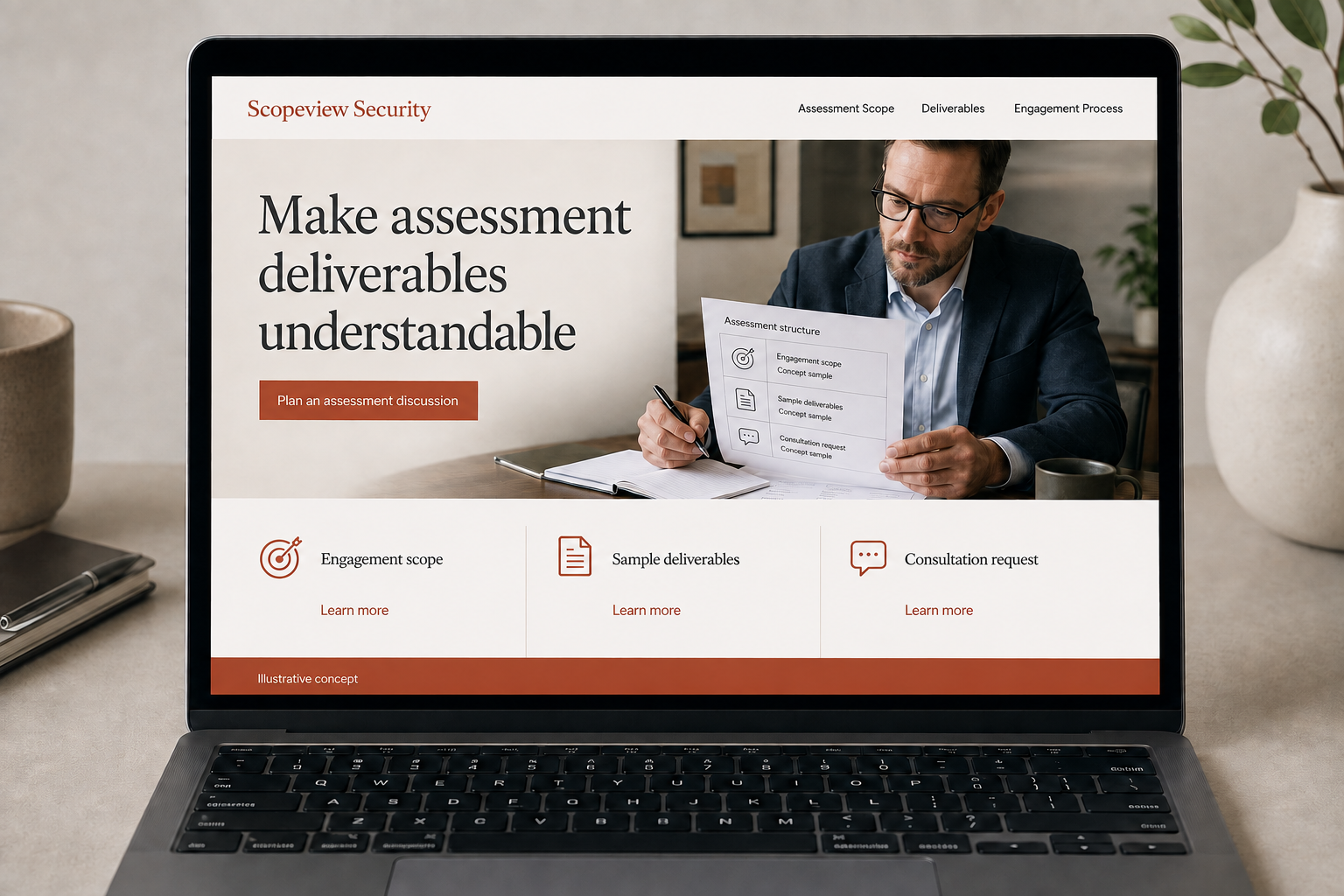
Explore this layout

A buyer considering a cybersecurity assessment needs to understand what will be reviewed and what they will receive. A consulting website should make those deliverables clear without relying on alarming headlines. Show the engagement boundaries, explain the report and follow-up discussion, and make the first contact a scoping conversation rather than a request for sensitive system details or permission to begin testing.
Define the engagement before listing threats
A cybersecurity buyer may need a scoped assessment, a review of a particular environment, or help understanding a set of findings. State the consulting services actually offered and the deliverables associated with them. Avoid fear based promises or claims of complete protection. A useful first page helps the reader recognize the kind of engagement they need and understand that scope, authorization, and information handling are discussed before any assessment work begins on a customer’s systems or data.
Show what the client receives
Use a clearly fictional or properly cleared sample deliverable to explain the report structure, finding priorities, and follow up discussion. Keep confidential details out of public examples. Distinguish assessment from remediation or ongoing operations if they are separate services. Buyers need to understand how the work supports a decision, not just see a list of technical tools. A plain explanation of the engagement’s boundaries gives them a better basis for preparing questions and comparing the offered consulting scope.
Keep first contact free of sensitive material
Ask about the broad environment, the reason for seeking an assessment, the desired outcome, and the person’s role. Do not request passwords, detailed weaknesses, or confidential reports through an open form. Explain the next scoping conversation and how further information is exchanged. A contact submission should not imply authorization to test anything. The site should make it easy to discuss a legitimate engagement while preserving the separate steps needed to define and approve the actual work.
Measure relevant assessment conversations
Track inquiries by engagement type and note where visitors expect services outside the offer. If readers confuse a scoped review with ongoing monitoring, clarify that distinction near the action. Helpful content can explain how to prepare an assessment brief or understand a sample report’s sections without giving attack instructions. Link it to the consultation. Judge the website by suitable scoping discussions and clearer deliverable expectations rather than alarming headlines or unsupported claims that one assessment proves an organization is secure.
Before you launch
- Separate assessment deliverables from remediation services.
- Use fictional or cleared report samples without client details.
- Keep passwords and confidential findings out of intake fields.
- State that first contact does not authorize assessment work.
Can an assessment report sample help buyers compare consultants?
Yes, when it is clearly fictional or properly cleared for publication and shows the structure rather than confidential findings. Explain how priorities, limitations, and follow-up are presented. A sample can clarify the deliverable while leaving the actual assessment scope and authorization to the separate engagement process.