

Design around the meetings a room must support Explore room requirements, system concept, and support handover. The main action is “Build a room brief”. Supporting sections cover Room requirements, System concept, Support handover.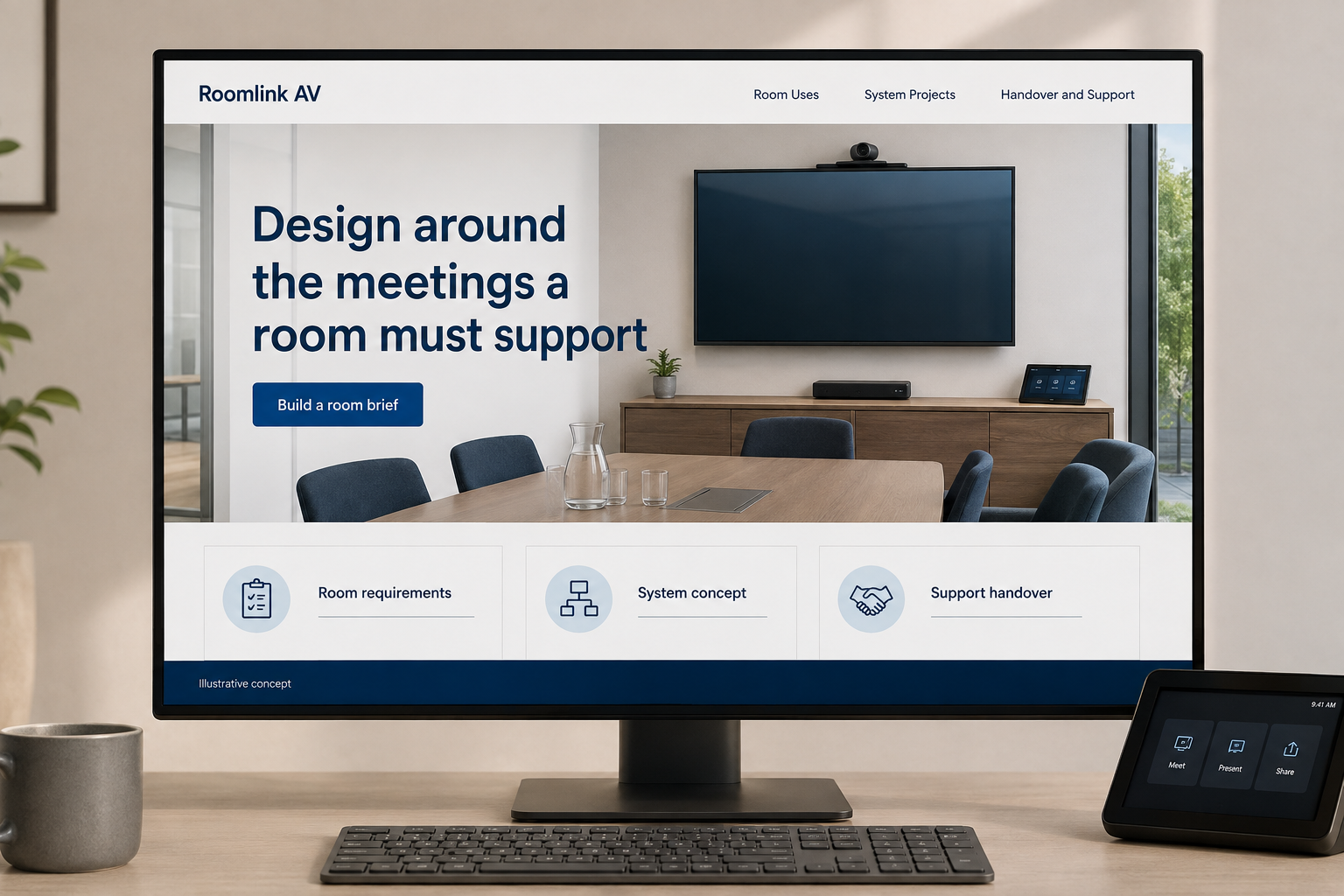
Explore this layout
A meeting room is successful when people can use it for the conversations and presentations they need to have. A commercial AV website should begin there, with room purpose and user experience before equipment brands. Explain how the integrator gathers requirements, installs and tests the system, and hands it over, then invite a room brief that a nontechnical organizer can complete.
Start with the meetings the room must support
An AV buyer may be planning hybrid meetings, presentations, training, or another shared activity. Organize the site around those uses before presenting equipment brands. Explain the room types and project scale the integrator actually handles. A labeled concept can show how displays, sound, and controls support a meeting without implying a fixed system suits every space. The useful next step is a conversation about the room, its users, and the experience the organization wants to improve.
Explain the handover as well as the installation
Describe how requirements, system design, installation, testing, and user handover are discussed. State which support services are offered after the project and which require a separate arrangement. Buyers need to know who helps the organization use the room, not only who mounts the equipment. Case studies should describe documented scope and permissioned details. A clear project sequence helps the customer understand the decisions and people involved before expecting a firm proposal from a few room photos.
Build a room brief people can complete
Ask about location, room purpose, approximate size or seating, current equipment in broad terms, and the main frustration. Let the customer attach a plan if available without making it mandatory. Avoid requesting sensitive network details in the first form. Explain who reviews the brief and what happens during discovery. The inquiry should help the team prepare a useful discussion rather than force the buyer to choose technical components before the actual requirements and room conditions are understood.
Measure projects that match the service
Track inquiries by room type and project stage, then review which become suitable consultations. Repeated requests for equipment only sales or unsupported systems suggest a scope explanation problem. Content about preparing a meeting room brief can attract relevant teams and improve discovery. Link it to the project inquiry. Evaluate clear requirements and appropriate opportunities, rather than judging the site by the number of technology logos or images of impressive rooms that do not explain how the service helps their users.
Before you launch
- Organize examples by room purpose and meeting use.
- Ask about the main room frustration before equipment choices.
- Explain user handover and any separate support arrangement.
- Keep sensitive network details out of the initial room brief.
Does an AV inquiry need a complete equipment list?
Not when the buyer needs help defining the system. Room purpose, approximate size or seating, current frustrations, and broad existing equipment can support the first discussion. Let plans be attached if available. The integrator can then establish requirements rather than asking a nontechnical organizer to choose components before the room has been reviewed.