
Explain an automation project around the process Explore process problem, system interfaces, and discovery request. The main action is “Start a discovery conversation”. Supporting sections cover Process problem, System interfaces, Discovery request.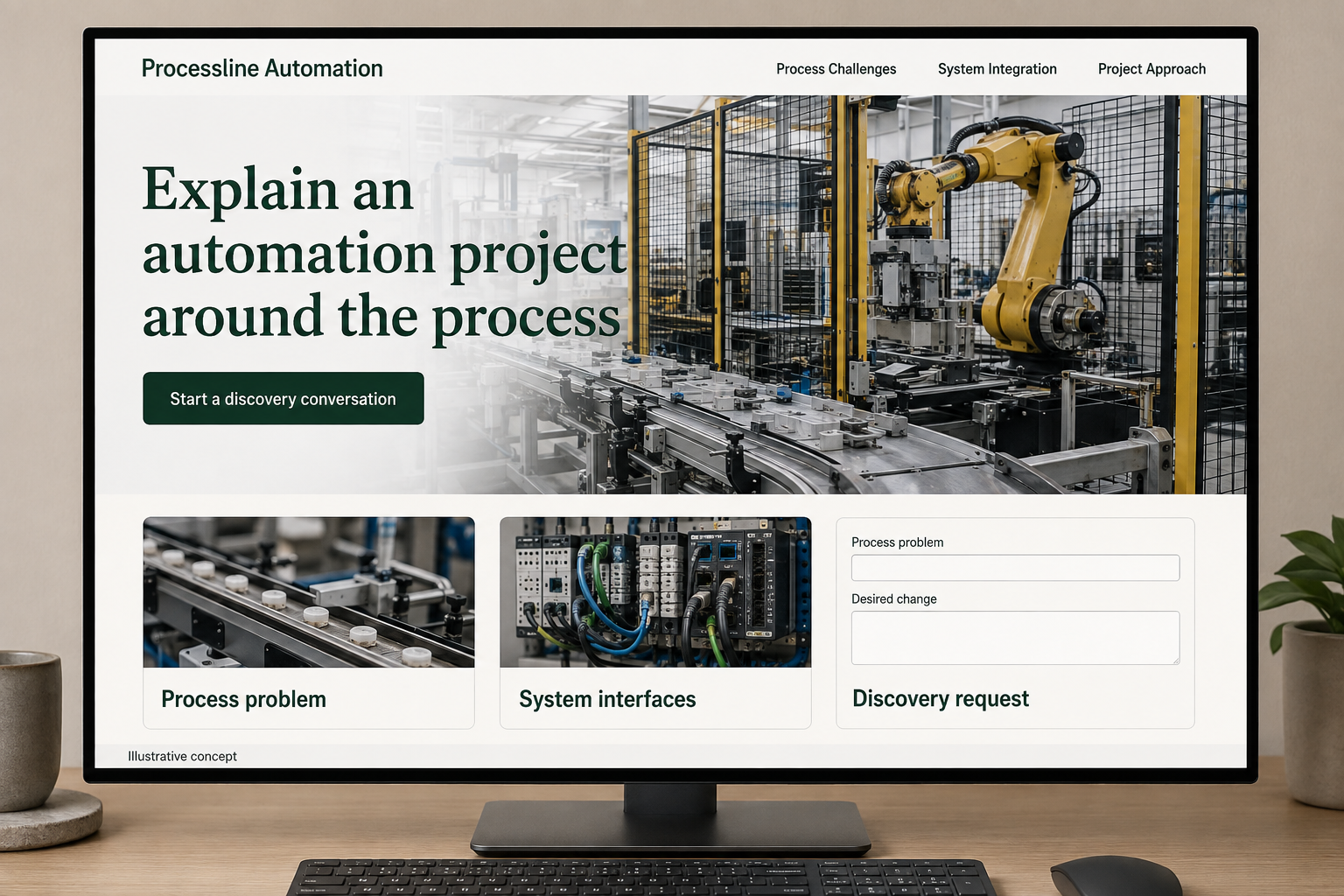
Explore this layout
An operations team may know exactly where work stalls without knowing which technology would improve it. An industrial-automation website should begin with that process problem. Explain how the integrator studies the current workflow, defines interfaces, and agrees the project’s scope, then invite a brief that describes the desired change instead of making the buyer choose equipment before discovery.
Lead with the process problem
An operations team may want less manual handling, better process visibility, or a more consistent handoff between stations. Organize the website around those business situations and the systems the integrator actually works with. Avoid promising a universal productivity gain. A clear first page helps the buyer describe the current process and desired change before being pushed toward a specific technology or assuming that one demonstration cell represents a ready made solution for their production environment.
Show interfaces and project stages
Explain how discovery, concept development, integration, testing, and handover are discussed in the actual service. Identify where existing equipment and customer systems enter the conversation. Case studies should use documented scope and permissioned details, separating observed outcomes from aspirations. Buyers need to know how requirements and responsibilities are established. A readable project sequence is more useful than a long list of technology logos that does not explain how the company approaches a real operational problem at a site.
Build discovery around the current workflow
Ask for the process area, the problem, existing systems in broad terms, and the intended outcome. Keep detailed network or production information out of the initial public form. Let the customer indicate whether they have a defined specification or need help scoping one. Explain who reviews the request and what happens in a discovery meeting. The inquiry should begin a conversation about fit, not imply that an automation design can be selected from a simple online checklist.
Measure opportunities that match the capability
Track requests by process and project stage, then review which become suitable discovery work. If visitors expect software products or services outside the offer, clarify the capability pages. Useful content can explain how to prepare a process brief or identify the people who should join a requirements discussion. Link it to the consultation. Judge acquisition by relevant projects and clearer requirements, rather than unsupported claims about replacing labor or dramatic demonstrations that lack any explanation of the work involved.
Before you launch
- Ask about the current workflow before preferred technology.
- Identify the interfaces discussed during discovery.
- Separate measured case-study outcomes from project goals.
- Keep detailed production and network records out of first contact.
Should an automation inquiry require a fully written specification?
Only if that is the kind of work the business accepts. When discovery and scoping are offered, let buyers describe the process, the current difficulty, and the intended outcome. Explain who should join the first discussion. A clear problem statement can be more useful initially than a premature list of technical components.