

Explore this layout
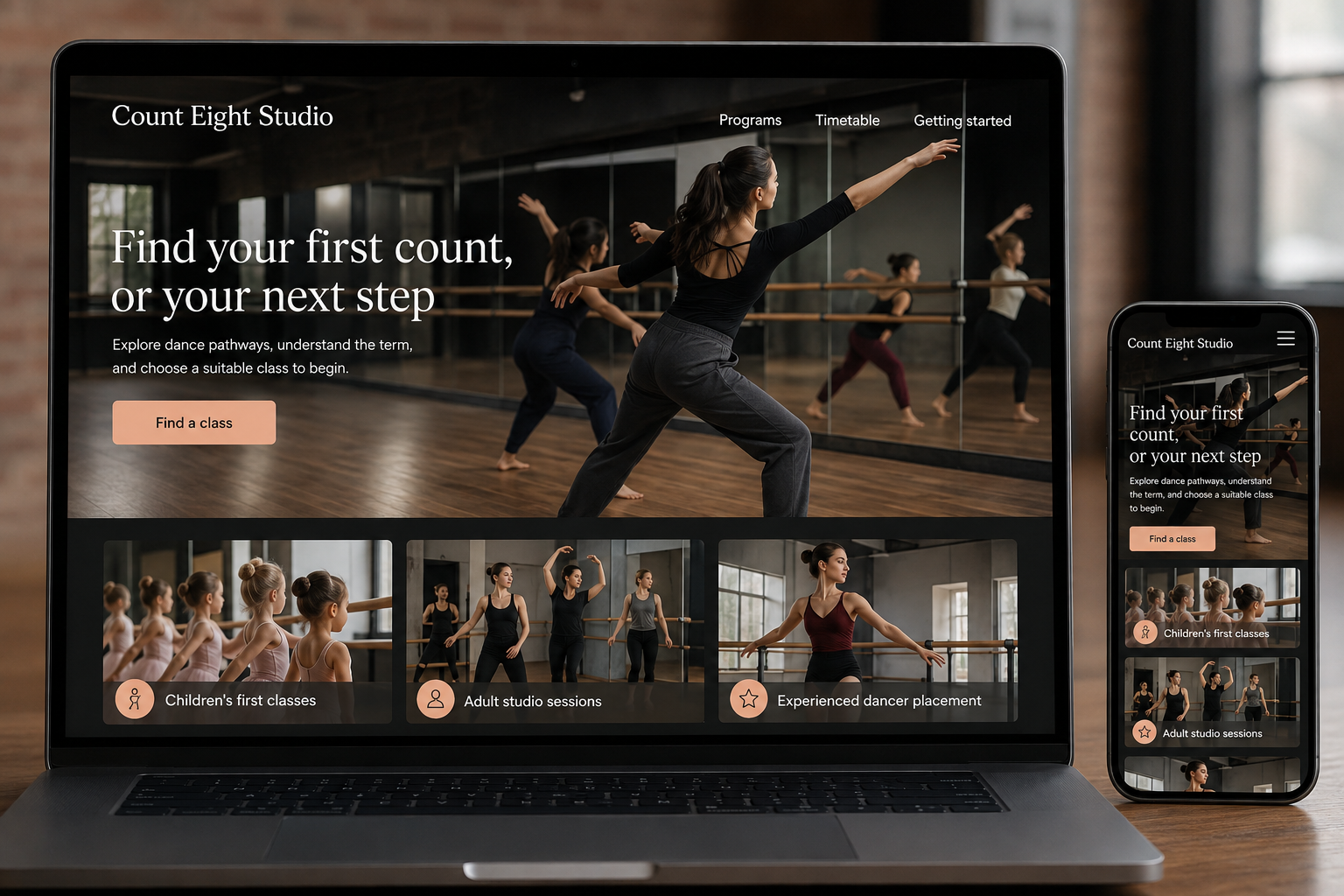
Find your first count, or your next step
Explore dance pathways, understand the term, and choose a suitable class to begin.
The main action is “Find a class”. Supporting sections cover Children's first classes, Adult studio sessions, Experienced dancer placement.
A dance studio may teach children starting their first class, teenagers building experience, and adults trying something new. The website needs to help each find the right doorway. Style names and timetable codes are not enough. Clear descriptions of age groups, experience, and enrollment expectations let prospective students understand the opportunity without already knowing how the studio organizes its teaching.
Show the pathways through the studio
Group programs by meaningful age and experience bands, then explain the available styles within them. Describe what students practice and how classes progress, without guaranteeing a particular level of achievement. Keep recreational and performance-focused routes distinct where both exist. A parent choosing a first class needs different information from an experienced dancer asking about placement. The website should make those paths visible instead of asking every visitor to decode the same dense timetable.
Explain the first class in practical terms
Show duration, location, clothing or footwear guidance, and whether a trial is available. Explain how placement questions are handled and whether an assessment or conversation comes before enrollment. Use accurate photographs of the studio and permission-cleared teaching examples. Avoid implying that an advanced performance image represents the expectation for every newcomer. People are more able to decide when they understand the ordinary lesson rather than seeing only the polished end-of-term presentation.
Make term commitments visible
Publish start and end dates, attendance arrangements, fees and inclusions, and any separately arranged performance or costume costs that affect the decision. Explain whether students can join after a term begins. Keep registration tied to the actual class group and date range. A calendar entry for one lesson should not conceal that the purchase covers an entire course. Parents and adult learners need a clear summary they can review before making an ongoing commitment.
Connect inspiration to suitable enrollment
Feature real class or performance stories with consent and explain the program involved. Link them to relevant current classes and an inquiry route for placement questions. Track trial bookings, suitable registrations, and reasons families ask to change groups. Frequent confusion about levels or term timing suggests a navigation problem. Useful content should help students enter the right class and understand how they can continue, rather than simply promote the studio with an endless gallery of stage photographs.
Before you launch
- Show age and experience together
- Publish full term dates
- Explain trial and placement arrangements
- Disclose separately arranged performance costs
Should every student book the same trial class?
Not necessarily. Age, experience, and interests may call for different starting points. Explain how the studio chooses an appropriate trial and let prospective students ask for guidance. A simple placement inquiry can be more useful than a universal booking button that sends everyone into one group.