

Start with a note and a clear plan Explore lessons, understand what to bring, and tell us about your musical starting point. The main action is “Explore lessons”. Supporting sections cover First lessons, Continuing players, Equipment questions.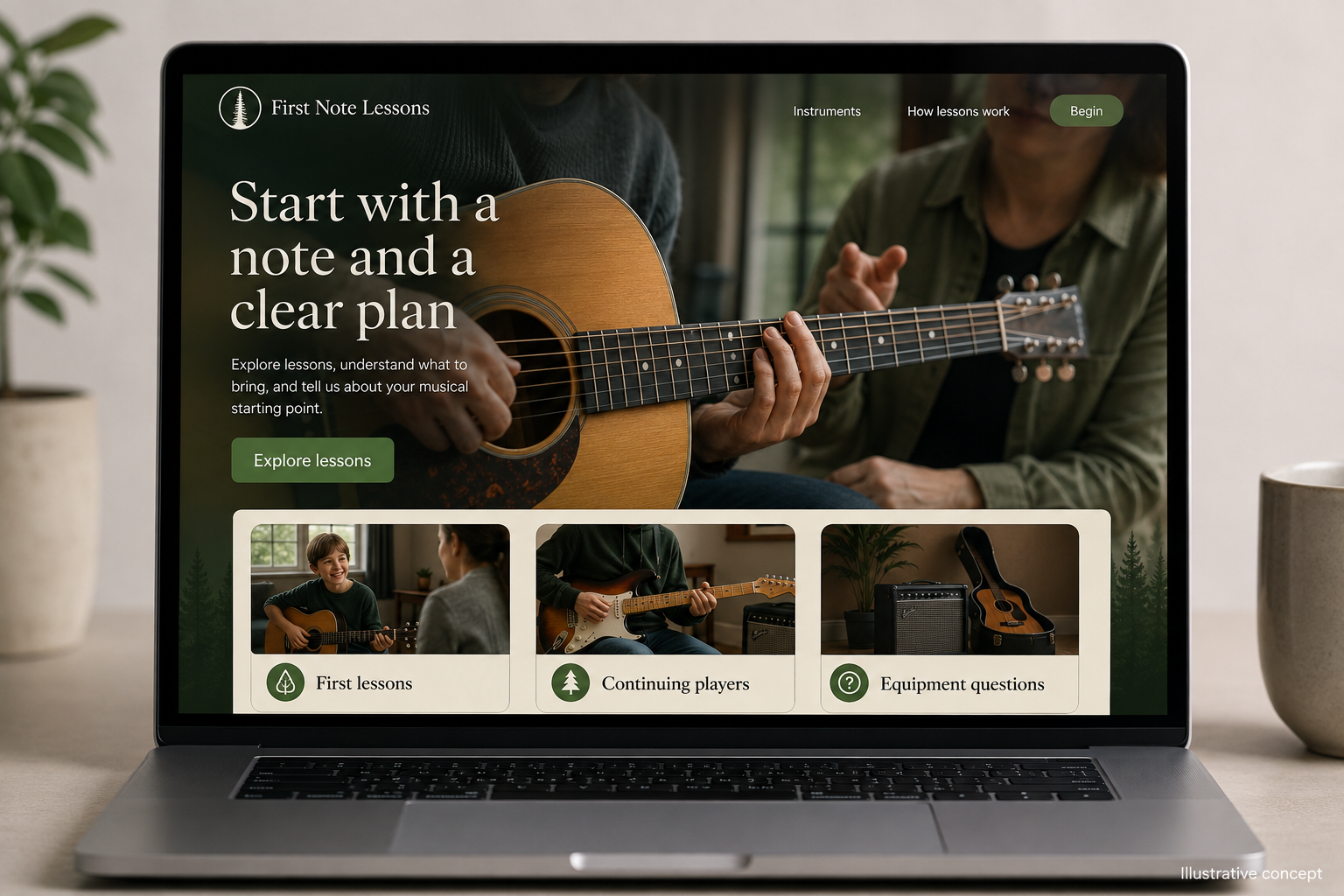
Explore this layout
A first music lesson often begins with questions that experienced players no longer think to ask. Does the student need an instrument already? What happens during the lesson? How much practice is expected between visits? A teacher's website should answer those practical questions while showing the kind of music and learning experience offered. That helps prospective students begin a conversation with a clearer idea of the commitment.
Explain who and what you teach
State instruments, learner ages, and experience levels actually supported. Describe musical interests and teaching approaches without suggesting every student follows an identical path. Distinguish individual lessons, shared sessions, and any group programs. A beginner needs a different introduction from an experienced player asking about a particular area of study. Let each find relevant information without making the homepage a long autobiography that never explains how lessons are organized.
Make the lesson routine tangible
Describe a typical session in broad, realistic terms, including playing, listening, discussion, or other activities the teacher uses. State lesson length, location, and online options where available. Explain how goals and progress are discussed without guaranteeing a particular grade or performance outcome. Real, permission-cleared recordings or photographs can support the description, but participation should not depend on viewing them. Useful text makes the teaching offer understandable to parents and students browsing quietly.
Answer the equipment question early
Explain what a new learner needs for the first lesson and what they may need for continued study. If choosing an instrument requires a conversation, invite that before the purchase. Identify materials included in fees and any separately arranged books or resources. For online teaching, show basic connection and setup requirements. The website should prevent someone buying unnecessary equipment simply because a photograph suggested it was essential to begin.
Turn inquiries into an appropriate first meeting
Ask for the instrument, learner age where relevant, experience, goals, and practical availability. Explain whether the next step is a call, introductory lesson, or waiting-list request. Publish the actual scheduling and payment arrangements in readable terms. Track suitable inquiries and first lessons, then review recurring questions from new students. A focused guide about getting ready for lesson one can support that transition more effectively than broad claims about the universal benefits of music.
Before you launch
- State first-lesson equipment needs
- Explain included learning materials
- Separate waiting lists from confirmed slots
- Show online setup requirements
Should beginners buy an instrument before making contact?
Not always. Explain the teacher's requirements and whether advice or a temporary option is available. An initial conversation can help the learner understand what is needed for the chosen instrument and format. Avoid making a specific purchase seem mandatory unless it genuinely is part of the teaching arrangement.