

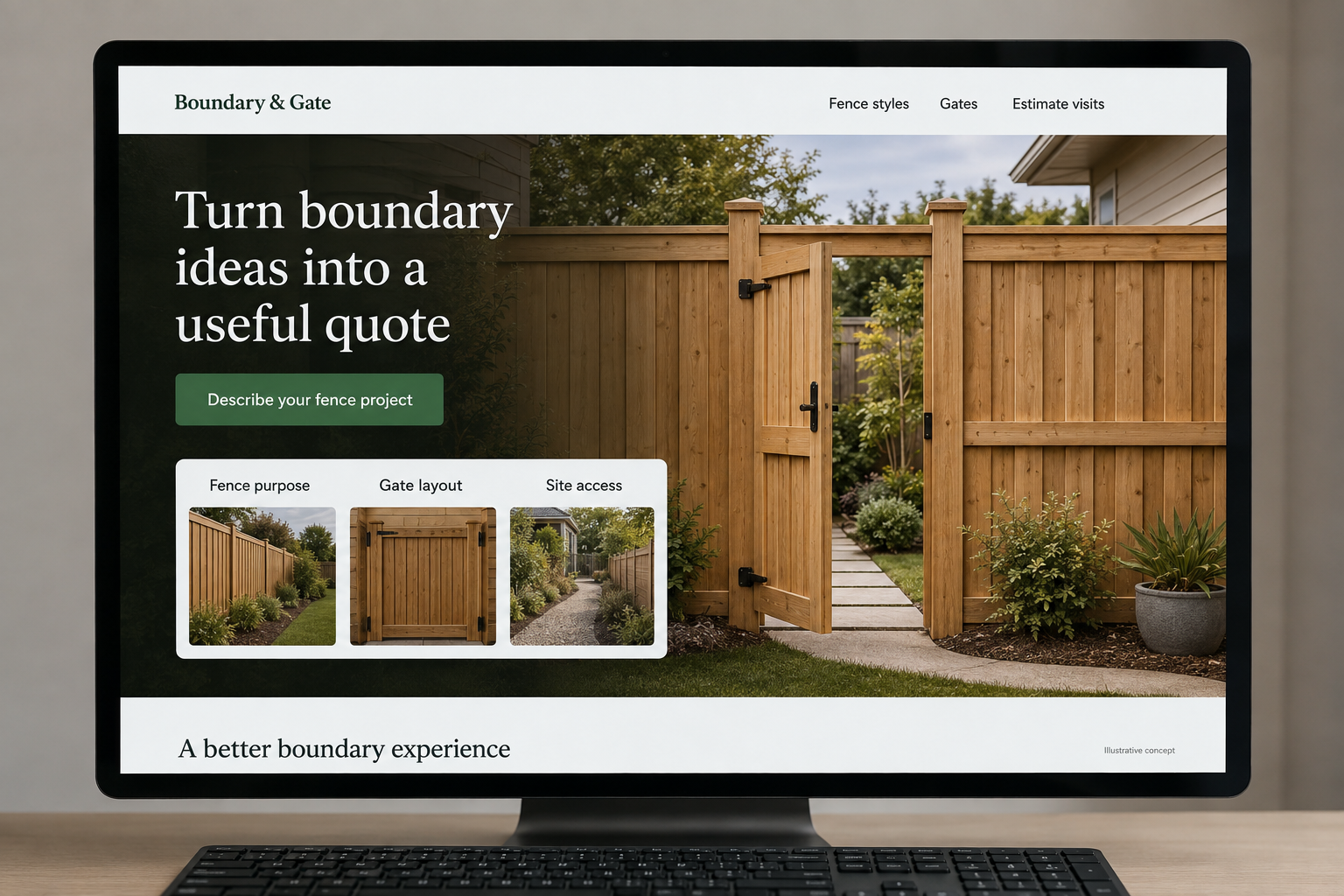
Explore this layout
Turn boundary ideas into a useful quote
Explore fence purpose, gate layout, and site access.
The main action is “Describe your fence project”. Supporting sections cover Fence purpose, Gate layout, Site access.
The same fence can be judged by privacy, appearance, access, or the way it divides a property. A fence contractor's website should help visitors say which of those matters most. Show relevant examples, make gates part of the conversation, and explain the information needed for an estimate. A material list alone does not tell someone whether the proposed layout will suit their daily routine.
Let the purpose guide the fence choices
Customers may want privacy, a defined yard, animal containment, or a more welcoming entrance. Use these goals to organize the service page, then explain the materials and styles offered. Avoid implying that any fence automatically solves every use case. A short comparison can show how visibility, upkeep, and gate access influence a discussion. Visitors should be able to identify their priority without already knowing the trade’s names for each style.
Show gates as part of the project
A fence gallery should include access points and the way the fence relates to the site, not just long stretches of panels. Explain which projects included new gates, removal of old fencing, or changes around uneven ground. Do not treat a photo as evidence of a property boundary. The website can tell customers which site information the contractor requests while leaving boundary confirmation and project requirements to the appropriate process.
Build a quote request around the route
Ask for the location, estimated length, intended use, preferred material if known, and the number of gates being considered. A simple sketch upload can be optional. Let the customer mention slopes or difficult access in plain language. Explain whether the quoted scope will be confirmed after a visit. This form should help the estimator prepare, rather than ask a homeowner to do the contractor’s measurements or settle every design detail.
Watch for mismatched expectations
Review inquiries by material, project size, and location. If customers expect automatic gate work that the business does not offer, make the gate page precise. If they assume old fence removal is included, explain how it is handled. Articles about planning access or comparing privacy styles can attract relevant readers when they link back to real services. Measure whether those readers request suitable estimates instead of judging success by gallery views alone.
Before you launch
- Include gate arrangements in project photographs.
- Group examples by purpose as well as material.
- Ask whether the job includes removing an existing fence.
- Explain how the proposed fence line is reviewed before quoting.
Should customers draw their fence layout before contacting us?
An optional sketch can help explain the idea, especially when several gates or separate areas are involved. It should not be a requirement for a first inquiry. Let visitors describe the purpose and approximate area, then explain how your team reviews the layout during the estimate process.