

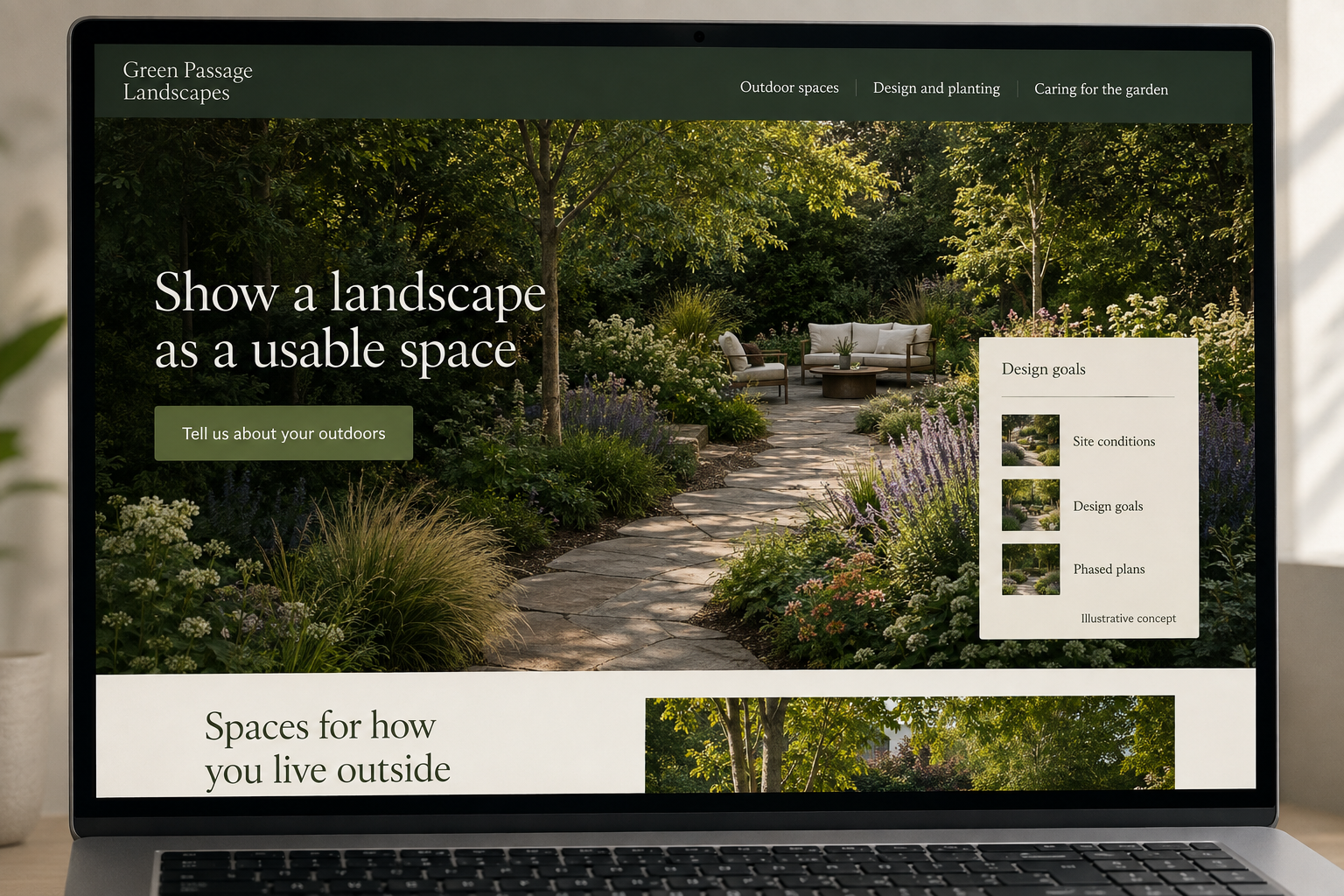
Explore this layout
Show a landscape as a usable space
Explore site conditions, design goals, and phased plans.
The main action is “Tell us about your outdoors”. Supporting sections cover Site conditions, Design goals, Phased plans.
A garden photograph can inspire someone without showing how the space would work for their household. A landscaping website should make that connection. Explain the brief behind a project, the way people move through it, and the care it needs afterward. Then give visitors a way to discuss their own priorities, whether that means a welcoming entrance, space to entertain, or a more manageable yard.
Design around how the outdoor space will be used
A garden for quiet evenings needs a different brief from a yard used by children and dogs. Let visitors start with their goals, then show how planting, paths, shade, and sitting areas can support them. Label drawings as concepts and finished work as completed projects. A useful portfolio explains the original problem and the choices made, rather than relying on attractive plants to tell the entire story of the space.
Show the planning behind the planting
Explain how the business reviews the site, discusses upkeep, and develops a scope. Separate design work, installation, and ongoing care if they are different services. Customers should know whether they can commission one stage without the others. Use material and planting examples as conversation starters, avoiding universal suitability claims. A phased project page can help readers understand how priorities might be discussed when the whole wish list cannot happen at once.
Invite a brief in the customer’s own words
Ask about the location, the space, the way it is used, and what the owner wants to change. Photos and a rough sketch can be optional. A question about desired upkeep is often more useful than requiring plant names. Explain the next meeting and any consultation charge. The form should help a customer describe a yard that does not yet work for them without demanding a finished landscape plan.
Connect inspiration with suitable consultations
Link project examples to the service they illustrate and a relevant inquiry. Track whether people who read those examples request the kind of work the company offers. If maintenance inquiries arrive through design pages, add a clear route to care services. If a concept draws unrealistic expectations, explain its scope. Useful content about preparing a landscape brief can bring readers to a conversation while giving the designer better information to work with.
Before you launch
- Describe the intended use of each featured outdoor space.
- Clarify whether planting, construction, and maintenance are offered.
- Show projects at a clearly identified stage of growth.
- Ask clients which existing garden features they want to keep.
Should landscape galleries include recently planted projects?
Yes, if they are labeled clearly. A newly planted space can explain layout and installation, while a later photograph shows how the planting develops. Where you have permission and access, pairing those views helps a prospective client understand the difference between handover day and an established garden.