

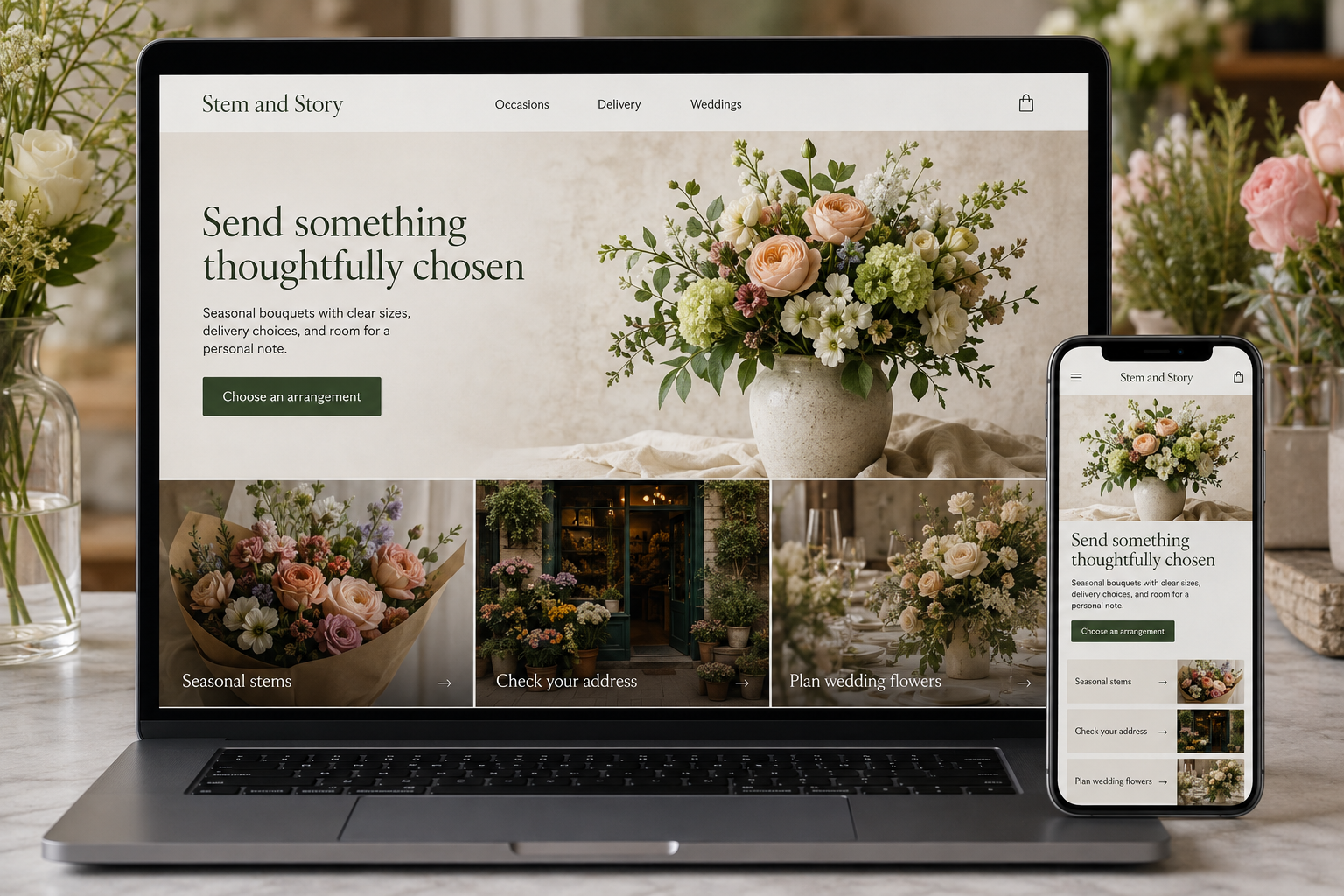
Explore this layout
Send something thoughtfully chosen
Seasonal bouquets with clear sizes, delivery choices, and room for a personal note.
The main action is “Choose an arrangement”. Supporting sections cover Seasonal stems, Check your address, Plan wedding flowers.
People often order flowers while thinking about someone else: a friend having a difficult week, a host they want to thank, or a partner celebrating something important. They need help choosing an appropriate gesture. The website should combine an inviting collection with practical delivery information, so a beautiful photograph does not create an expectation the florist cannot meet.
Organize around the occasion
Use occasion collections thoughtfully, with a brief explanation of the choices rather than rows of almost identical products. Describe the intended scale, palette, and presentation of each arrangement. A hand-tied bouquet and an arrangement delivered in a vessel solve different needs for the recipient. Show approximate dimensions where useful, and explain whether the picture represents the standard size or a larger option customers must select separately before ordering.
Explain the florist's creative choices
Seasonal availability means flowers can change. Place the substitution approach close to the product description, using everyday language about preserving the palette, value, and overall style. Offer a designer's choice option with clear boundaries instead of showing an exact bouquet that cannot reliably be reproduced. For highly specific requests, send customers to a short inquiry route that captures the desired flowers and date without implying immediate acceptance of the order.
Make delivery part of selection
Let shoppers check the delivery area, charge, and available date before writing a card message or entering payment details. Explain what happens when nobody answers the door and whether certain venues need extra information. Separate same-day ordering limits from general opening hours. A visible collection option also helps customers who live outside the delivery area but can visit the shop. These details prevent disappointment more effectively than a long policy page alone.
Learn from incomplete orders
Review where customers stop: area checking, date selection, size choice, or checkout. Each point suggests a different problem to investigate. Add useful occasion guides only when they help people choose, such as explaining bouquet versus vase delivery for a workplace recipient. Keep those guides connected to current arrangements. Track completed orders and appropriate inquiries rather than treating every image view as evidence that the website is bringing worthwhile business.
Before you launch
- Check delivery boundaries before payment
- Label photographed arrangement sizes
- Explain seasonal substitutions near products
- Allow recipient instructions and card text
Should wedding flowers share the everyday ordering form?
A wedding usually needs a separate consultation path. Ask for the date, venue area, approximate requirements, and any visual direction. Everyday bouquet checkout is designed for a known product and delivery date; it rarely gathers enough context for a considered event proposal.