

Help owners record where water appears Explore water location, rain timing, and assessment booking. The main action is “Describe your basement”. Supporting sections cover Water location, Rain timing, Assessment booking.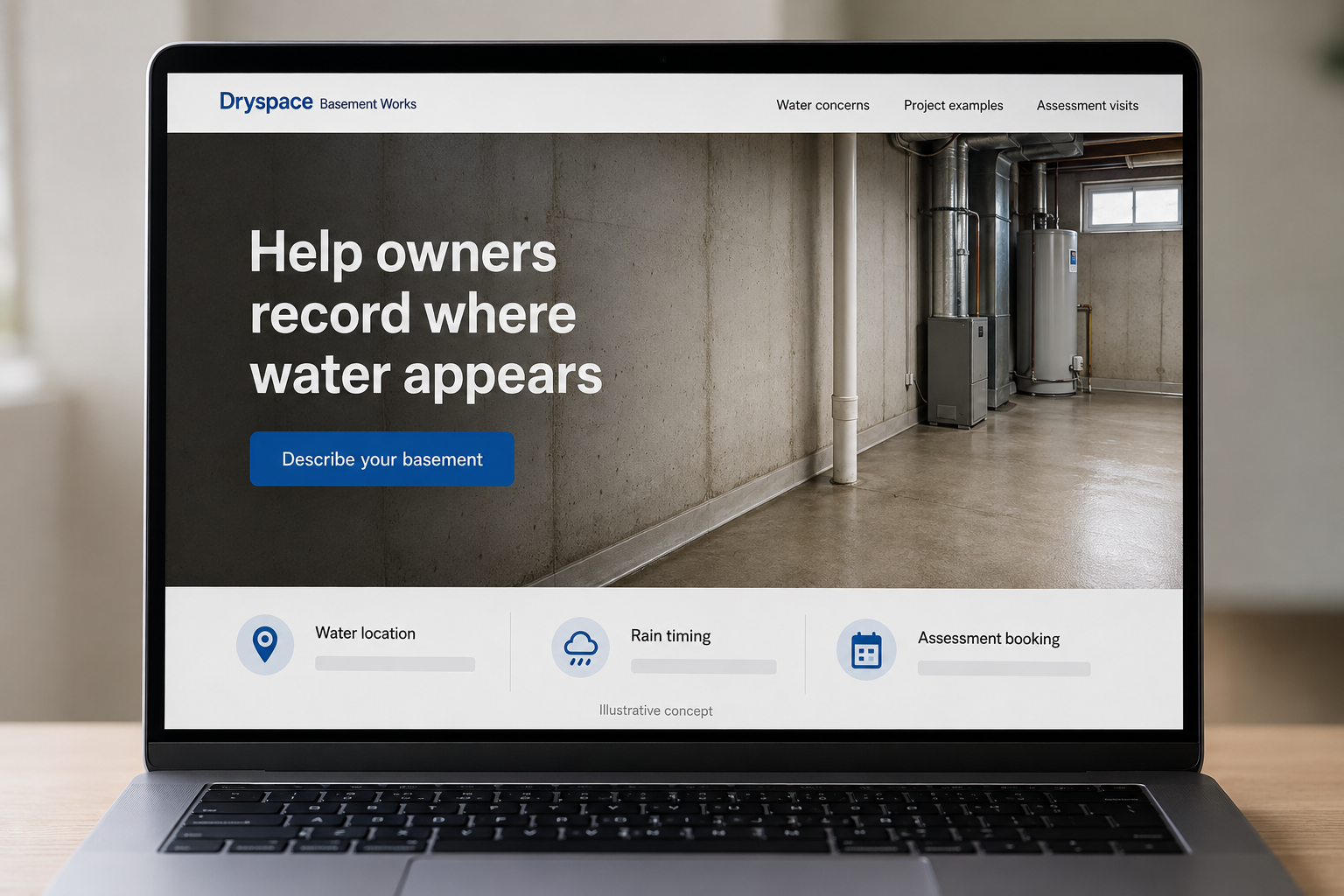
Explore this layout
A damp corner after heavy rain and water appearing in several places are not the same story. A basement waterproofing website should help owners describe when, where, and how the problem appears. Use clear examples to explain the assessment process and the work you offer, giving the visitor a useful next step without pretending that every basement needs the same treatment.
Help visitors describe when water appears
A basement owner may notice a puddle after rain, dampness near a wall, or an issue at a particular opening. The website can invite those observations without naming a cause remotely. Organize services around assessment and the work the company actually provides. Give visitors a clear next step and use calm photographs or diagrams. Avoid presenting a single drainage product as a complete answer before the property has been reviewed.
Make the proposed process visible
Explain how the team gathers history, examines the affected areas, and discusses options. A customer should know whether a visit is an assessment, a sales consultation, or both. Describe installation categories in ordinary terms and identify what an estimate includes. Keep warranty statements tied to actual written terms. A simple process page helps an owner compare proposals without assuming that two businesses using the same service name offer identical scope.
Design an inquiry around useful records
Ask where water appears, when it tends to happen, and whether previous work has been done. Optional photos and a brief history can help the office prepare. Do not ask someone to enter a hazardous area or carry out tests. Include the property location and preferred contact method. The response should explain the next scheduling step, especially if the business must speak with the owner before accepting an assessment appointment.
Measure the value of clearer explanations
Review which pages produce assessment requests and which lead to misunderstandings about what the service covers. If visitors repeatedly expect cosmetic finishing after waterproofing, explain the boundary near the estimate action. Useful content might show how to keep a simple record of observations for a consultation. Link it to the relevant service. Judge success by appropriate conversations and clear expectations rather than frightening headlines or an increase in unqualified urgent messages.
Before you launch
- Ask when water appears and where it is noticed.
- Show whether project examples involved interior or exterior work.
- Explain access needs for the initial assessment.
- Keep any maintenance information linked to the relevant installed system.
Is a simple before-and-after basement photograph enough?
It shows a visual change, but prospective customers also need to understand the original complaint and the scope of work. Explain what was observed, what your team installed or changed, and what the owner needs to maintain. Avoid suggesting that one photographed solution applies to every source of water.