

Explain intake and storage arrangements clearly Explore facility capabilities, intake appointments, and account contacts. The main action is “Discuss storage needs”. Supporting sections cover Facility capabilities, Intake appointments, Account contacts.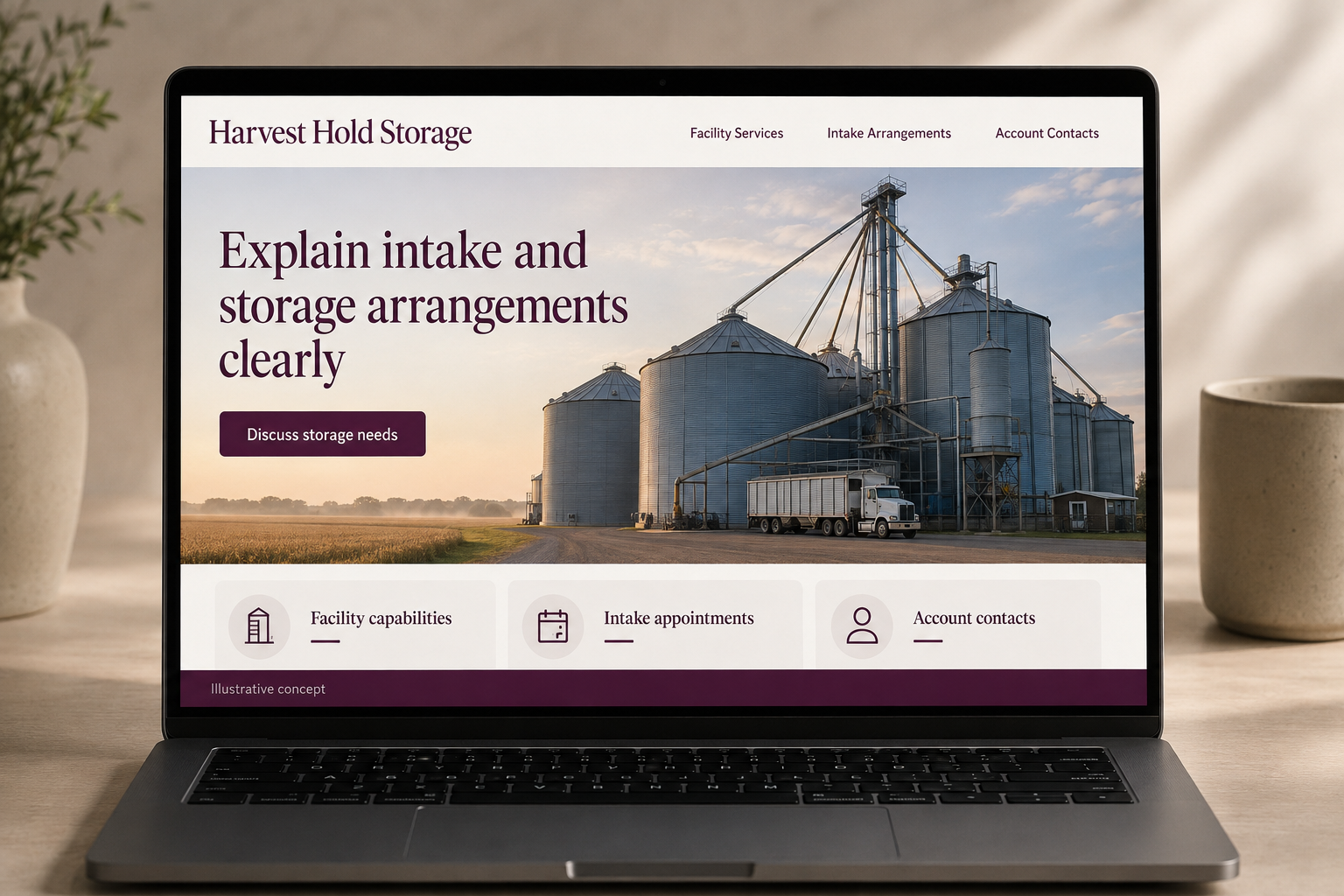
Explore this layout
A grower considering storage needs to understand the facility’s role, the products it handles, and how an intake arrangement is confirmed. A grain-storage website should make those facts easy to discuss without turning a general capacity description into a promise of available space. Existing account questions also need a direct route that keeps them separate from new-service inquiries.
Explain the facility’s role in the customer’s plan
A grower or grain business needs to know the products, services, and arrangements a facility actually supports. State the offered intake and storage capabilities clearly, without implying that space or acceptance is guaranteed for every request. Give current customers a direct account contact route. A prospective customer should understand how to begin a capacity conversation before being asked for detailed commercial information or assuming that a general facility description confirms suitability for a particular lot and delivery schedule.
Make intake arrangements easy to discuss
Describe the information reviewed before delivery and how scheduling is coordinated through the business’s actual process. Keep hours and contact details maintained. Avoid publishing operational promises that do not apply to every arrangement. A simple workflow can show inquiry, review, confirmation, and account communication without revealing sensitive customer information. Buyers need to understand the handoffs and who confirms the details, rather than relying on a photograph of storage structures to explain how the service would work for them.
Collect a useful first profile
Ask for the general product, estimated volume, expected timing, and the service being considered. Keep sensitive account and transaction details out of the initial public form. Let the customer state that plans are still developing. Explain who reviews the request and what additional information may be needed before an arrangement is accepted. A submission should begin a discussion and must not be presented as confirmed storage capacity or an approved delivery appointment before the facility has actually agreed to it.
Measure suitable account conversations
Track new inquiries separately from existing customer requests and note where people misunderstand the offered scope. If visitors expect transport or other services not provided, clarify the relevant page. Helpful content can explain how to prepare an intake inquiry or contact the right team about an existing arrangement. Link it to a clear action. Evaluate qualified discussions and fewer routing problems rather than publishing broad agricultural advice that does not help the customer understand the facility’s actual role and service process.
Before you launch
- Separate existing-account contact from new capacity inquiries.
- Keep intake hours and scheduling contacts current.
- Request approximate volume without public transaction records.
- Label proposed delivery timing as unconfirmed until accepted.
Does a capacity inquiry reserve grain-storage space?
It should not be described as a reservation unless the facility has accepted the arrangement through its actual process. The initial profile helps staff discuss product, volume, timing, and requested services. Explain the review and confirmation steps so a customer does not plan a delivery based only on an automated form receipt.