

Explore this layout
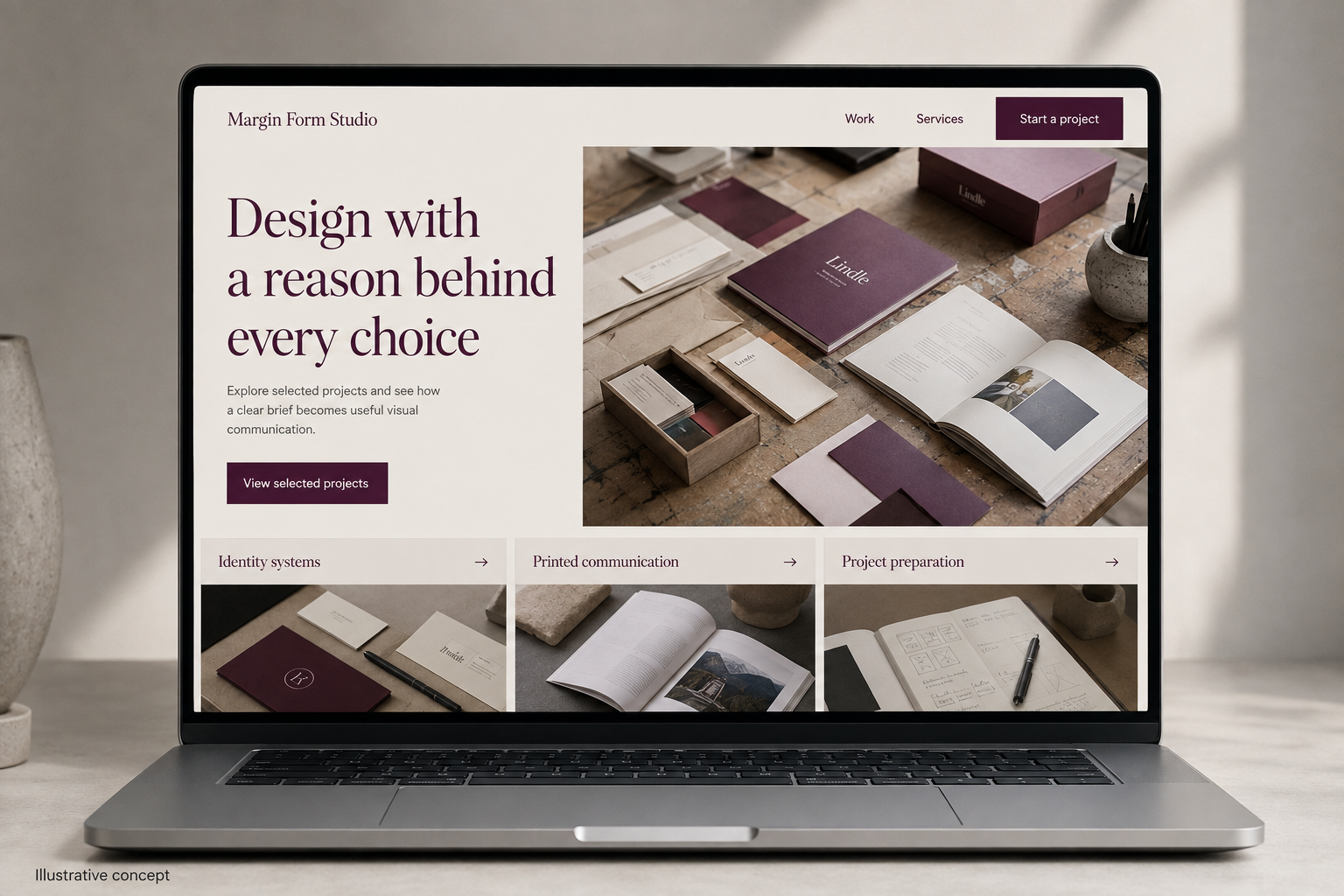
Design with a reason behind every choice
Explore selected projects and see how a clear brief becomes useful visual communication.
The main action is “View selected projects”. Supporting sections cover Identity systems, Printed communication, Project preparation.

A prospective design client may like the work without knowing whether the studio can solve their particular communication problem. The website should make that connection visible. Selected projects need enough context to explain the task and the decisions involved, while service pages clarify what the client receives. Good presentation makes creative judgment easier to assess without turning the portfolio into a collection of unexplained mockups.
Show the problem behind the visual result
For real projects, describe the audience, purpose, constraints, and the designer's contribution. Keep claims about results limited to evidence the studio can support and publish. Label self-initiated concepts clearly. Show the design in relevant applications, but include enough direct detail that visitors can judge the actual work. A polished scene should not obscure typography, hierarchy, or the information the design needed to communicate to its intended reader.
Define the service boundaries
Explain whether the studio offers identity, print, packaging, digital graphics, or other specific work. Describe typical deliverables and the decisions made during a project without presenting every engagement as identical. State where copy, photography, production, or technical implementation is separately arranged. Buyers unfamiliar with design often assume a broad label includes all related work. A plain explanation of responsibilities makes the initial conversation more useful and helps prevent avoidable scope confusion later.
Give the brief a manageable starting point
Ask about the organization, intended audience, project need, timing, and existing materials. Let a client describe an uncertain problem rather than forcing them to choose a finished solution from a dropdown. Explain the discovery and proposal steps, including how the studio establishes scope. A form should begin the discussion, not replace it with a demanding questionnaire. Keep uploads optional unless an initial file is genuinely necessary to assess the request.
Let useful explanations support the portfolio
Publish short pieces about preparing content for a brochure, choosing deliverable formats, or organizing feedback for a design project. Connect them to the relevant service and inquiry path. Measure suitable briefs and project conversations, alongside which case studies visitors read. If inquiries repeatedly assume printing or coding is included when it is not, improve the scope description. Useful content explains how a client can work with the studio rather than merely repeating that design matters.
Before you launch
- Label concept work clearly
- State client-supplied materials
- Explain typical final deliverables
- Ask about audience and purpose
Should every case study claim a business result?
Only when there is reliable, permission-cleared evidence linking the project to that result. A case study can be useful by explaining the problem, constraints, and design decisions. Avoid attaching invented sales improvements to attractive work simply because a portfolio format appears to expect a numerical outcome.