
Explore this layout
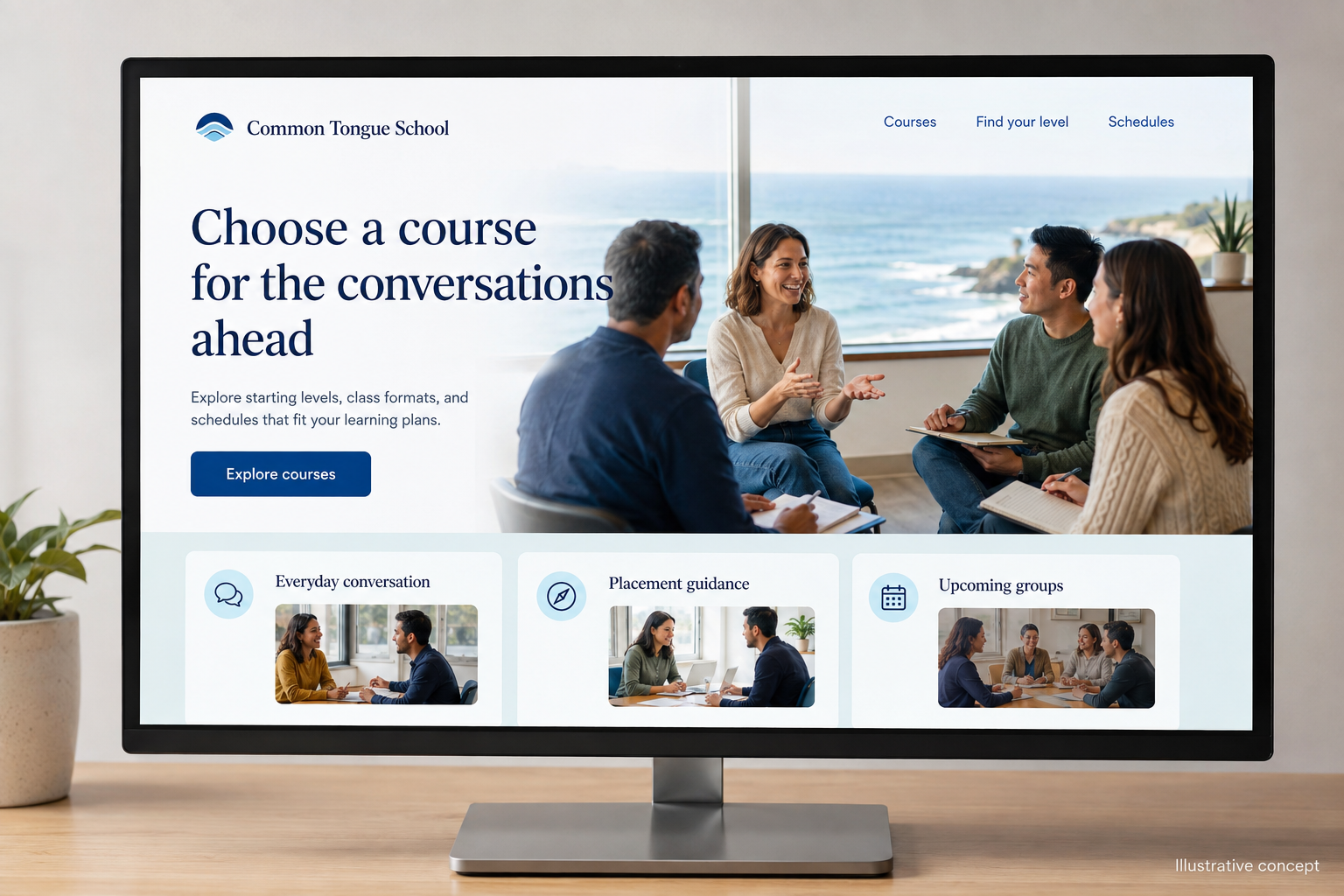
Choose a course for the conversations ahead
Explore starting levels, class formats, and schedules that fit your learning plans.
The main action is “Explore courses”. Supporting sections cover Everyday conversation, Placement guidance, Upcoming groups.

A language learner may want to hold everyday conversations, prepare for travel, or study a language in a more structured way. The right course depends on more than a beginner label. A useful school website explains expected starting knowledge, teaching format, and the weekly commitment. It should help learners choose a sensible route or ask for placement guidance before they pay for a course.
Describe the starting point and destination
For each course, explain what learners are expected to know and the topics or tasks they will practice. Use recognized level labels only with a plain-language explanation of how the school applies them. Avoid promising fluency by a fixed date. A visitor should be able to distinguish an introductory conversation course from a more intensive program without interpreting a string of codes or assuming all courses at one level cover identical material.
Show how teaching is organized
State group size arrangements, session duration, teaching language where relevant, and whether classes are in person, live online, or self-paced. Explain what participation and practice between sessions involve. Identify included materials and any separately purchased resources. For online classes, show time zones clearly and describe the basic equipment required. Practical details matter to adults fitting study around work and to families coordinating a learner's attendance alongside other commitments.
Make placement a helpful conversation
Offer a clear route for people who are unsure which level fits. Explain whether placement uses a short discussion, a task, or another process, and what happens afterward. Keep the initial form focused on goals, prior learning, preferred schedule, and contact details. Do not make a visitor complete a lengthy test merely to see available courses. The website should reduce uncertainty while leaving room for the school to recommend an appropriate starting point.
Keep enrollment tied to an actual course
Show the full date range, meeting pattern, location or online format, and current booking status. Explain what happens if a course requires a minimum group before confirmation, using the school's real arrangement. Track placement requests, completed enrollment, and changes caused by a level mismatch. Publish useful explanations of the course pathways and link them from listings. Those pages help learners understand how to continue rather than presenting every new term as an unrelated product.
Before you launch
- Explain level labels in plain language
- Show online class time zones
- List full course dates
- State when a group is confirmed
Should learners choose a level themselves?
Offer clear descriptions so confident learners can identify an option, and provide placement guidance for anyone uncertain. The school's review process should be visible before payment where it affects admission to a group. A useful starting recommendation is better than letting someone enroll in a course that does not match their current experience.